
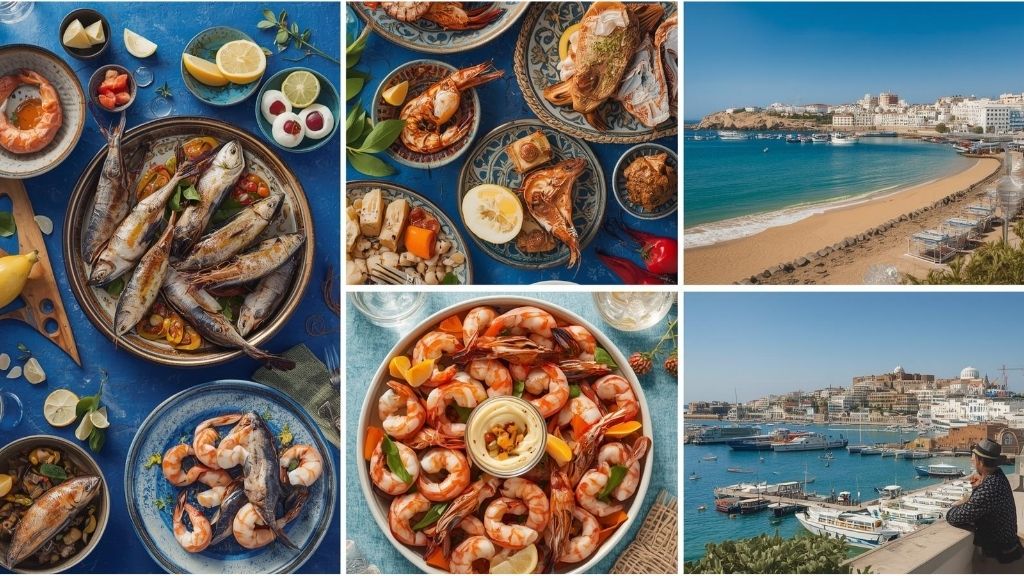
The Mediterranean crashes against tangier’s northern edge and the Atlantic touches its western shore. This double coastline means fishing boats return daily with catches that end up on restaurant tables within hours. The city has always lived off the sea and that relationship shows in how seriously locals take their seafood.
Understanding Tangier’s fishing culture
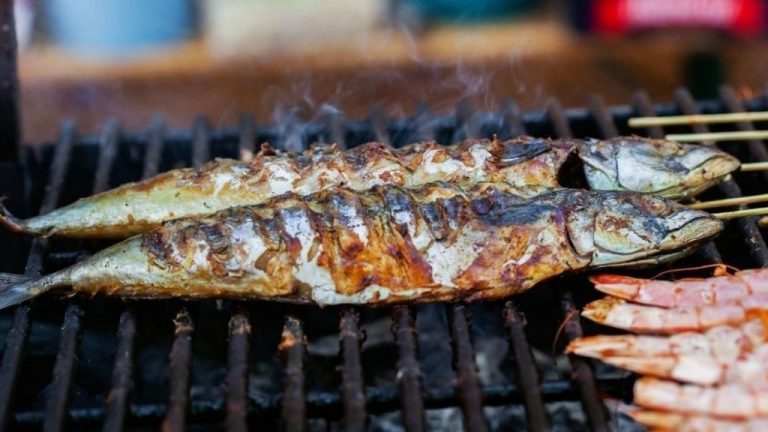
Tangier’s port bustles before dawn when boats unload their night catches. Sardines dominate the haul along with mackerel, sea bream, sole, and whatever else the nets brought up. Larger boats venture further for grouper, sea bass, and swordfish. The fish market near the port opens early and restaurant owners arrive to select what they’ll serve that day.This direct connection between boat and kitchen means menus change based on what’s available. A restaurant might feature grilled sea bream one day and switch to fried sole the next. Asking what’s fresh today is always smart because that’s what the kitchen will prepare best.The cooking methods tend toward simplicity. Grilling over charcoal, frying in light batter, or baking with chermoula sauce lets the fish flavor speak. Heavy sauces aren’t common because quality seafood doesn’t need disguising. Salt, lemon, olive oil, and maybe some cumin or paprika are usually enough.
LE SAVEUR DU POISSON near the port
This restaurant sits close enough to the fishing port that you can watch boats while you eat. The name translates to fish flavor and they deliver on that promise. The dining room feels casual with plastic tablecloths and simple chairs but the food quality rivals fancier places.Their specialty is whole fish grilled over charcoal. You choose from the display case where fish sit on ice and they weigh it to determine price. Sea bream runs about 120 dirhams per kilo and a fish usually weighs 400 to 600 grams. They serve it with bread, olives, and a simple tomato and onion salad.The grilling technique matters here. They don’t overcook and the fish stays moist inside while getting crispy skin. A squeeze of lemon is all it needs. Local families come here for weekend lunches which tells you it’s not just a tourist trap.Fried fish platters offer variety if you can’t decide on one type. They’ll fry up sardines, sole, and calamari then serve everything hot with harissa on the side. The batter is light and not greasy. Sharing a mixed platter with friends lets everyone taste different fish.
EL MOROCCO club overlooking the strait
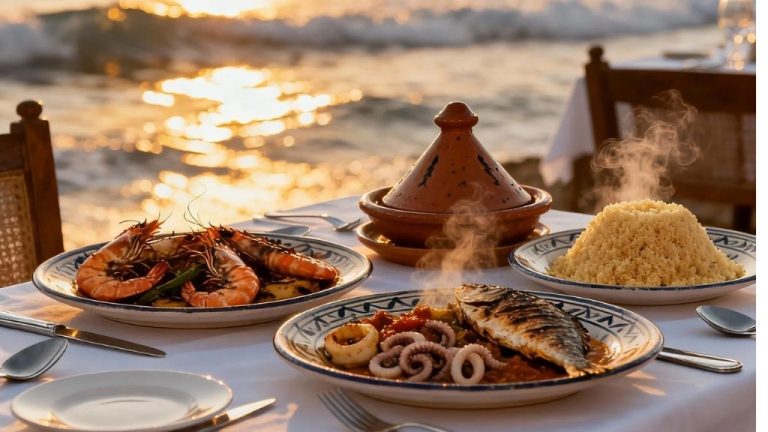
This place occupies a restored villa with terraces that look across the strait of gibraltar toward spain. The setting is more upscale with white tablecloths and professional service. Prices reflect the location and ambiance but the seafood quality justifies the cost.Their seafood tagine takes the traditional clay pot concept and fills it with fish, shrimp, mussels, and squid. The sauce uses tomatoes, preserved lemon, and saffron. The seafood stays tender because they add it late in the cooking process. This dish costs around 180 dirhams and easily feeds two people if you order sides.Grilled prawns come butterflied and brushed with garlic herb butter. They’re massive prawns, probably six or seven per order, and arrive sizzling. The meat pulls cleanly from the shell and tastes sweet. This works as a starter before moving to a main fish course.The wine list includes moroccan and imported options. Pairing white wine with seafood feels natural though moroccan wines can be hit or miss. The staff knows which bottles work best if you ask for guidance.Sunset reservations book up fast especially during summer months. The views at golden hour with spain visible across the water create memorable dining moments. Calling ahead is necessary unless you want to risk not getting a table.
Restaurant populaire in the medina
Don’t let the plain name fool you. This spot serves excellent seafood in no-frills surroundings at prices that make you double check the bill. It’s tucked into the medina away from main tourist paths so you need directions or a good map to find it.Sardines are the star here. They grill them whole and serve six or eight on a plate with bread and salad for maybe 35 dirhams. The sardines in tangier are plump and oily in a good way. When they’re fresh they don’t taste fishy but almost sweet. Locals eat them by pulling the meat off with their teeth and leaving the bones.Fried fish also appears on the limited menu. They use whatever came in that morning and fry it simply. The portions are generous and everything tastes like the sea in the best possible way. This isn’t a place for complicated preparations or fusion experiments. It’s just good fish cooked right.
The clientele is mostly working class tangerines grabbing lunch. Tourists who find it are usually thrilled by the authenticity and value. There’s no written menu so you negotiate with the owner about what’s available and agree on a price before they cook.
LE YACHT CLUB for upscale marina dining
The marina development brought modern restaurants to tangier including le yacht club which targets the boating crowd and well-off locals. The interior feels sleek with contemporary design and the terrace overlooks yachts bobbing in their slips.Seafood here gets more elaborate presentations. Tuna tataki appears on the menu alongside moroccan inspired dishes. Sea bass might come with a saffron foam or lamb tagine reduction. The kitchen clearly has trained chefs who know french techniques and apply them to local ingredients.Oysters arrive on ice when available though they’re imported since morocco doesn’t have oyster farming. A plateau de fruits de mer serves as an impressive starter with lobster, prawns, crab, and shellfish artfully arranged. This runs expensive at 400 dirhams or more but works for special occasions.The bar makes proper cocktails and the wine selection is the best of any seafood restaurant in tangier. You’ll find french champagnes and burgundies alongside spanish albarinos. Service is polished and staff speak multiple languages fluently.Reservations are essential for dinner and weekend lunches. The dress code isn’t formal but showing up in beach clothes might get you seated in a less desirable corner. This is where tangier’s elite dine when they want seafood with sophistication.
Beach restaurants along Malabata
The stretch of beach east of the port has simple restaurants that operate mainly in summer. These aren’t fancy establishments but rather casual spots where you sit at plastic tables on the sand. The cooking happens on grills right there and smoke drifts across the beach.Sardine sandwiches are the specialty. They grill sardines then stuff them in round bread with tomatoes, onions, and harissa. The combination of hot fish, crunchy vegetables, and spicy sauce in soft bread hits perfectly after swimming. These cost about 15 dirhams and you eat them with your hands while sand gets everywhere.Fried fish platters work for bigger appetites. You get whatever they caught that day fried and served with fries and salad. Beer is available at most places though some only serve soft drinks. The vibe is relaxed and slightly chaotic especially on sunny weekends when families pack the beach.Quality varies between these restaurants. Look for places with crowds and where locals eat. Avoid anywhere aggressively trying to pull you in. Fresh fish doesn’t need hard selling.The season runs roughly from may through september. Outside those months many beach restaurants close or operate sporadically. Summer is when they shine and when eating grilled fish on the sand feels like the only reasonable thing to do.
CASA D’ITALIA brings italian seafood traditions
Italian influence runs through tangier’s history and casa d’italia celebrates that connection. The owner spent years in italy and returned with recipes that blend italian seafood cooking with moroccan ingredients. The result feels authentic to both traditions.Their seafood pasta deserves attention. Linguine with clams uses fresh clams from local waters with white wine, garlic, and parsley. The pasta is cooked properly al dente and the sauce clings without being heavy. This dish costs around 90 dirhams and portions are substantial.Grilled octopus comes tender after slow cooking then gets finished on the grill. They serve it with potatoes and a salad dressed in olive oil and lemon. The octopus has char marks but stays moist inside. Many restaurants overcook octopus until it turns rubbery but not here.Pizza options include seafood versions with shrimp and calamari though the focus stays on pasta and grilled preparations. The dining room is small so reservations help. The atmosphere feels intimate and the service is warm without being intrusive.
What to order and how to eat it
Whole grilled fish comes to the table with head and tail attached. Moroccans often eat the cheeks and other parts westerners might skip. You don’t have to but the cheek meat is actually quite tender and flavorful. Use your bread to push fish off the bone rather than struggling with a fork.Chermoula is the classic moroccan marinade for fish. It combines cilantro, parsley, garlic, cumin, paprika, lemon juice, and olive oil into a green paste. Fish gets coated before grilling or baking. The herbs brighten the fish without overwhelming it.Fried fish works best eaten immediately while still hot and crispy. Letting it sit makes the coating soggy. Most restaurants serve it with harissa on the side for those who want heat. A little goes a long way since harissa packs serious spice.Sharing is common in moroccan dining culture. Ordering several dishes for the table and eating family style lets everyone try different preparations. This works especially well with seafood where you might want both grilled and fried options.
Pricing and value
Seafood prices in tangier stay reasonable compared to european standards. A full grilled fish meal with sides rarely exceeds 100 dirhams at mid-range places. Upscale restaurants charge more but still remain affordable by international resort standards.Beach and medina spots offer the best value. You sacrifice ambiance and service polish but gain authenticity and savings. A satisfying seafood lunch at these places might cost 40 to 60 dirhams total.Imported seafood like salmon or oysters costs significantly more than local catches. Sticking to mediterranean fish keeps prices down and supports local fishermen. The moroccan fish tastes better anyway since it’s fresher.Some restaurants try to overcharge tourists by not providing clear prices. Always ask the price per kilo for whole fish before ordering. Agree on the total before they start cooking. Reputable places have no problem being transparent about costs.
Best times to visit
Lunch service runs from noon until three or four depending on the restaurant. This is when many locals eat their main meal so restaurants are liveliest. Evening service starts around seven and runs late especially in summer.Friday lunch sees families dining out after mosque. This can mean crowded restaurants but also great atmosphere. Reservations become more important on fridays at popular spots.Summer weekends bring tangerines to beach restaurants. Expect crowds and potentially longer waits for food. Weekday visits offer quieter experiences with the same quality.Winter months see fewer tourists but restaurants serving locals stay open. Some beach places close but port area and medina spots operate year round. Winter fish like sardines are especially good during colder months.
Tangier’s coastal restaurants prove that the best seafood preparations are often the simplest. Fresh fish, hot charcoal, and skilled hands create meals that capture the essence of mediterranean living. From humble grilled sardines to elegant seafood tagines, the range satisfies every budget and taste. For insights into the spices and ingredients that season these dishes, explore tangier’s vibrant markets where the flavors begin.