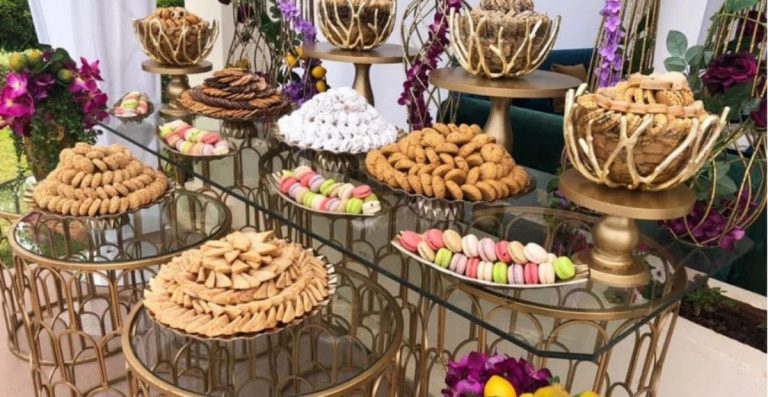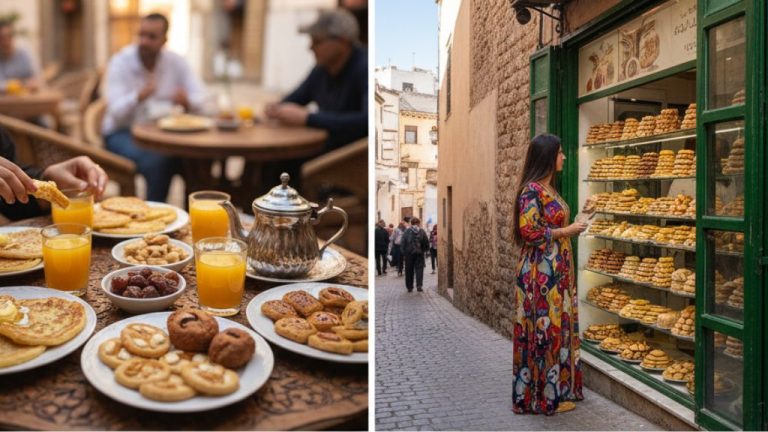

In Marrakech, pastries like gazelle horns, briouats, ghriba and chebakia are seriously sweet – rich in honey, almonds and butter – which can be a surprise if you’re used to lighter desserts. That’s why it’s smarter to recommend shared tasting plates instead of ordering several pieces per person, especially if your reader is planning multiple sweet stops in one day.
You can also encourage them to take advantage of breakfast deals and afternoon tea in riads and tea rooms. That’s often where local pastries are served as part of a set – crêpes, bread, jams, mint tea – so they can discover everything gradually instead of crashing from a sugar overload. Good pastry houses in Marrakech focus on quality ingredients and handmade recipes, which makes it worth zeroing in on a few trusted addresses rather than wasting calories on forgettable pastries.
Ordering in Person or Getting Delivery Without the Language Stress
When ordering in person, your reader can relax: in major pastry shops and places used to tourists, staff are used to foreign customers and usually accept card payments with modern terminals. The easiest trick is to point at the display and ask for an “assorted box” with a set number of pieces or a target budget – most pastry shops know exactly how to build a mixed box that works.
Some Marrakech bakeries also offer delivery to homes and hotels, either through their own service or local apps, with online or phone ordering. For travelers, it’s a great way to get a big tray for a group or a special occasion (birthday, last night in town) without leaving the hotel – they just need to double‑check in advance that the shop delivers to their area and at what time.
Choosing Pastries That Actually Travel Well
If your reader wants to bring pastries back to the US or Canada, it’s best to avoid anything fragile, very creamy or that needs refrigeration: think layered entremets, fresh cream desserts, cakes loaded with whipped cream and so on. On the flip side, gazelle horns, ghriba, fekkas, certain shortbread‑style cookies, dry briouats and assorted dry pastries are usually more travel‑friendly and keep their texture longer.
Advise them to ask for sturdy, well‑sealed boxes, pack them in their carry‑on instead of checked luggage, and cushion everything with clothes to absorb shocks. Many Marrakech pastry shops are used to preparing “travel boxes” and can add extra wrapping if you mention you’re flying back to North America.
Customs Reality Check for the US and Canada
Without giving legal advice, it’s important to remind readers that they are responsible for checking current official rules before bringing food across borders. Canadian authorities clearly state that bringing food for personal use is regulated, with stricter limits on animal products but more flexibility for dry or processed foods, as long as you respect quantity limits and declare what you’re carrying.
For the US, general recommendations also lean heavily toward declaring all food items, even if they might be confiscated, to avoid fines. Dry products without meat or dairy – like most traditional Moroccan pastries made from flour, almonds, honey and vegetable oils – tend to be more compatible with the rules, but every traveler should verify up‑to‑date information with USDA, CBP or their country’s official sources.
Simple Rules Your Readers Should Remember
To make this section truly useful, finish with a few easy guidelines your readers can screenshot and keep:
Always declare any food items at customs, even if it’s “just a few cookies.”
Keep original packaging or receipts when possible, so ingredients and origin are clear.
Stick to dry, cream‑free pastries in reasonable quantities, instead of trying to bring home fresh cakes.
Combined with your sections on must‑visit addresses and must‑try pastries, this turns your guide into a full roadmap for North American travelers: what to taste, where to go, how to order and how to bring a little bit of Marrakech back home in their carry‑on.