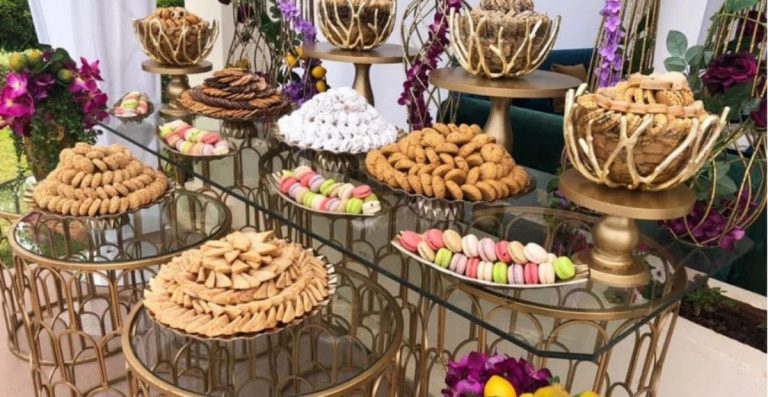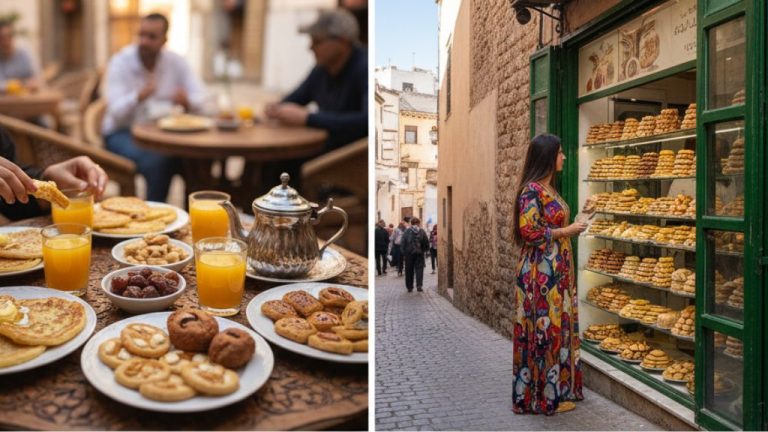

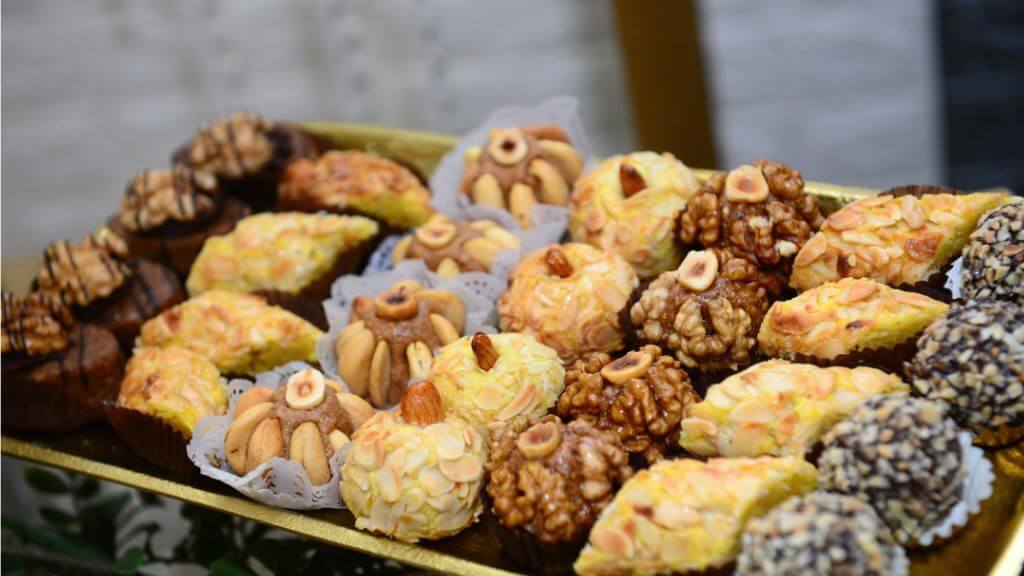
In Marrakech, pastry shop windows – from big, polished maisons to tiny neighborhood spots – overflow with honey, almond and sesame treats that pretty much sum up the Moroccan art of living. For North American travelers, these pastries are often the first real encounter with Moroccan food beyond tagines and couscous, and they quickly turn into a sunset ritual, usually with a glass of hot mint tea.
To make things easy for your readers, here are the must‑try Moroccan pastries they should taste at least once during their stay in Marrakech – with a focus on what’s easy to love, easy to find and easy to bring back home.
Gazelle Horns: the One Classic You Can’t Skip
Gazelle horns are the iconic Moroccan pastry, and Marrakech is one of the best places to experience them at their finest. Think small crescent‑shaped pastries made with a thin, delicate dough wrapped around an almond paste filling, usually scented with orange blossom, then lightly baked and sometimes dusted with powdered sugar. The texture is soft rather than crunchy, with a strong almond flavor that’s rich but not overwhelming, even if you’re new to Middle Eastern–style desserts.
For your US/Canada audience, you can frame them as “the must‑try Moroccan pastry”: easy to understand, not crazy sweet when they’re well made, and available in almost every good bakery in town. They’re also one of the most practical shapes to buy by the box – perfect to stash at the hotel, share with friends or tuck into a carry‑on at the end of the trip.
Almond & Honey Briouats: Crispy, Gooey, Totally Extra
Almond briouats are tiny show‑stoppers: little triangles or rolls of ultra‑thin pastry filled with almond paste, fried until crisp, then soaked in warm honey syrup and finished with sesame seeds. The mouthfeel is all about contrast – a crunchy shell outside, a soft, melting, intensely flavored filling inside, with orange blossom and almond front and center.
In your content, you can pitch them as the ultimate “guilty‑pleasure pastry” – the one to order if your reader loves rich, buttery, unapologetically sweet desserts. The best tip to share: don’t eat them scorching hot, don’t rush them, and definitely share. Two or three briouats are usually more than enough for one person.
Chebakia: The Spiced Party Pastry
Chebakia is strongly linked to Ramadan, but in Marrakech you’ll find it in pastry shops all year long. It’s made from a spiced dough shaped into flowers or knotted ribbons, fried, then dipped in honey syrup and coated with sesame seeds, often with notes of anise and sometimes cinnamon or other spices. The result is dense, sticky, very sweet – and insanely aromatic.
For North American readers, you can present chebakia as a “celebration pastry” – something to try if they want to feel the intensity of Moroccan festive flavors. It’s best recommended in small doses: maybe as part of a mixed tray, or as a tasting item on a food tour, rather than as a huge box to take home. Compared with dry cookies, chebakia doesn’t travel quite as well over long distances.
Ghriba: The Moroccan Cookie That Travels Like a Pro
Ghriba are crumbly cookies, often cracked on top, made with different bases: almonds, walnuts, semolina, coconut and more. The texture is sandy and melt‑in‑your‑mouth, with gentle nutty flavors and sometimes a hint of orange blossom or vanilla. Visually, they’re not far from certain holiday cookies, which makes them instantly familiar for a North American crowd.
In your article, you can call them the “Moroccan cookie version” – perfect for snacking with coffee or mint tea. They keep well for several days (often longer) and handle travel like champs when packed in a solid box, which makes them an ideal choice for readers who want to bring something authentically Moroccan to the office or back home without stressing about breakage.
Sellou & Fekkas: the Perfect Tea‑Time Duo
Sellou (also spelled slilou) is a sweet, energy‑packed mix made from toasted flour, almonds, sesame, honey and spices, served either scooped into bowls or pressed into small blocks. Traditionally tied to big celebrations, it’s now also offered in smaller portions in some Marrakech tea rooms and pastry shops as a special treat with tea.
Fekkas, on the other hand, are thin, crunchy biscotti‑style cookies, often studded with almonds, anise seeds or raisins. They’re a staple in boxes of dry cookies and pair beautifully with tea or coffee. For your reader, you can present this duo as the “tea‑time option”: less syrupy than briouats or chebakia, closer to Western comfort zones, but still totally rooted in Moroccan tradition.