
Sacred music in Tangier rarely announces itself. There are no billboards, no fixed programs, and few official schedules. What exists instead is a living network of spiritual spaces, cultural institutions, and seasonal gatherings that reward patience and curiosity. Knowing where to listen determines whether your encounter with Morocco’s Sacred Music Festivals: Where Ancient Rhythms Meet Modern Souls remains superficial or becomes transformative.
This guide maps the most meaningful entry points into Tangier’s sacred soundscape, from intimate zawiyas to public festival spaces.
Zawiyas: The Inner Circle
Zawiyas remain the most authentic places to hear sacred music as devotional practice rather than performance. Thursday night dhikr sessions occur weekly in multiple locations across Tangier.
Zawiya Tijania near the Grand Socco offers the most accessible entry point for respectful visitors. The Tijani dhikr emphasizes collective chanting and steady rhythm, creating an immersive spiritual environment. Zawiya Qadiriya near Bab Fahs presents a slower, more contemplative style, while Darqawiya gatherings in the old medina can feel intense and inward-focused.
Attending these sessions requires understanding etiquette, dress, and behavioral expectations detailed in Morocco zawiya etiquette for respectful visitors. These rules are not formalities they are conditions for access.
For deeper context, Tangier’s Sufi zawiyas and Thursday night dhikr sessions explores how these spaces function spiritually and socially.
Cultural Institutions and Concert Halls
For those seeking structured access, Tangier’s cultural institutions provide reliable opportunities to hear sacred and classical music in concert settings.
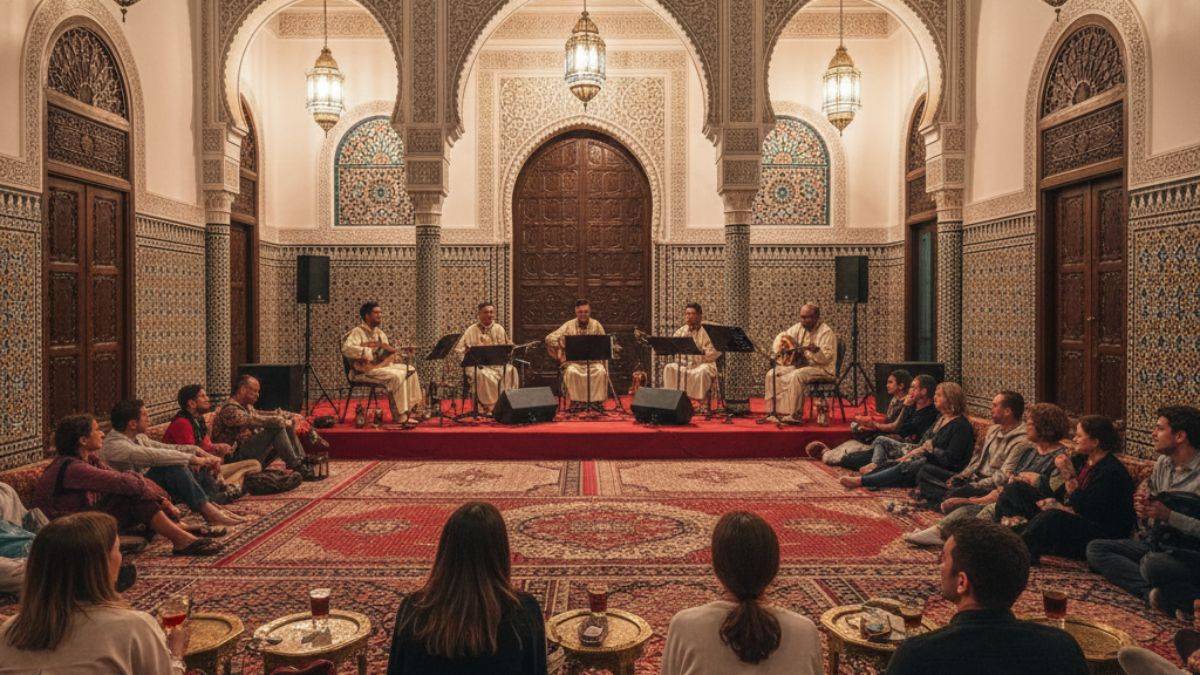
The Conservatoire de Musique Andalouse hosts regular student recitals and ensemble performances. These events offer rare insight into living Andalusian lineages while maintaining accessibility. The Institut Cervantes presents monthly concerts featuring established orchestras performing classical noubas in refined settings.
These venues bridge devotional heritage and public presentation, complementing the more private experiences found in zawiyas. Their programming often aligns with periods highlighted in Tangier’s sacred music festival calendar.
Among these listening spaces, Andalusian music offers a quieter but equally profound point of entry. Rooted in the 1492 exile from Al-Andalus, its refined noubas preserve memory through discipline rather than trance. Hearing this tradition in Tangier’s conservatories and Ramadan concerts reveals another dimension of the city’s sacred soundscape, explored in depth in Andalusian Music in Tangier: The 1492 Legacy Lives On.
Ramadan Nights and Public Squares
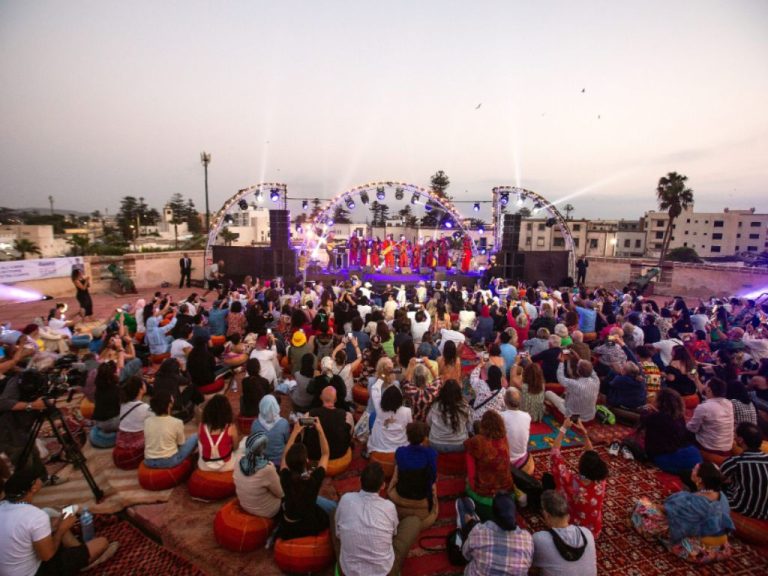
During Ramadan, sacred music spills into public space. After iftar, city-sponsored stages host nightly performances of Andalusian and devotional music. These concerts draw mixed audiences—locals, families, and visitors—creating inclusive environments ideal for first-time listeners.
Public squares near the Kasbah and along major boulevards often host rotating ensembles. Performances begin late and continue into the night, reflecting the nocturnal rhythm of the holy month.
Ramadan offers the most concentrated access to multiple traditions within Morocco’s sacred music festivals, making it the optimal period for musically focused visits.
Aissawa in the Streets
Unlike scheduled concerts, Aissawa music appears unpredictably. Public processions occur during Mawlid and major moussems, moving through neighborhoods without fixed routes.
The sound announces itself long before the musicians appear. Ghaitas, drums, and chanting fill the streets, drawing crowds organically. Observing these processions requires maintaining respectful distance and resisting the urge to photograph.
Understanding the spiritual purpose behind these events enhances appreciation, as explained in Aissawa brotherhood music and trance traditions in Morocco.
Seasonal Moussems
Moussems—saints’ festivals—combine pilgrimage, music, and communal celebration. The Moussem of Sidi Kacem attracts Aissawa groups from across northern Morocco, offering several days of continuous ceremonies and public performances.
These events reflect rural devotional culture more than urban programming. Vendors, families, and pilgrims create dense social environments where sacred music functions as communal glue rather than spectacle.
Moussems form key moments within Tangier’s sacred music festival cycle, though dates shift annually.
How to Stay Informed
Reliable information travels locally rather than digitally. Café owners, bookshop staff, mosque attendants, and guesthouse hosts often know more than official tourism offices.
Smaller riads and locally owned hotels tend to offer better insight than international chains. Asking respectfully signals intention and often opens doors.
For visitors seeking orientation before arrival, Morocco’s sacred music festivals overview provides a structural understanding that helps contextualize discoveries on the ground.
Choosing Your Entry Point
First-time visitors benefit from beginning in public or semi-public contexts—Ramadan concerts, conservatory performances, or open-air festivals. These settings allow acclimation before entering more intimate spiritual spaces.
Those seeking deeper immersion may progress toward zawiya dhikr sessions or community-based events. Moving gradually demonstrates respect and increases the likelihood of meaningful access.
Every pathway ultimately leads back to the same living tradition explored throughout Morocco’s sacred music festivals and spiritual landscape.
Listening as Participation
Sacred music in Tangier is not passive entertainment. Listening itself becomes a form of participation—requiring attention, humility, and restraint.
Those who approach gently often discover that the city reveals more than expected. Doors open quietly. Invitations arrive unannounced. Music becomes guide rather than attraction.
For a complete synthesis of how these traditions interconnect across history, space, and season, return to Morocco’s sacred music festivals: where ancient rhythms meet modern souls.