
The invitation felt generous but came with unspoken expectations. A shopkeeper I’d befriended mentioned his zawiya held dhikr Thursday evening and said I was welcome. But welcome under what conditions? Sacred spaces operate by codes outsiders rarely understand instinctively. Violating those codes even innocently disrespects both the practitioners and the practice. After attending dozens of zawiya sessions across Morocco, I learned that proper protocol isn’t about restriction but about creating conditions where genuine spiritual work can happen. These guidelines ensure your presence honors rather than disrupts the sacred music that unfolds.
Understanding What a Zawiya Is
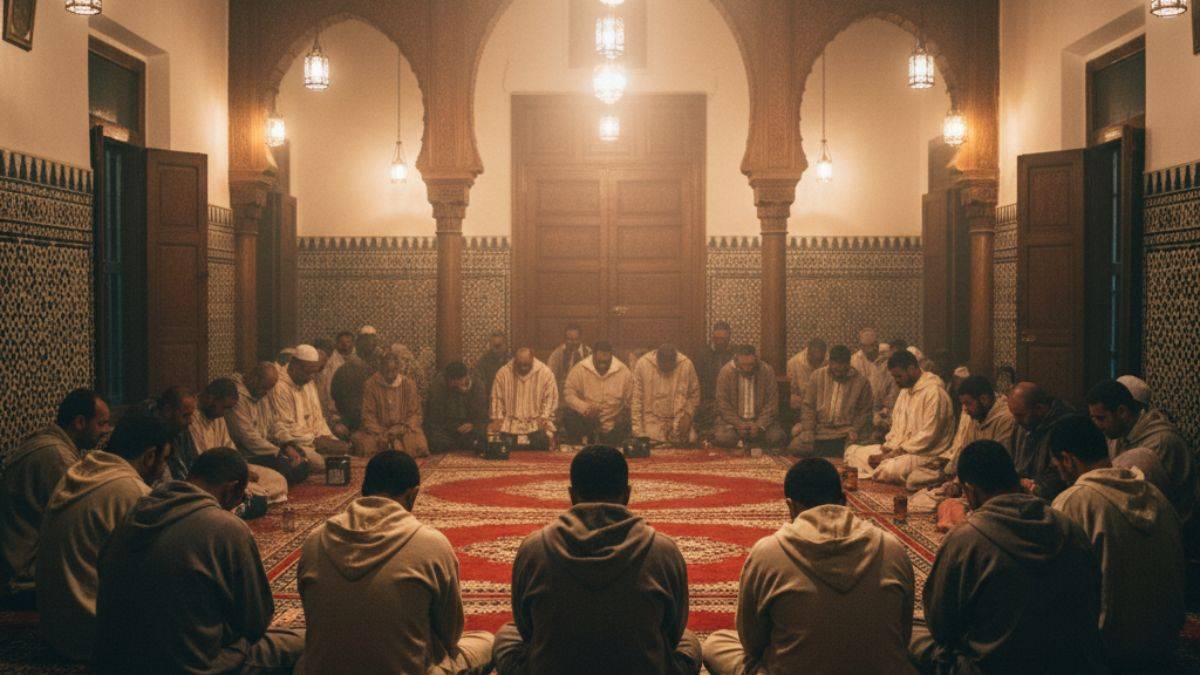
Before discussing protocol, understanding the nature of zawiyas helps explain why certain behaviors matter. A zawiya functions as Sufi lodge, combining elements of mosque, community center, and spiritual training ground. The word derives from an Arabic root meaning corner or angle, suggesting a quiet space set apart from ordinary life.
Zawiyas center on a particular Sufi order or tariqa, each with lineage tracing back through centuries of masters to the Prophet Muhammad. The zawiya serves as physical anchor for the tariqa’s practices and community. Men gather there for dhikr sessions, religious instruction, and communal fellowship. Some zawiyas include residences for traveling Sufis or students engaged in intensive spiritual training.
The space itself carries sacred quality. Years of devotional practice saturate the walls with spiritual energy that sensitive visitors can feel immediately upon entering. This isn’t metaphor repeated focused intention in a space creates palpable atmosphere. You don’t need to believe in supernatural forces to recognize that a room where people have prayed together weekly for decades feels different from a conference room or shopping mall.
Before You Go: Self-Assessment
Not every visitor belongs in every zawiya. Honest self-assessment before you go prevents situations where your presence disrupts the practice or creates discomfort for regular participants. Ask yourself why you want to attend. Genuine interest in understanding Moroccan spiritual traditions represents valid motivation. Curiosity about Sufi practices and sacred music justifies respectful observation. Seeking spiritual experiences that might resonate with your own path makes sense.
Tourist box-checking does not. If you want to say you witnessed a Sufi ceremony without caring about the actual experience, stay away. The practitioners deserve better. If you approach the session as entertainment or exotic spectacle, you’ve already missed the point. These gatherings serve devotional purposes, not cultural tourism.
Consider your comfort with sitting on floors for extended periods. Most zawiyas lack chairs. You’ll sit cross-legged or with legs folded to one side for two to three hours. Physical discomfort distracts you and disturbs others when you fidget constantly. If sitting on floors proves impossible, attend concerts in formal venues instead.
Assess your tolerance for sensory intensity. The collective chanting can grow quite loud. Incense smoke fills the air. Bodies press close in crowded rooms. If claustrophobia, sensory processing issues, or general discomfort with intensity affects you, consider whether pushing through serves anyone. No shame exists in recognizing your limits.
Dress Code: Non-Negotiable Basics
Conservative dress matters significantly in zawiya contexts. This isn’t suggestion but requirement. For men, long pants and covered shoulders represent the absolute minimum. Jeans work fine if they’re not ripped or excessively casual. Button-down shirts, t-shirts with sleeves, traditional djellabas all acceptable. Shorts, tank tops, sleeveless shirts violate basic respect.
Women face stricter expectations. Shoulders, chest, and legs to at least below the knee must be covered. Many women bring a large scarf for adjusting coverage as situations require. Long skirts or loose pants work well. High necklines avoid issues. Some zawiyas expect head covering for women, others don’t. When uncertain, bring a scarf you can use if needed.
Footwear barely matters since you’ll remove it at the entrance anyway. Wear shoes easy to slip on and off. The pile of shoes outside the zawiya entrance tells you much about attendance that evening. Add yours neatly to the collection rather than leaving them where people will trip.
Avoid clothing with prominent branding, political slogans, or imagery that might offend. Plain, modest, clean clothing shows respect. You’re entering someone’s sacred space. Dress like you’re meeting their grandmother for the first time respectful, appropriate, thoughtful about impression.
Arrival and Entry
Arrive slightly before the stated start time if one was given. Moroccan time operates flexibly, so don’t panic if you’re a few minutes late, but arriving egregiously late disrupts sessions already underway. The dhikr might begin gradually with people arriving over half an hour, or it might start promptly when the muqaddem arrives.
Approach the entrance quietly. Some zawiyas have obvious main doors facing streets or squares. Others hide behind modest portals in residential neighborhoods. When you find the entrance, pause. Remove your shoes before stepping inside. Place them neatly where others have left theirs.
If someone greets you at the entrance, respond appropriately. “As-salamu alaykum” (peace be upon you) represents the standard Muslim greeting. The response is “Wa alaykumu s-salam” (and upon you be peace). If Arabic feels uncomfortable, a respectful nod and quiet greeting in your language works. Your demeanor matters more than perfect Arabic pronunciation.
Let your host or greeters indicate where you should sit. Don’t simply choose the most convenient spot. The zawiya has spatial logic positions of honor, places for regular members, areas suitable for visitors. Accept placement graciously even if it means sitting in back corners or near doorways. You’re a guest. You sit where guests belong.
Sitting Protocol and Body Language
Once seated, arrange yourself appropriately. Sit cross-legged if comfortable, or with legs folded to one side. The critical rule: never point the soles of your feet toward other people or toward the center of the circle. Soles carry connotations of dirtiness and disrespect. Keeping them turned away from others represents basic courtesy.
Maintain upright posture suggesting attention and respect. Slouching communicates disinterest. Sitting bolt upright communicates tension. Find natural middle ground present, attentive, relaxed but focused. Your body language speaks volumes in contexts where verbal communication might be minimal.
Keep hands in neutral positions resting on knees, folded in lap, whatever feels natural without fidgeting. Avoid crossing arms defensively across your chest. Don’t play with phones, cameras, watches, or other objects. Your attention should rest on the unfolding practice, not on distractions you brought with you.
If you need to adjust position because legs fall asleep or discomfort grows unbearable, move slowly and minimally. Wait for transition points in the dhikr rather than shifting during intense moments. Small adjustments prove less disruptive than sudden major movements.
During the Dhikr: Participation and Observation
When the dhikr begins, several options exist for your participation. You can join the chanting softly if you feel moved to do so. You can maintain silence and simply witness. Both approaches have validity. What matters is genuine presence rather than performance of participation.
If you choose to join the chanting, listen first to understand the melody and rhythm. Don’t sing loudly or attempt to lead. Your voice should blend into the collective texture, not stand out. The Arabic pronunciation matters less than sincere intention. Do your best with the sounds. The practitioners understand you’re learning.
If you maintain silence, avoid the appearance of judgment or detachment. Your facial expression and posture should communicate respectful witness rather than anthropological study. You’re not analyzing specimens. You’re sharing space with human beings engaged in practice they hold sacred.
Photography during dhikr represents complex territory. Some zawiyas prohibit it entirely. Others allow discrete shooting without flash. The safest approach: don’t photograph unless explicitly told permission exists. Even then, consider whether documentation serves the moment or diminishes it. Sometimes the most respectful choice involves putting the camera away and simply being present.
Never record video or audio without clear permission. The voices and images of people in prayer carry privacy concerns beyond casual photography. What happens in zawiya contexts shouldn’t automatically become content for social media. If you do receive permission to photograph or record, do so minimally and thoughtfully.
Managing Your Own Responses
The dhikr might trigger unexpected responses in you. The repetitive chanting, restricted breathing, collective energy these create conditions for altered states. You might feel emotional, tearful, overwhelmed. You might experience physical sensations, temperature changes, energy moving through your body. These responses are normal.
If emotion arises, allow it without making spectacle. Quiet tears are fine. Sobbing that disrupts others requires you to step outside briefly. If you need to leave the space for any reason—bathroom, overwhelming emotion, physical discomfort do so quietly during transitional moments rather than during intense peaks.
Some visitors report experiencing trance-like states during dhikr even without intending to participate fully. The music works on consciousness whether you consciously engage or not. If you find yourself entering altered states, maintain awareness of your body and surroundings. Ground yourself if necessary by focusing on breath or physical sensations.
Don’t perform spiritual experiences for the benefit of regular participants. Exaggerated swaying, loud vocalizations, dramatic displays of ecstasy these behaviors draw attention inappropriately. If genuine experience moves through you, allow it naturally without amplification. The practitioners can distinguish authentic states from performance.
After the Session: Reentry and Departure
When the dhikr concludes, silence typically settles over the space for a few moments before conversation resumes. Respect that transitional silence. Don’t immediately start talking or gathering your belongings. Allow the energy to settle naturally.
Tea and dates often appear after sessions. Accepting offered hospitality shows good manners unless dietary restrictions prevent it. The post-session conversation provides opportunity for connection with regular participants. This is appropriate time for respectful questions about the practice, the tariqa, or recommendations for other musical experiences in Tangier.
If someone speaks to you, engage genuinely. Practice your Arabic greetings. Express appreciation for being welcomed. Ask thoughtful questions demonstrating you understand the sacred nature of what you witnessed. Avoid treating people as information sources to be mined for travel blog content.
When preparing to leave, thank your hosts explicitly. “Shukran” (thank you) represents basic courtesy. “Baraka Allahu fik” (may God bless you) expresses deeper appreciation appropriate to spiritual contexts. A respectful nod to the muqaddem acknowledges his role in leading the session.
Retrieve your shoes quietly. Don’t linger at the entrance blocking others. Once outside, take time to process the experience before rushing to the next destination. The dhikr can leave you in altered state requiring reentry into ordinary consciousness. Walking slowly through the medina, sitting in a quiet café, allowing integration these practices honor what you received.
Building Ongoing Relationships
If you plan multiple visits to Tangier, building relationships with specific zawiyas enriches your experience enormously. Regular attendance at the same zawiya allows practitioners to recognize you, trust your intentions, and welcome you more deeply into the community.
Bring small appropriate gifts on subsequent visits dates, nuts, tea, nothing expensive or elaborate. The gesture communicates appreciation without being transactional. Don’t treat the zawiya as service you’re purchasing but as community you’re honored to witness.
Learn people’s names. Remember faces. Ask about family members mentioned in previous conversations. These human connections transform you from tourist observer into someone approaching genuine relationship with the community. That shift opens doors no amount of research or proper protocol can access.
Consider whether you might contribute something valuable to the zawiya beyond passive observation. Perhaps you have skills to offer help with translation, assistance with technology, connections that might benefit the community. Approach these possibilities carefully without imposing, but genuine reciprocity strengthens relationships.
When You’re Not Welcome
Sometimes despite best intentions and perfect protocol, you’re not welcome. The muqaddem might politely suggest you attend a different zawiya. Regular members might make clear through body language that your presence creates discomfort. These responses don’t necessarily reflect personal rejection but rather protection of sacred space.
If you sense you’re not welcome, leave graciously without demanding explanation. Not every spiritual gathering suits every visitor. Some zawiyas maintain stronger boundaries than others. Some nights carry particular significance requiring privacy. Accept these boundaries with humility.
Don’t take rejection as judgment of your worthiness or character. The practitioners protect something precious. Their caution reflects healthy boundaries, not narrowness. Plenty of other musical experiences in Tangier welcome visitors enthusiastically. Seek those rather than forcing entry where you’re not wanted.
The Gift of Access
When zawiyas do welcome you, recognize the generosity involved. These communities share something intimate and sacred with outsiders who often understand little of its significance. That openness represents trust you should honor through impeccable behavior and genuine appreciation.
The protocols outlined here aren’t arbitrary restrictions but gateways to meaningful encounter. Following them signals to practitioners that you recognize the sacred nature of what they’re sharing. The dress code, the sitting positions, the silence during prayer all communicate respect that allows genuine exchange to happen.
What you receive from these experiences depends largely on what you bring. Approach with humility, openness, and willingness to be changed by what you witness. The ancient rhythms continue meeting modern souls in these tiled courtyards where voices rise together in remembrance. When you enter those spaces with proper understanding and conduct, you become part of that meeting rather than remaining outside as mere observer.
For travelers wanting to know which specific venues in Tangier offer the most accessible entry points into these sacred traditions, understanding where to go and what to expect at each location helps you make informed choices about which experiences align best with your interests and comfort level. The protocols remain constant, but the spaces themselves each offer distinct flavors of Tangier’s rich spiritual musical heritage.
If you’re seeking the next step after understanding proper zawiya protocol, explore our complete venue guide: Where to Hear Sacred Music in Tangier: Complete Guide. It lists real locations, what to expect, accessibility notes, music styles, and practical entry tips to help you choose meaningful musical experiences across the city.
For a broader context on Tangier’s spiritual soundscape, visit the main article here: Morocco’s Sacred Music Festivals: Where Ancient Rhythms Meet Modern Souls.