
I came to Dakhla expecting silence.
What I found was conversation with the wind, the waves, and a stretch of sand so vast it seemed to breathe.
Most travelers see Dakhla’s beach as a backdrop: a place for photos, kitesurfing, or sunset cocktails. But step beyond the resorts, walk past the last café, and you enter a different world one where the shore isn’t scenery, but companion. Here, the sand doesn’t just lie still. It shifts, sighs, and sometimes, if you’re quiet enough, walks with you.
My first morning alone on the bay, I walked without destination. No playlist, no goal, no distance to cover. Just feet on wet sand, eyes on the horizon, breath syncing with the pull of the tide. After twenty minutes, something shifted. The usual noise in my head the lists, the worries, the endless scroll of “what’s next” began to quiet. Not because I forced it, but because the space itself demanded presence.
In California, I’d treated solitude as escape. Here, it felt like return.
The Bay That Holds Your Steps
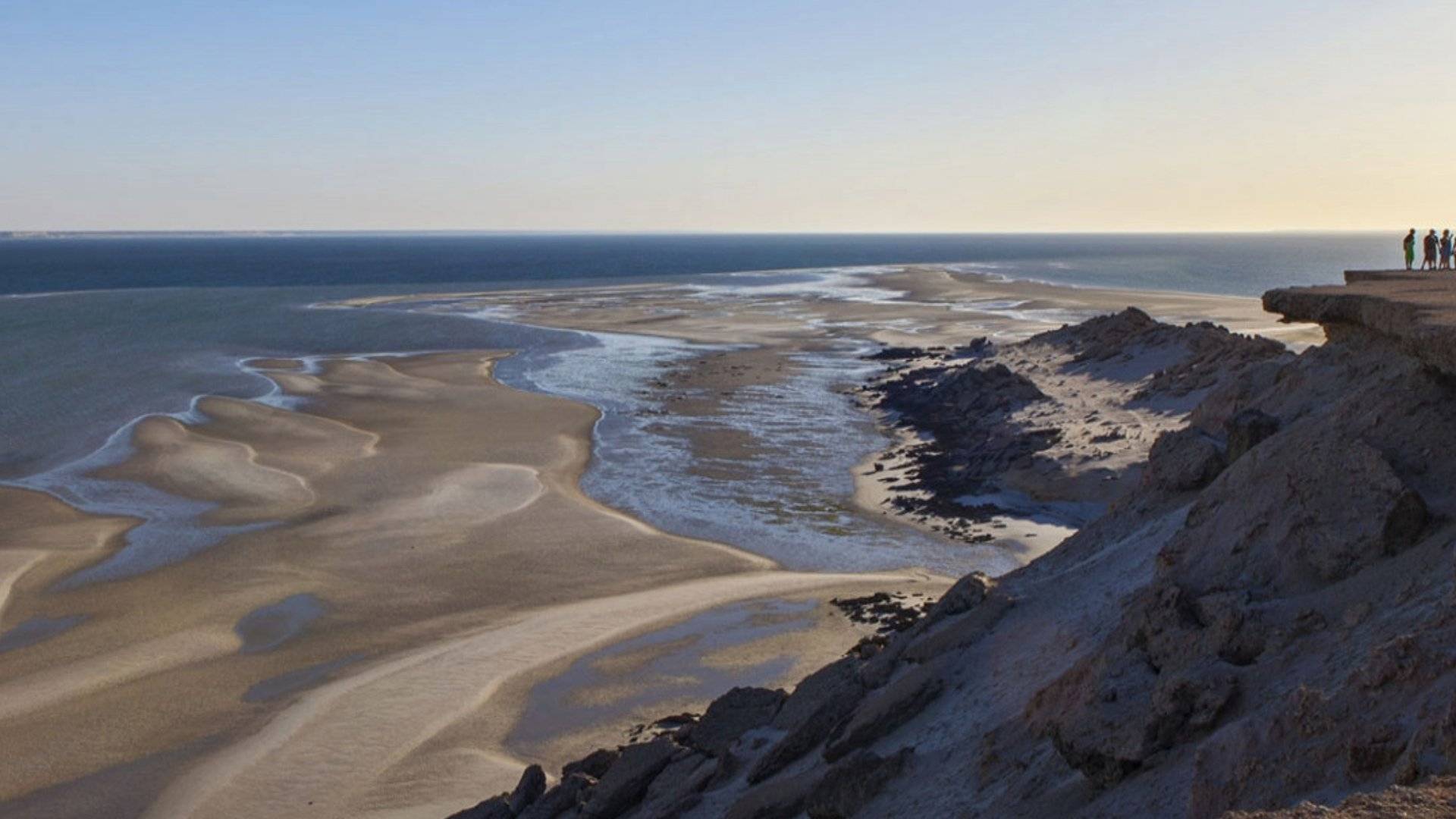
Dakhla Bay stretches over fifty kilometers of uninterrupted shore white sand, turquoise shallows, and dunes rising like guardians in the distance. But its true gift isn’t beauty. It’s emptiness. Not the hollow kind, but the generous kind the kind that makes room for you to be exactly as you are, without performance or explanation.
I met an elder named Lalla Zineb who walks this shore every dawn, rain or shine. “The bay doesn’t ask who you are,” she told me, her scarf fluttering in the wind. “It only asks if you’re willing to be here.” She showed me how to read the sand: smooth patches mean calm seas; rippled lines signal wind from the south; footprints erased by waves are reminders that some things aren’t meant to last.
One afternoon, I walked beside her in silence for nearly an hour. No advice. No questions. Just two bodies moving with the rhythm of the tide. When we parted, she pressed a small shell into my palm. “For when you forget how to listen,” she said.
That shell sits on my desk now. Not as souvenir, but as anchor.
For those who’ve mistaken solitude for loneliness, Dakhla’s Pulse: Traditions Where the Sahara Greets the Atlantic reveals how an entire region turns empty space into sanctuary not by filling it, but by letting it hold what words cannot.
Walking Without Destination
In Dakhla, walking isn’t exercise. It’s conversation.
There are no marked trails, no fitness trackers, no “steps to complete.” You simply step onto the sand and let the shore guide you sometimes toward the dunes, sometimes along the water’s edge, sometimes in circles that make no sense to a map but feel right to the body.
I learned this from Youssef, a former fisherman who now walks the bay after losing his boat in a storm. “The sea took my boat,” he said, “but it gave me back my feet.” Every morning, he walks for hours, not to burn calories, but to remember how to be in his body without agenda. “When you walk without destination,” he told me, “the world speaks.”
And it does. The crunch of shells underfoot. The cry of gulls overhead. The sudden stillness when the wind drops. These aren’t distractions. They’re invitations to slow down, to notice, to let go of the need to be somewhere else.
One day, I followed him without speaking. We walked for three hours, sometimes side by side, sometimes yards apart. Not once did he check his phone or glance at the sun to mark time. When I asked how he knew when to turn back, he smiled. “The shore tells me. When my shadow grows long, it’s time to return.”
In a world that measures worth by output, this kind of walking feels like rebellion. Not loud. Not political. Just deeply, quietly human.
The Silence That Speaks
People assume silence is empty. In Dakhla, it’s the opposite.
The silence here is thick with presence the whisper of wind over dunes, the distant crash of waves on hidden reefs, the soft sigh of sand shifting underfoot. It’s not the absence of sound, but the presence of space. And in that space, something remarkable happens: your own noise begins to settle.
I used to fill every quiet moment with podcasts, music, or planning. But on the bay, there’s nothing to fill. Just you, the horizon, and the slow rhythm of your breath. At first, it felt uncomfortable like standing naked in a room full of mirrors. But after a while, the discomfort gave way to clarity. Without distractions, I could finally hear what I’d been avoiding: grief I hadn’t named, joy I’d dismissed, questions I’d buried under busyness.
Lalla Zineb calls this “listening with your skin.” “Your ears hear words,” she said. “But your skin hears truth.” She taught me to sit on the sand, close my eyes, and let the wind move through me not as weather, but as messenger. “It carries what you need to know,” she said. “If you’re still enough to receive it.”
This isn’t meditation as technique. It’s attention as belonging. And in that belonging, healing begins not by fixing yourself, but by remembering you were never broken to begin with.
When the Horizon Walks Back
After a week of walking the bay alone, something shifted.
I stopped feeling like a visitor observing a landscape. The shore no longer felt “out there.” It began to feel like an extension of my own breath rising with the tide, sighing with the wind, holding me in its vast, quiet embrace.
One morning, as I walked near dawn, I saw a figure in the distance a woman in a blue headscarf, moving slowly along the water’s edge. As I drew closer, I recognized Lalla Zineb. She didn’t greet me with words. She simply slowed her pace until we walked side by side, our steps falling into rhythm without effort. For nearly an hour, we said nothing. Yet I’ve rarely felt so deeply understood.
Later, she told me, “The horizon doesn’t just receive you. It walks back toward you if you’re willing to meet it halfway.” In Dakhla, solitude isn’t isolation. It’s preparation. A way of clearing the noise so you can truly see the other when they appear. And when you do, no introduction is needed. Presence is enough.
This is the quiet magic of the bay: it doesn’t just heal you in isolation. It prepares you for connection. By emptying you of pretense, it makes space for real encounter with others, with yourself, with the living world.
If your spirit has been worn thin by constant interaction that leaves you lonelier than before, No Clocks in the Dunes will carry you deeper into Dakhla’s timeless wisdom where time isn’t measured in hours, but in the movement of stars, the direction of wind, and the slow patience of those who know that some things cannot be rushed.
The Shore That Remembers You
On my last morning in Dakhla, I walked the bay one final time.
No destination. No expectations. Just feet on sand, eyes on the water, breath syncing with the tide. As I reached a quiet cove where the dunes curve like arms around the sea, I stopped and sat. The wind was light, the waves gentle. For the first time in years, I felt no urge to document, capture, or share. I simply was.
And in that being, something returned to me not a memory, but a feeling: the certainty that I belong here, not because I’ve earned it, but because I’m part of this world. The same salt in the air is in my blood. The same rhythm that moves the tide moves through my chest. The shore didn’t ask me to be anything other than what I am a tired man from California, carrying grief and wonder in equal measure.
When I stood to leave, I noticed my footprints already fading in the wet sand, erased by the next wave. It didn’t feel like loss. It felt like grace. Some things aren’t meant to last. They’re meant to pass through like wind, like breath, like presence.
Back home, I don’t have fifty kilometers of empty beach. But sometimes, when the noise grows too loud, I close my eyes and remember the weight of sand under my soles, the smell of salt on the wind, the way the horizon seemed to breathe with me. And I walk not to get anywhere, but to remember that I’m already here.
Because in Dakhla, the shore doesn’t just hold your steps.
It walks with you long after you’ve left.