
I lost my watch on my third day in Dakhla.
Not misplaced. Not stolen. I took it off and left it on a windowsill in my rented room, next to a half-empty bottle of water and a notebook filled with questions I hadn’t yet learned how to ask. In California, time was a master dictating when to wake, work, eat, sleep, even feel. My days were sliced into blocks: thirty minutes for email, an hour for writing, fifteen for “mindful breathing” (as if mindfulness could be scheduled). But here, time wasn’t something you owned, controlled, or optimized. It was something you entered like the tide, like the wind, like breath returning after holding it too long.
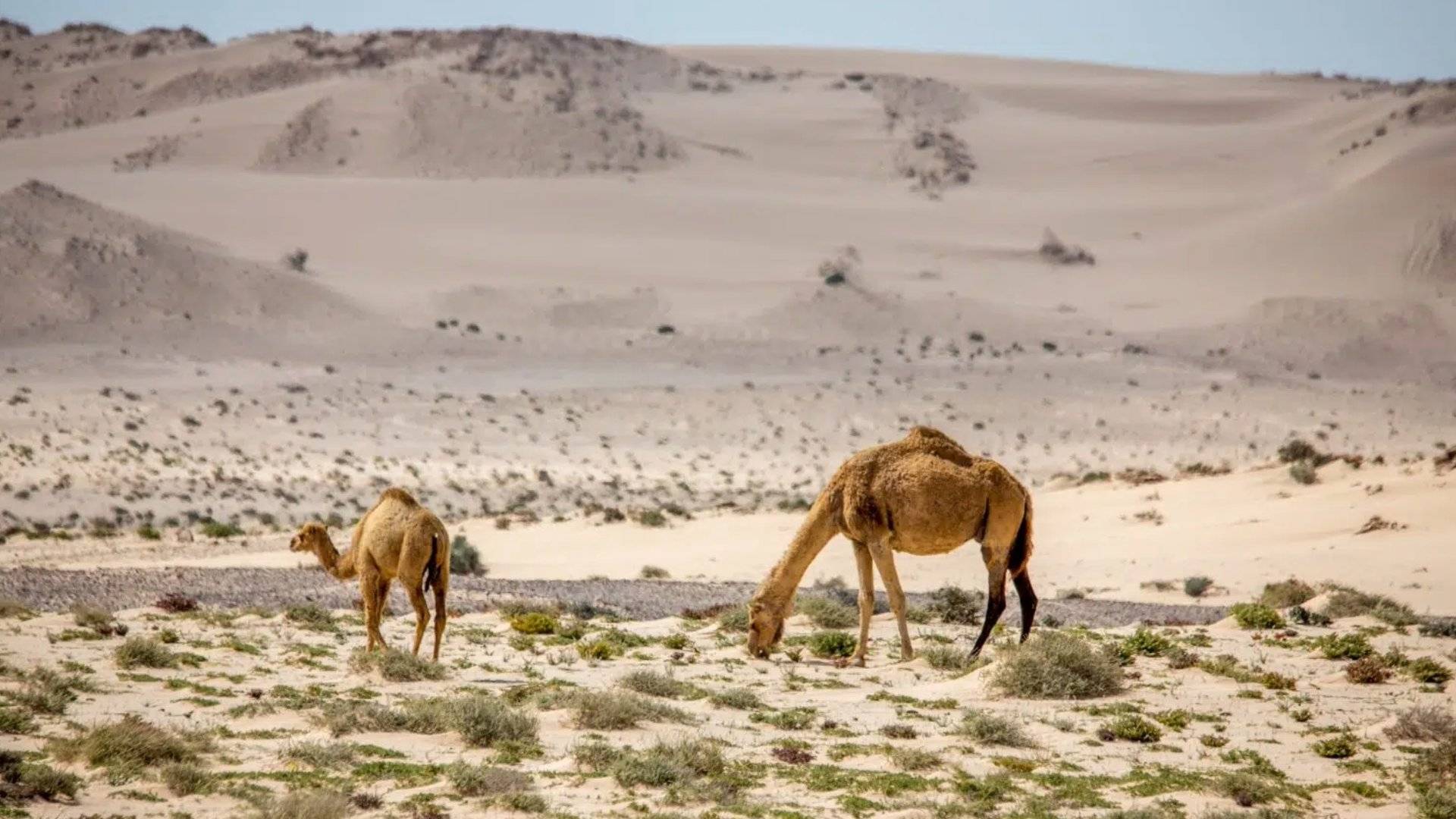
There are no clocks in the dunes. No ticking. No deadlines etched in digital ink. Just the slow arc of the sun across a boundless sky, the shifting color of sand from gold to rose to deep violet, and the quiet rhythm of bodies that know when to rest without being told, when to move without being prompted, when to speak without being asked.
My first morning without a watch, I panicked. How would I know when to meet Youssef by the port? When to return for tea with Lalla Zineb? What if I missed something important? But Youssef just laughed, his eyes crinkling at the corners. “The sun will tell you,” he said, adjusting the strap of his net bag. “Your hunger will tell you. Your shadow will tell you.” And he was right. By noon, my stomach growled with a clarity no alarm could match. By late afternoon, my shadow stretched long and thin across the sand, pointing east like a compass needle. Time hadn’t disappeared it had simply returned to its source, flowing not through circuits, but through skin, sky, and sea.
Reading Time in the Sand
In Dakhla, time isn’t measured in minutes, but in movements subtle, living shifts that only presence can detect.
Elders read the day not by numbers, but by the position of the sun over specific dunes. “When it touches the tip of El-Hajj,” an old woman once told me, pointing to a distant ridge, “it’s time to bring the water jars inside.” Fishermen know it’s time to cast nets not by an alarm, but by the way light fractures on the water at dawn silver for sardines, green for calm, gray for caution. Women grinding grain with stone querns pause not when a timer buzzes, but when their arms grow heavy, their breath deepens, and their rhythm slows a natural punctuation mark written in muscle and bone.
I met a man named Sidi Ahmed who hasn’t worn a watch in forty years, not since his father told him, “A clock measures absence. The sun measures presence.” He lives in a small house near the edge of town, where the paved road gives way to sand. Every morning, he sits under a tamarisk tree, sipping mint tea from a small glass, watching the light change. “Clocks cut time into pieces,” he told me one afternoon, his voice as steady as the breeze. “But time is whole. Like the sea. You don’t measure the ocean in cups.”
He showed me how to tell midday: when your shadow disappears completely beneath your feet, pooling like water around your sandals. How to know evening is near: not by darkness, but by the moment the sand cools enough to sit on barefoot without burning. How to sense night: not by the absence of light, but by the first star appearing over the western ridge a signal that goats should be penned, fires lit, stories begun.
“This is how my grandfather lived,” he said, pouring me another glass. “And his grandfather before him. We don’t chase time. We walk with it, like a friend who knows when to speak and when to be silent.”
For those who’ve felt crushed by schedules that leave no room for breath, for wonder, for simply being, Dakhla’s Pulse: Traditions Where the Sahara Greets the Atlantic reveals how an entire region lives by a different rhythm one where healing flows not from productivity, but from presence aligned with sky, sea, and sand.
The Tide as Timekeeper
The sea, not the clock, marks the hours in Dakhla.
Fishermen don’t consult watches or weather apps before heading out they stand on the shore and watch the water, reading its surface like a sacred text. A silver shimmer near the surface means sardines are feeding in schools; that’s morning. A deep, clear green hue signals calm seas and good visibility; that’s midday. When the waves turn choppy and gray, carrying foam like scattered lace, it’s time to haul nets and head home long before sunset, long before any digital alert would sound.
I spent a full morning with Youssef, the same fisherman who once taught me that fishing begins long before the net hits the water. He didn’t check his phone once not for time, not for messages, not even for the weather. Instead, he stood on the shore, eyes fixed on the bay, reading the tide like a language only his bones understood. “The sea doesn’t rush,” he said, his voice low and steady. “Why should we?”
Later, I watched him mend his net in silence on the beach, his hands moving with the same rhythm as the waves lapping nearby pull, knot, pull, knot. No hurry. No playlist. No internal monologue about efficiency. Just presence, woven into every thread. When I asked how he knew when to stop for the day, he pointed to the sun, now resting on the crest of a distant dune. “When it touches that dune,” he said, “I go home. Not because I’m tired. Because the light says it’s time.”
This isn’t laziness. It’s attunement the kind that comes from generations of listening, not commanding. And in a world that equates busyness with worth, this kind of listening feels like quiet rebellion. Not loud. Not angry. Just deeply, stubbornly human.
When the Stars Return
Night in Dakhla doesn’t arrive with a switch. It unfolds slowly, gently, like a blanket pulled over the dunes by unseen hands. And with it come the stars, not as decoration for Instagram, but as guides written in light.
I sat one evening with Lalla Zineb, the same woman who once gave me a shell to remember how to listen. We were on her rooftop, the Atlantic a soft murmur in the distance. She pointed to a cluster of stars low on the western horizon, bright and steady. “That’s Al-Jadi,” she said. “When it rises just above the ridge, we know it’s time to bring the goats in from the far pasture.” She explained that each season has its own celestial markers some signal the coming of rare rains, others mark the return of migratory birds from Europe, still others tell when the dates on her palms are ripe for harvest.
“No clock can teach you this,” she said, stirring mint into a small pot of tea over glowing coals. “Only stillness can. You have to sit long enough for the sky to speak.”
I thought of my life in California the blue glow of screens at midnight, alarms interrupting dreams with jarring beeps, the constant pressure to “optimize” every hour, to fill every gap with content, consumption, or self-improvement. Here, time wasn’t something to manage, control, or extract value from. It was something to receive with open hands, open eyes, open heart. And in that receiving, I began to feel something I hadn’t in years: rest that wasn’t earned through exhaustion, but given freely, like air, like light, like tide.
This is the quiet wisdom of the dunes: they don’t ask you to be efficient. They ask you to be present. And presence, it turns out, is the deepest form of healing the kind no app, retreat, or productivity hack can replicate.
The Body That Knows When to Rest
In Dakhla, fatigue isn’t ignored, medicated, or pushed through with caffeine and willpower. It’s honored as a message, not a failure.
No one praises “grinding” or “hustle.” Instead, when the body says “enough,” people listen. I watched a young boy, no older than eight, stop mid-game of tag to sit in the shade of a tamarisk tree, not because an adult told him to, but because his breath had grown short and his cheeks flushed. An elder woman paused while weaving a rug to close her eyes for ten minutes, her hands resting in her lap, not out of laziness, but because her fingers needed stillness to remember the next pattern. Even meals aren’t scheduled by the clock they happen when hunger rises, shared without rush, often stretching into hours of quiet conversation, laughter, and silence that needs no filling.
Sidi Ahmed put it simply one afternoon, as we sat watching the sun dip toward the dunes: “Your body is your first clock. If you stop listening to it, you don’t gain time you lose it. You lose yourself.”
One afternoon, overwhelmed by the heat and the profound silence of the desert, I lay down on a woven mat in his courtyard. I expected him to suggest I “get back to work” or “make the most of the daylight.” Instead, he brought me a glass of cool water infused with orange blossom and said, “Rest is part of the rhythm. Even the tide pulls back. Even the wind sleeps.”
That moment changed me. In California, rest was guilt stolen time, wasted potential, a sign of weakness. Here, it was sacred a necessary pause that made the next step possible, the next word clear, the next breath full. And in that shift, I began to heal not by doing more, but by allowing myself to be held by time, rather than chased by it.
If your spirit has been frayed by the tyranny of calendars, notifications, and the endless demand to “be productive,” Before the Net Hits the Water will carry you back to Dakhla’s first and most essential lesson: that true readiness begins not with action, but with stillness and that some of the most important work happens long before anything is done, in the quiet space between intention and act.
Time That Walks With You
On my last evening in Dakhla, I walked the edge of the dunes as the sun dipped below the horizon, painting the sky in hues of amber and violet. No watch. No plan. No destination. Just the cool, fine sand under my bare feet and the slow fade of light across the endless expanse. For the first time in years, I didn’t wonder what came next. I didn’t calculate how much I’d “accomplished” that day. I simply was breathing, walking, feeling the wind on my skin like a familiar hand.
And in that being, I understood: time in Dakhla isn’t something you spend, save, or waste. It’s something you live. Not as a resource to deplete, but as a companion to walk with through tide, through stars, through silence, through the quiet certainty that you are exactly where you need to be.
Back in Los Angeles, I never put my watch back on. Instead, I’ve learned to read my own rhythms to rest when my eyes grow heavy, to write when my hands feel ready, to pause when the world grows loud. The dunes didn’t give me more time. They gave me back time itself whole, unhurried, and deeply human.
Because in Dakhla, there are no clocks in the dunes.
Only time that walks with you, if you’re willing to slow down enough to notice.