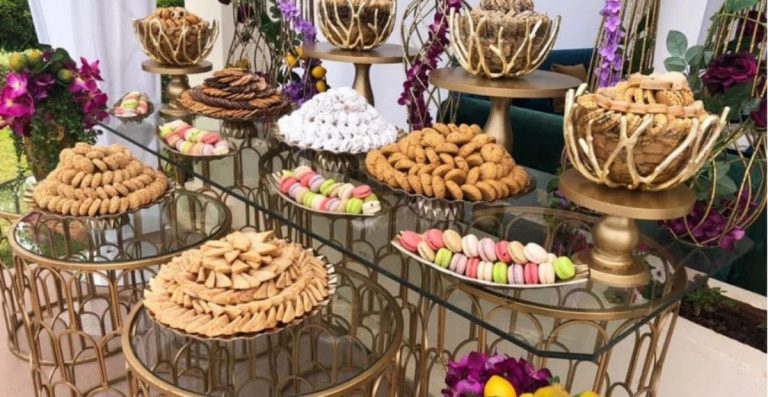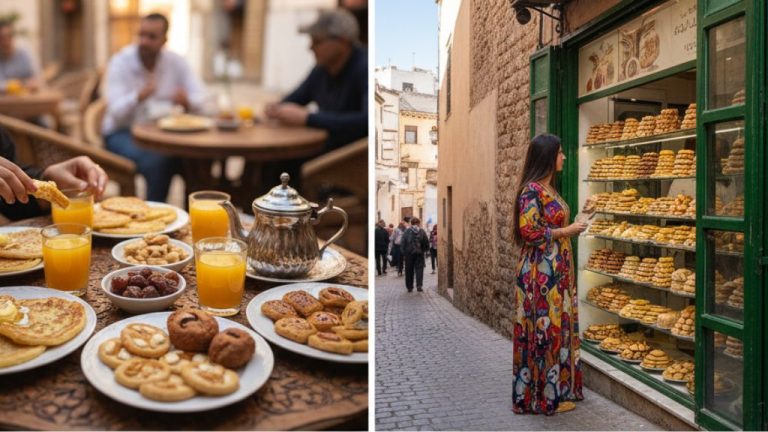

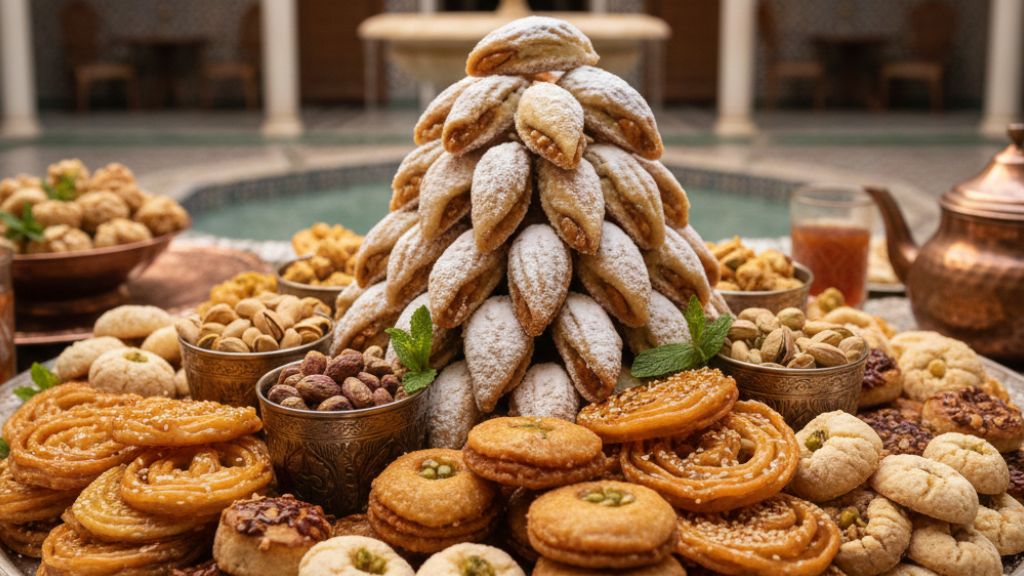
Tangier is the perfect place to discover, in a single city, a wide variety of Moroccan pastries, from the most classic to the most refined. As you wander between the medina, residential neighbourhoods and modern pastry shops, you’ll come across trays of gazelle horns, honey briouats, ghribia, fekkas, chebakia and almond shortbread, each with its own signature texture and flavour. In this section, you’ll go through the sweet specialties you absolutely need to try during your stay, with for each pastry what makes it unique, when to enjoy it and where you’re most likely to find it in Tangier.
Gazelle horns: the almond‑filled classic
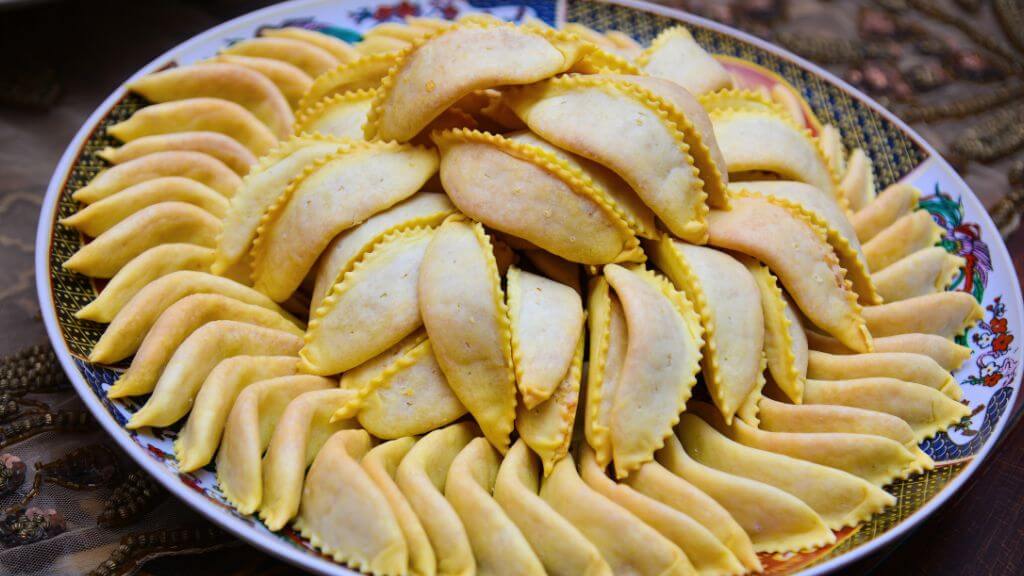
Among all the Moroccan pastries you can taste in Tangier, the gazelle horn is probably the most iconic. This small, delicate crescent is filled with an almond paste flavoured with orange blossom water, wrapped in a very thin dough, lightly baked until just golden, and sometimes dusted with icing sugar for extra indulgence. Served with mint tea, it perfectly embodies both the refinement of Moroccan pâtisserie and the know‑how of Tangier’s artisans, who work the texture and shape with great care to achieve that famous balance between soft and melt‑in‑the‑mouth.
Chebakia: the honey‑soaked star
It’s hard to talk about Moroccan pastries without mentioning chebakia, a generously honey‑soaked pastry that locals in Tangier particularly enjoy, especially during Ramadan. It is made from a spiced dough (with anise, cinnamon, sesame seeds and sometimes almonds), shaped into a flower, then fried and dipped in warm honey, which gives it a texture that is both crisp and tender. In Tangier, you’ll find it in traditional pastry shops as well as on stalls near markets, often sold in large boxes that are perfect for sharing or taking home after your trip.
Sweet briouats: crisp and soft at the same time
Sweet briouats are one of those small bites that are almost impossible to stop eating, especially in Tangier where they are often particularly well made. They are triangles or cigar‑shaped pieces of thin pastry (brick or warqa) filled with an almond mixture, sometimes scented with orange blossom water, then fried and coated in warm honey, creating an irresistible contrast between a crispy exterior and a soft interior. Served with mint tea or at the end of a meal, they are perfect for discovering Moroccan sweetness in “bite‑size” format, and you’ll find them both in traditional pastry shops and in takeaway assortments.
Ghribia and fekkas: perfect little biscuits with tea
In Tangier, ghribia and fekkas are the ideal companions for a good glass of mint tea, whether in the late afternoon or during a visit to someone’s home. Ghribia is a shortbread‑style biscuit, usually made with flour, sugar and oil or butter, sometimes enriched with almonds or peanuts, and it literally melts in your mouth. Fekkas look like small slices of twice‑baked biscuits, crunchy and fragrant, often filled with almonds, raisins or sesame seeds. Sold by weight in pastry shops and enjoyed on a daily basis, these two classics let you discover the “simpler” but just as addictive side of Moroccan pâtisserie.
Sweet msemen and baghrir for breakfast
In Tangier, it’s hard to imagine breakfast without msemen or baghrir served piping hot, with honey and melted butter. Msemen is a flaky, layered crêpe, slightly crispy on the outside and soft on the inside, often folded and generously drizzled with honey scented with orange blossom water. Baghrir, known as the “thousand‑hole crêpe”, is lighter and spongier: its small holes hold the butter‑and‑honey mixture perfectly, making it an ultra‑indulgent way to start the day. By choosing a café or pastry shop frequented by locals, you’ll be able to taste these two classics in their most authentic version.
Milk pastilla and other typical Tangier desserts
If you want to end your meal on a light yet ultra‑gourmet note, milk pastilla is one of the desserts you really shouldn’t miss in Tangier. It is made with thin, crispy layers of pastry stacked with a milk cream flavoured with orange blossom water and sprinkled with chopped almonds, offering a play of textures between crunch and softness that appeals to both locals and visitors. Alongside this classic, you can also discover other typical sweets served at the end of a meal or in the evening, such as different kinds of milk desserts, almond‑ and pistachio‑based treats, and some specialties specific to northern Morocco, often featured in traditional restaurants and tea rooms across the city.