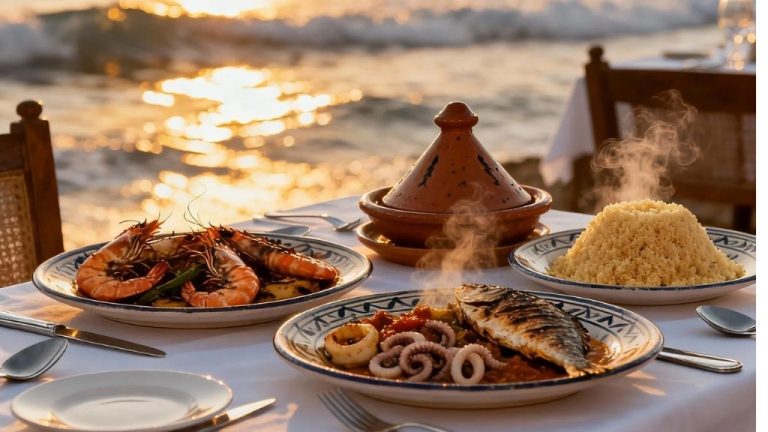

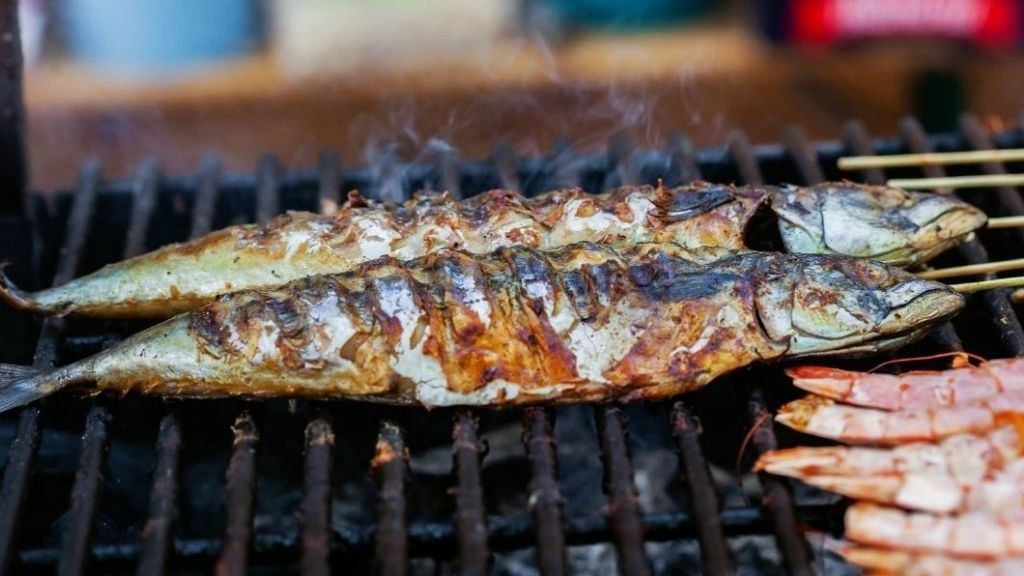
Walk along Agadir’s beachfront in the evening and you’ll smell charcoal grills cooking fresh fish seasoned simply with chermoula marinade. This green sauce of cilantro, parsley, garlic, cumin and lemon transforms fish without masking its natural flavor. The grilling technique keeps fish moist while adding subtle smokiness that works with rather than against the seafood’s inherent taste. These preparations represent coastal Moroccan cooking at its most essential, focusing on quality ingredients treated simply. The approach mirrors California’s best seafood restaurants except here it happens at casual beachside stands where dinner costs eight dollars instead of forty. Learning these techniques connects to Agadir’s philosophy about food and wellness where simplicity and freshness create better nutrition than elaborate preparations using inferior ingredients.
The grilling philosophy
Agadir’s fish grilling tradition emerged from practical necessity rather than culinary theory. Fishermen returning from sea wanted to eat their catch immediately using whatever resources were available on the beach. Charcoal fires, simple seasonings and direct heat produced excellent results without requiring kitchens or complex equipment. This straightforward approach persists because it works.The technique respects the fish rather than trying to transform it into something else. Fresh sardines taste like sardines, sea bass like sea bass. The seasonings enhance rather than disguise these natural flavors. This honesty about ingredients defines the entire coastal cooking style and explains why simple preparations here often surpass elaborate restaurant dishes made with inferior seafood.Speed matters in Agadir fish grilling. The fish cooks quickly over high heat, spending just minutes on the grill before reaching the table. This rapid cooking preserves moisture and prevents the rubbery texture that results from overcooking. The window between perfectly cooked and overdone measures in seconds rather than minutes.The communal nature of beach grilling creates social experiences around food. Groups gather at grills operated by vendors who cook fish to order while conversations flow and mint tea gets poured. The eating happens casually with minimal formality but maximum enjoyment. This relaxed approach to dining supports wellness by reducing stress around meals.
Charcoal fire basics
Charcoal produces intense heat that sears fish surfaces while the interior cooks through. The slight smokiness adds flavor dimension without overwhelming the seafood. Gas grills can approximate these results but charcoal delivers superior taste that justifies the extra effort. If you’re serious about grilling fish Moroccan-style, use real charcoal.Natural lump charcoal burns hotter and cleaner than briquettes which contain binders and fillers. The irregular chunks of hardwood charcoal create varying heat zones useful for managing cooking temperatures. They also produce less ash and fewer chemical flavors that can affect food. Spend the extra dollar per bag for quality charcoal.Building the fire properly means arranging coals for direct high heat. Pile them in a single layer covering the grill bottom without gaps. Light them using a chimney starter rather than lighter fluid which imparts petroleum flavors. Wait until the coals are covered with white ash before cooking. This indicates they’ve reached optimal temperature.The grill grate needs to be clean and well-oiled to prevent sticking. Scrub it with a wire brush while it’s hot, then use tongs to rub an oil-soaked paper towel across the grates. This thin oil layer creates a non-stick surface that allows fish to release cleanly when it’s ready to flip. Skipping this step guarantees frustration.
Managing heat involves adjusting vent openings and moving coals around. More oxygen means hotter fires while restricting airflow cools things down. Spreading coals creates moderate heat while concentrating them produces intense zones. Understanding these controls lets you cook different fish species optimally since they require different temperatures.
Essential chermoula marinade
Traditional chermoula combines fresh cilantro, parsley, garlic, cumin, paprika, lemon juice and olive or argan oil into a loose paste. The herbs should dominate with garlic and spices supporting rather than overwhelming. The consistency should be thick enough to cling to fish but loose enough to spread easily. Getting the balance right takes practice but the formula is forgiving.Use fresh herbs exclusively since dried versions lack the bright flavors that define chermoula. Wash cilantro and parsley thoroughly then dry them completely before chopping. Moisture dilutes the marinade and makes it watery. Chop herbs by hand rather than using a food processor which bruises them and creates bitter flavors.Garlic should be minced finely or crushed to release its oils. Too much raw garlic tastes harsh and burns easily on the grill. Three cloves for a large bunch of herbs provides enough garlic presence without overpowering everything else. Adjust according to your garlic tolerance but err on the side of less rather than more.Cumin gets toasted in a dry pan until fragrant then ground fresh. This step activates essential oils and develops deeper flavors than using pre-ground cumin. The toasting takes maybe two minutes and transforms the spice completely. Ground the toasted seeds in a mortar and pestle or spice grinder. The extra effort pays off in superior taste.Lemon juice should be freshly squeezed and added gradually until the marinade reaches desired consistency and tanginess. Start with the juice of one lemon per large bunch of herbs and increase if needed. The acid tenderizes fish surfaces while adding brightness that balances the herbs’ earthiness. Bottled lemon juice tastes flat and won’t deliver the same results.
Marinating times and techniques
Delicate fish like sole or small sardines need only fifteen to twenty minutes in chermoula. Longer marinating starts breaking down the flesh texture and can make fish mushy. The acids in lemon juice essentially begin cooking the fish chemically like ceviche. Brief contact time allows flavor penetration without texture degradation.Firmer fish such as sea bass, grouper or monkfish tolerate thirty to forty-five minutes of marinating. Their denser flesh can handle acid exposure without falling apart. These species also benefit from slightly longer flavor infusion time. Don’t exceed an hour even with firm fish since extended marinating creates problems.Apply chermoula generously to all surfaces including the cavity if cooking whole fish. Use your hands to massage the marinade into the flesh, ensuring even coverage. This physical contact helps you gauge the fish’s freshness and firmness while distributing seasonings effectively. Don’t be shy about getting hands dirty.Room temperature marinating works fine for the brief times involved. No need to refrigerate fish that will hit the grill within an hour. Bringing fish to room temperature before cooking helps it cook more evenly. Cold fish straight from refrigeration creates challenges with exterior overcooking before interiors finish.Reserve some unmarinated chermoula for serving alongside grilled fish. The fresh herbs and lemon brighten the finished dish while providing moisture for the cooked fish. Spoon it over grilled fish at the table or serve it separately for guests to add as desired. This double application maximizes chermoula’s impact.
Grilling whole small fish
Sardines require nothing more than a coating of oil, salt and maybe cumin before hitting the grill. The high oil content in sardines keeps them moist even over intense heat. Score the skin diagonally in a few places to help heat penetrate and create attractive grill marks. Don’t gut sardines before grilling since the innards add flavor and moisture.Place sardines perpendicular to grill grates so they don’t fall through. Arrange them tightly together so they support each other and are easier to flip. Cook about three minutes per side over high heat until the skin crisps and the flesh turns opaque. The meat should separate easily from bones when done.Medium fish like red mullet or small sea bass benefit from cavity stuffing. Fill the gut cavity with lemon slices, garlic and fresh herbs before grilling. These aromatics perfume the flesh from inside while protecting it from direct heat. The skin acts as natural protection preventing the exterior from drying before the interior cooks through.Score both sides of medium fish in two or three places cutting down to the bone. This helps heat penetrate thick parts near the backbone and creates channels for smoke and marinade to enter. The scoring also makes the fish easier to portion after cooking. Make diagonal cuts for visual appeal.
Flip whole fish only once using two spatulas if necessary to support the entire length. Attempting multiple flips causes the flesh to fall apart and stick to the grill. The fish is ready to flip when the skin releases cleanly from the grates. Forcing it prematurely tears the skin and ruins presentation.
Grilling fish fillets
Fillets cook faster than whole fish and require careful attention to prevent overcooking. Leave skin on if possible since it protects the flesh and adds flavor. Start skin-side down and leave it there for about three-quarters of total cooking time. The skin crisps beautifully when cooked properly.Don’t move fillets after placing them on the grill. The constant fiddling that some people do while grilling causes sticking and breaks up the fish. Let the fillets sit undisturbed until the skin releases naturally. This patience produces far better results than anxious manipulation.Thicker fillets can handle direct high heat while thin pieces need moderate temperatures or they’ll dry out before developing good color. Adjust your fire or move fish to cooler zones of the grill based on thickness. Thin fillets might benefit from a fish basket that makes flipping easier while protecting delicate flesh.
Check doneness by gently pressing the thickest part of the fillet. It should feel firm but still give slightly. Overcooked fish feels hard and springs back aggressively. The flesh should flake easily when prodded with a fork but still appear moist rather than dry. This judgment comes with practice.Remove fillets from heat slightly before they seem completely done since carryover cooking continues for a minute or two. Fish that looks perfect on the grill will be overcooked by the time it reaches the table. Pulling it a bit early ensures it arrives at the table at peak doneness.
Timing and temperature
High heat means the grill feels uncomfortable when you hold your hand six inches above the grates for more than two to three seconds. This intensity sears fish surfaces quickly creating flavorful crust while the interior cooks through. Most Agadir-style grilling happens at this temperature level.Sardines cook in six to seven minutes total over high heat. Red mullet or similar-sized fish need eight to ten minutes. Sea bass or other larger fish require twelve to fifteen minutes depending on size. These times assume a hot charcoal fire and fish at room temperature. Adjust based on your specific conditions.The fish is done when flesh at the thickest part turns opaque and flakes easily with a fork. The internal temperature should reach 145 degrees Fahrenheit for food safety though fish cooked to this temperature often seems slightly overdone to those preferring moister results. Find your personal preference through experimentation.Undercooking poses less risk with ocean fish than freshwater species or certain types like salmon. Most fish purchased at Agadir’s market can be safely eaten when the center remains slightly translucent. This medium doneness preserves maximum moisture and texture. However, cook fish fully if you have any concerns about freshness or safety.
Resting fish briefly after grilling allows juices to redistribute and carryover cooking to finish. Transfer fish to a serving platter and wait two to three minutes before serving. This short rest improves texture and prevents juices from running all over the plate when you cut into the fish.
Accompaniments and serving
Grilled fish needs little accompaniment beyond lemon wedges and fresh bread for soaking up juices. The simplicity keeps focus on the fish itself rather than burying it under sides. A simple salad of tomatoes, onions and herbs works well when you want vegetables without competing with the main event.Harissa, the spicy Moroccan chili paste, appears at many fish grills for those wanting heat. A small amount mixed into leftover chermoula creates a spicy version that adds dimension without overwhelming. Not traditional necessarily but delicious and commonly seen in Agadir. Let diners add their own heat level rather than making everything spicy by default.Fried potatoes or root vegetables pair well with grilled fish when you want something more substantial. The starchy sides soak up fish juices and chermoula while providing textural contrast. Keep preparations simple so vegetables don’t upstage the fish. Salt, oil and maybe some cumin are sufficient seasoning.Couscous works as a base for grilled fish creating a complete meal. Steam the couscous, fluff it with olive or argan oil, and arrange grilled fish on top. Spoon chermoula over everything and serve with lemon wedges. This presentation appears frequently at home meals where families want to stretch expensive fish further.Mint tea rounds out the meal perfectly. The tea’s digestive properties help process the fish and its oils while the ritual of tea service extends the social aspects of the meal. Sweet tea might seem like an odd pairing with savory fish but the combination works in ways that make sense once you experience it.
Common mistakes to avoid
Overcooking ruins fish faster than any other error. The line between perfectly cooked and dry exists in a narrow window. Better to undercook slightly than overshoot since fish continues cooking after leaving the grill. Watch timing carefully and check doneness frequently as fish nears completion.Using dirty grill grates guarantees sticking problems and off flavors from burnt residue. Clean the grill thoroughly before each use and oil the grates properly. These simple steps prevent most issues people blame on delicate fish. The problem isn’t the fish but inadequate preparation.Flipping fish too early tears the skin and ruins presentation. Wait until the fish releases naturally from the grates. This patience pays off in intact fish that look as good as they taste. The urge to fiddle and flip constantly defeats itself by making things worse.Choosing the wrong fish for grilling sets you up for failure. Delicate flaky fish like tilapia fall apart on the grill and are better suited for other cooking methods. Stick with fish that have firmer flesh and preferably skin that crisps nicely. Not every fish belongs on a grill.Over-complicating the seasonings obscures rather than enhances fish flavors. The California tendency to add seventeen ingredients and five different sauces works against you with grilled fish. Keep it simple and let quality seafood speak for itself. The Agadir approach of fish, chermoula and fire succeeds because of restraint.
Equipment you actually need
A good charcoal grill with adjustable vents provides better control than cheap models. The investment pays off in years of use and superior cooking results. Look for thick metal construction that retains heat well and grates made from stainless steel or cast iron. Flimsy grills create frustration and cook unevenly.Two wide metal spatulas allow you to flip whole fish with confidence. The width supports the entire fish length while the paired spatulas provide stability. Trying to flip fish with tongs or a single spatula leads to broken fish and lost dinners. Spend fifteen dollars on proper spatulas and save yourself grief.A fish grilling basket makes cooking delicate fillets easier though it’s not essential for whole fish. The basket clamps around the fish allowing you to flip everything at once without touching individual pieces. Clean the basket thoroughly after use since any residue will cause sticking next time.Long-handled tongs let you adjust coals and move fish around without burning your hands. The length keeps you safely away from the intense heat while maintaining control. Spring-loaded tongs with scalloped edges grab better than smooth ones. A good pair lasts decades with minimal maintenance.A wire brush for cleaning grates is essential for maintenance. Scrub the grates while they’re hot after cooking to remove stuck-on residue. This regular cleaning prevents buildup that causes sticking and off flavors. Replace brushes when bristles wear down since ineffective brushing wastes time.
Taking techniques home
You don’t need an outdoor grill to apply these principles. A well-seasoned cast iron pan over high heat produces similar results to charcoal grilling. The fish won’t have smoke flavor but the cooking technique and seasonings remain the same. Pan-searing brings Agadir-style fish to any kitchen regardless of outdoor space availability.Indoor grilling on a grill pan creates attractive marks and drains excess oil though smoke can be an issue. Good ventilation helps but indoor grilling will never perfectly replicate outdoor charcoal results. Accept this limitation and focus on proper seasoning and timing which matter more than cooking method.The marinade and timing principles apply regardless of cooking method. Whether grilling outdoors, pan-searing or oven-roasting, chermoula enhances fish beautifully. The technique of coating fish, letting it sit briefly, then cooking over high heat works across various heat sources.Shopping for quality fish matters as much as cooking technique. Seek out the freshest seafood available in your area even if it costs more. The Agadir approach of simple preparation only works when ingredients are excellent. No amount of technical skill compensates for mediocre seafood.
Practice these techniques with inexpensive fish like sardines or mackerel before graduating to pricier species. The learning curve involves some failures and you’ll feel less bad about ruining a few sardines than destroying expensive halibut. Once you master the basics, apply them to any fish.
Health benefits of grilled fish
Grilling uses minimal added fat compared to frying or heavy sauces. The high heat sears the exterior quickly, trapping moisture without requiring oil-based coatings. This lean cooking method preserves the fish’s natural nutritional profile while adding appealing flavors through browning reactions and subtle smoke.The omega-3 fatty acids in fish remain intact during brief high-heat grilling. Longer lower-temperature cooking actually causes more omega-3 degradation than the quick sear of proper grilling. This makes grilling one of the healthiest fish cooking methods when done correctly with minimal overcooking.Charring creates some potentially harmful compounds but the brief cooking times with fish minimize formation of these substances. The benefits of eating fresh fish prepared simply outweigh concerns about occasional charred bits. Avoiding burning while achieving nice browning strikes the right balance.The protein in grilled fish is highly bioavailable and easy to digest. The cooking process denatures proteins in ways that facilitate enzyme access during digestion. Many people who struggle with heavier proteins find fish easier on their digestive systems. The lack of heavy sauces and complicated preparations further aids digestibility.Incorporating grilled fish into your regular eating rotation provides sustained nutrition without feeling like diet food. The flavors satisfy in ways that naked chicken breast never can. This satisfaction helps maintain healthy eating patterns long-term since you’re not suffering through meals but genuinely enjoying them.For those wanting to explore how these grilled fish preparations pair with other elements of Agadir’s coastal food culture, discovering the health-conscious restaurants that feature these techniques alongside fresh local ingredients reveals how simple preparations and quality sourcing combine to create meals that nourish both body and spirit without requiring expensive ingredients or complicated recipes.