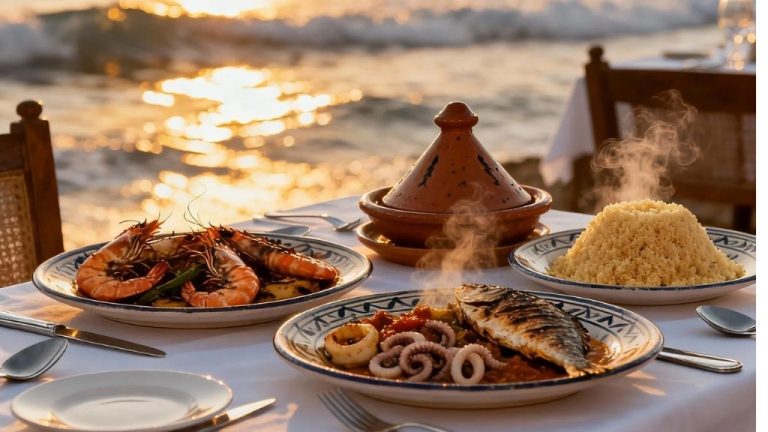

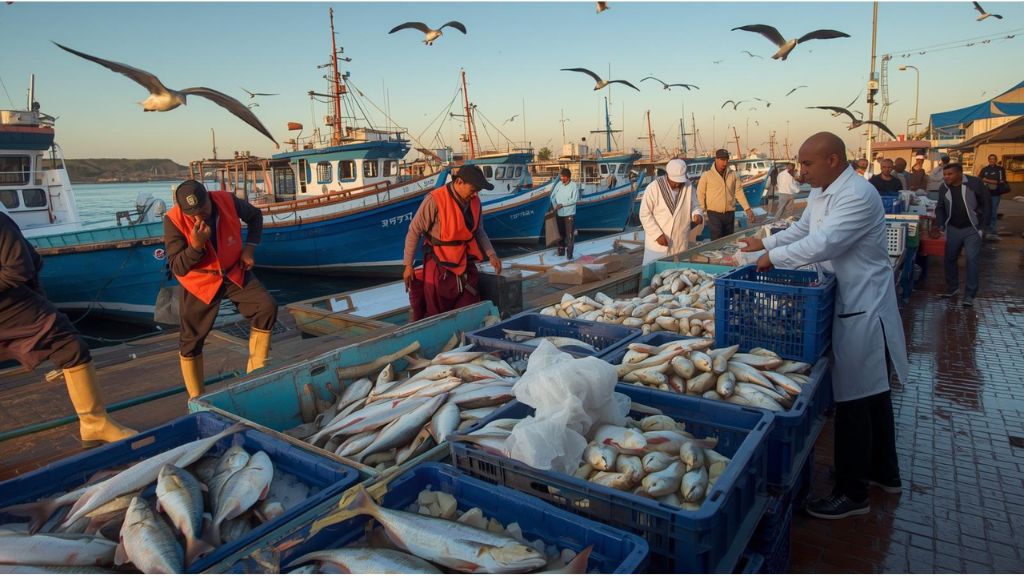
The Agadir fish market opens before sunrise when boats return with the night’s catch. Fishermen unload directly onto ice-covered tables where restaurant chefs and locals select from sardines, sea bass, sole and prawns pulled from Atlantic waters hours earlier. This direct connection between ocean and plate creates opportunities for nutrition that California’s longest supply chains can’t match. The omega-3 content in fish this fresh remains at peak levels while flavor intensity puts grocery store seafood to shame. Understanding how to navigate this market and select quality catch connects you to Agadir’s broader Atlantic food culture that prioritizes freshness and simplicity above all else.
The morning ritual
The fish market comes alive around six in the morning when the first boats dock at the port. Fishermen who spent the night at sea unload plastic crates filled with their catch while seagulls circle overhead hoping for scraps. The fish goes directly from boat to market stall within minutes, still wet from ocean water and displaying the clear eyes and firm flesh that indicate absolute freshness.Restaurant chefs arrive early to claim the best specimens before crowds form. They know which boats consistently deliver quality and which fishermen handle their catch most carefully. These relationships built over years ensure restaurants get first selection of premium fish. Watching these professionals evaluate seafood teaches you what to look for when making your own purchases.The market operates on a first-come basis with no reservations or advance ordering. What you see is what’s available that specific morning based on where boats fished the night before and what they caught. This variability means menus throughout Agadir change daily based on actual availability rather than printed promises. The system keeps everyone honest about freshness and seasonality.
Understanding Atlantic species
Sardines dominate catches most of the year since Atlantic waters off Agadir teem with these small oily fish. Moroccans prize sardines for their rich flavor and high omega-3 content. The fish get grilled whole, stuffed with chermoula, or packed fresh for home cooking. At three dollars per kilo, sardines represent the most affordable way to access premium seafood nutrition.Sea bass and sea bream appear regularly in catches and command higher prices due to their delicate white flesh. These fish work beautifully for grilling whole or filleting for more refined preparations. Chefs value them for mild flavor that accepts seasoning well without losing character. A two-pound sea bass runs about twelve dollars, still remarkably cheap compared to California pricing.Sole and other flatfish show up depending on where boats fished. These specimens require more skill to fillet but reward the effort with sweet tender meat. Locals often request that market vendors clean and fillet flatfish on site since the process demands practice. The filleting service costs maybe fifty cents and saves considerable frustration for those lacking knife skills.
Prawns and squid round out typical offerings though availability fluctuates more than finfish. When boats bring in fresh prawns the quality exceeds anything you’d find at American grocery stores. The firm texture and sweet flavor come from minimal time between catch and consumption. Squid arrives whole and requires cleaning but the freshness makes it worthwhile for anyone willing to put in ten minutes of prep work.
Evaluating freshness
Fresh fish has clear eyes that look almost alive rather than cloudy or sunken. The gills should be bright red or pink, never brown or gray. When you press the flesh with your finger it should spring back immediately without leaving an indentation. These basic checks tell you most of what you need to know about fish quality.Smell matters enormously despite what people claim about fresh fish not smelling fishy. Good fresh fish smells like clean ocean water with a slight mineral note. Any ammonia scent or strong fishiness indicates the catch is past its prime. Don’t be shy about getting close and taking a good sniff before purchasing. Vendors expect this and those selling quality product welcome the scrutiny.The ice beneath fish should be clean and abundant. Proper temperature control preserves quality between when fish arrives at market and when customers buy it. Stalls where ice has melted or fish sits directly on tables without cooling should be avoided. These details separate vendors who care about their product from those just trying to move inventory.
Whole fish generally offers better value and quality than pre-filleted options. You can examine the entire specimen to verify freshness and the bones add flavor if you cook fish whole. However some vendors do excellent filleting work if you prefer convenience. Just make sure they fillet your chosen fish right in front of you rather than using pre-cut portions that might have been sitting around.
Omega-3 and nutritional benefits
The omega-3 fatty acids in fresh fish deliver anti-inflammatory benefits that support heart health, brain function and joint mobility. These essential fats must come from diet since your body can’t produce them. Fish provides the most bioavailable form of omega-3 compared to plant sources like flax or chia which require conversion that many people perform inefficiently.Sardines pack particularly high omega-3 levels relative to their size. A serving of sardines contains more omega-3 than most salmon portions while costing a fraction of the price. The small fish also accumulate fewer environmental toxins than large predatory species since they sit lower on the food chain. This combination of high nutrition and low contamination makes sardines ideal for frequent consumption.The time between catch and consumption dramatically affects omega-3 content. These fatty acids begin degrading immediately after fish dies. Fish caught last night and eaten today retains far more nutritional value than fish that spent a week in cold storage and then traveled across continents. The Agadir market’s direct supply chain preserves nutrients that longer distribution systems sacrifice.Beyond omega-3, fresh fish provides high-quality protein with all essential amino acids in ratios humans utilize efficiently. The protein comes with minimal saturated fat unlike many meat sources. Fish also delivers important minerals including selenium, iodine and zinc that support immune function and metabolism. A diet featuring regular fresh fish consumption addresses multiple nutritional needs simultaneously.
Negotiating and purchasing
Prices at the fish market are generally fixed with little room for negotiation on smaller purchases. Vendors post prices per kilo and weigh your selection on scales visible to customers. Attempting aggressive bargaining marks you as a tourist and might result in higher starting prices. Better to accept posted rates which remain very reasonable compared to Western pricing.Buying larger quantities opens negotiation possibilities. If you’re purchasing five kilos of sardines or multiple whole fish the vendor might reduce the per-kilo rate. Restaurant buyers and locals stocking their freezers regularly negotiate on volume. These discussions happen respectfully with both parties understanding market rates.Bring cash since card payments don’t exist at market stalls. Small bills help since vendors may not have change for large denominations early in the morning. A cloth shopping bag or basket makes carrying your purchases easier and more environmentally friendly than accepting plastic bags.
Ask vendors to clean and gut whole fish if you’re not comfortable doing it yourself. Most will perform this service quickly either free or for a tiny additional charge. They have the tools and experience to work far more efficiently than you could manage in a riad kitchen. Specify whether you want the head left on or removed based on your intended preparation.
Taking fish home
Get your purchase back to refrigeration as quickly as possible. Fish quality deteriorates rapidly at room temperature especially in Agadir’s warm climate. If you’re staying in a riad with a kitchen, head directly there after the market. Some people bring insulated bags or small coolers if they plan other errands before going home.Rinse fish under cold water when you get home and pat it completely dry with paper towels. Moisture promotes bacterial growth so drying the surface helps preserve quality. Store fish in the coldest part of your refrigerator covered loosely rather than wrapped tightly in plastic which can trap moisture.Cook fish the same day you buy it whenever possible. At most, fish from the Agadir market stays good for two days if stored properly but eating it immediately provides the best flavor and texture. The whole point of shopping this market is accessing peak freshness so don’t undermine that advantage by waiting too long to cook your purchase.
Freezing works if you bought more than you can eat fresh. Wrap portions individually in plastic wrap and then place in freezer bags with air pressed out. Frozen fish lasts about three months though some quality loss is inevitable. Thaw in the refrigerator overnight rather than at room temperature to minimize texture changes.
Simple preparation methods
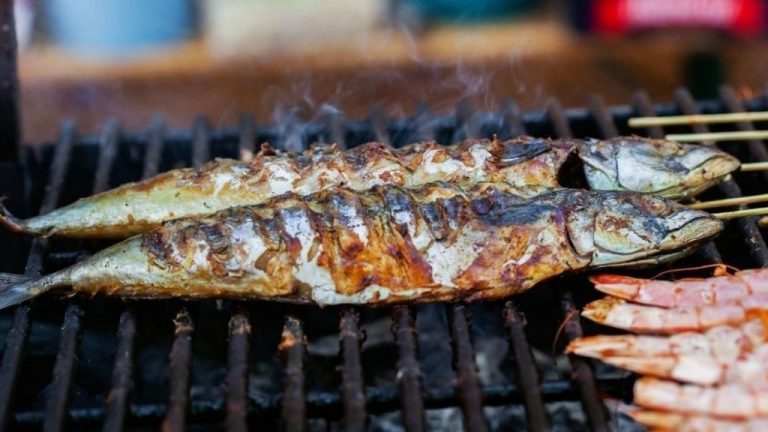
Grilling whole sardines takes about three minutes per side over hot coals or a gas flame. Brush them with olive oil or argan oil, season with salt and maybe some cumin. The skin crisps while the flesh stays moist. Serve with lemon wedges and fresh bread to soak up the flavorful oils.Larger fish like sea bass or bream benefit from stuffing the cavity with herbs and lemon slices before grilling. The aromatics perfume the flesh from inside while the skin protects meat from drying out. A three-pound fish needs about twelve minutes per side depending on heat intensity. The flesh should flake easily when done but still appear moist.Pan-searing works brilliantly for fillets. Heat a skillet until very hot, add a thin layer of oil, and cook fillets skin-side down for about four minutes without moving them. Flip once and cook another two minutes. The high heat creates a crispy exterior while keeping the interior tender. Simple seasoning of salt and pepper lets the fish flavor dominate.
Chermoula marinade elevates any fish preparation. Blend fresh cilantro, parsley, garlic, cumin, paprika, lemon juice and olive oil into a loose paste. Coat fish and let it sit for thirty minutes before cooking. The herbs and spices complement seafood without overwhelming it. This marinade represents Moroccan coastal cooking at its most essential.
Health considerations
Mercury and other heavy metals concentrate in large predatory fish like tuna and swordfish. The smaller species dominating Agadir’s market carry minimal contamination since they eat plankton and small prey rather than other fish. This makes them safer for frequent consumption without worrying about toxin accumulation.Some people worry about parasites in raw or undercooked fish. Cooking fish to an internal temperature of 145 degrees kills parasites and harmful bacteria. If you prefer fish less done, freezing it first for several days eliminates parasite risk. However most visitors cook their market purchases thoroughly so this rarely becomes an issue.Allergies to fish and shellfish affect some people severely. If you have known seafood allergies obviously avoid the market and restaurants serving fish. Cross-contamination can occur even in dishes not containing seafood directly so communicate your allergy clearly when dining out.The high protein and omega-3 content makes fish an excellent choice for athletes, people recovering from illness and anyone seeking to improve their diet. The lean protein supports muscle maintenance and growth while healthy fats reduce inflammation that can hinder recovery. Regular fish consumption might improve everything from sleep quality to mental clarity.
Beyond the main market
Several smaller fish markets operate in neighborhoods outside the central tourist areas. These local markets serve residential communities and often have slightly lower prices since they don’t cater to visitors. The selection might be more limited but the quality remains excellent. Exploring these neighborhood markets provides glimpses into daily life beyond tourist zones.Some fishermen sell directly from the beach after returning from sea. You’ll see small groups of people gathered around newly landed boats buying fish before it ever reaches formal markets. This represents the ultimate in freshness though it requires early rising and knowledge of where boats typically land. Locals share this information if you ask around your neighborhood.Fish restaurants near the port often source directly from fishermen they know personally. Eating at these establishments means getting the same quality chefs select at market but prepared by professionals. The cooking tends toward simple grilling and frying that showcases ingredients rather than elaborate preparations. Meals cost eight to twelve dollars and include multiple courses.Street vendors grill sardines at beachside stands throughout Agadir. These casual operations offer the quickest way to sample fresh local fish without any cooking effort. The sardines get grilled over charcoal, served on paper with bread and maybe some salad. The whole experience costs about three dollars and provides authentic taste of coastal Moroccan life.
Connecting to wellness culture
The Agadir fish market embodies principles that California wellness culture promotes but often struggles to implement. Direct sourcing from producers, minimal processing, seasonal eating and nutritional density all happen naturally here rather than requiring conscious effort. The system works because infrastructure supports it rather than fighting against it.Daily shopping from fresh sources creates rhythms that benefit both physical and mental health. The routine of visiting the market, selecting ingredients and cooking them that day establishes mindfulness around food that gets lost when shopping weekly at supermarkets. This intentionality around eating supports overall wellness beyond just nutritional content.The affordability means you can maintain high-quality eating habits without the financial stress that comes with California organic prices. When excellent seafood costs a few dollars per serving rather than twenty or thirty, eating well becomes sustainable long-term practice instead of occasional splurge. This accessibility democratizes good nutrition in ways that American food systems struggle to achieve.Building relationships with vendors and learning about seasonal patterns connects you to natural cycles that modern urban life obscures. Understanding why certain fish appear in summer versus winter teaches you about ocean ecology and sustainable harvesting. This knowledge enriches your relationship with food and environment in meaningful ways.
For those wanting to explore how the ingredients from this market get transformed through simple coastal cooking techniques, learning about Agadir-style grilled fish and traditional preparations reveals how freshness and minimal intervention create meals that satisfy both hunger and wellness goals without complicated recipes or expensive equipment.