
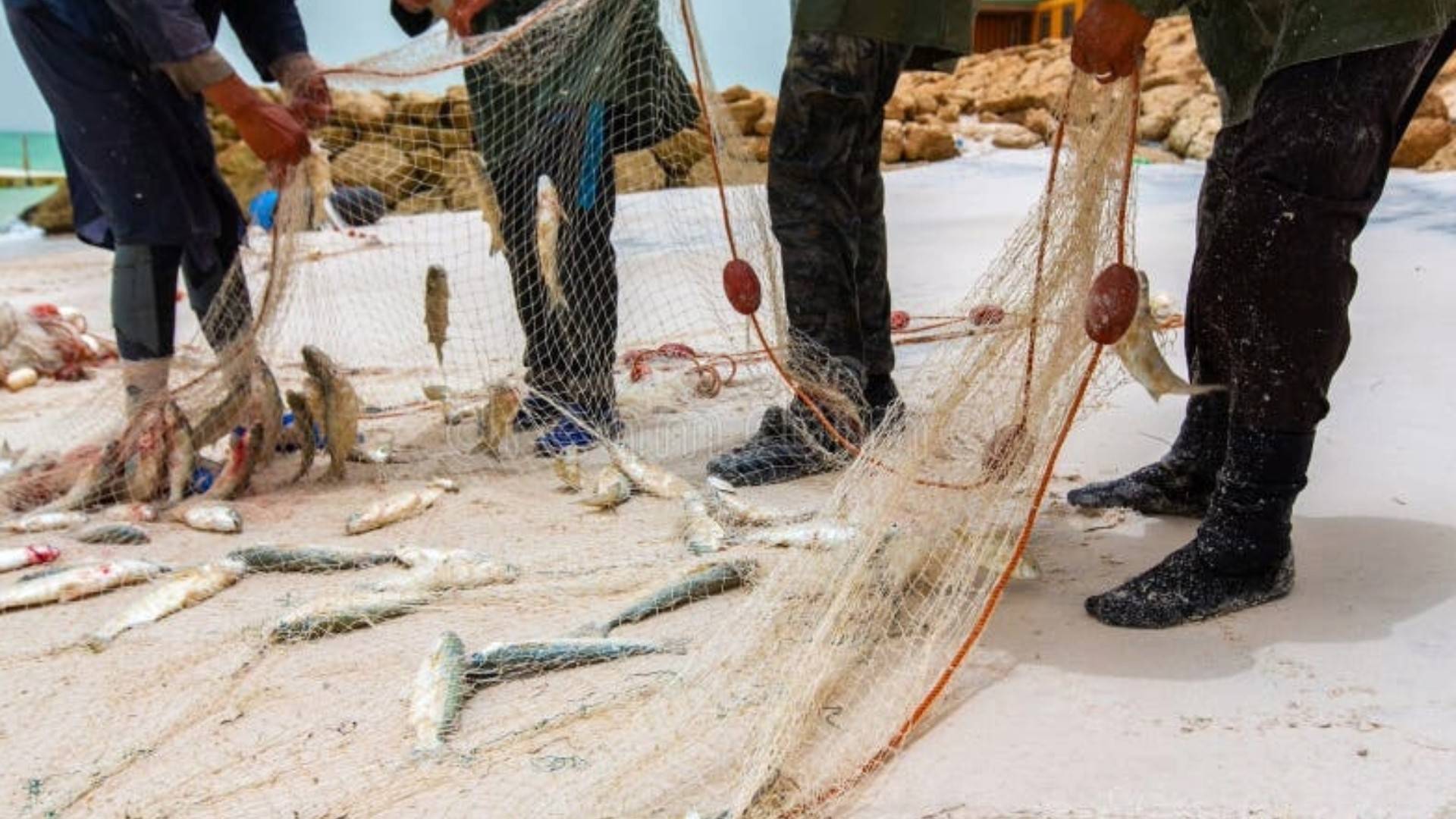
I arrived in Dakhla at dawn, drawn not by the promise of waves or white sand, but by a silence I couldn’t name. The city still slept, but down at the port, lights flickered on small boats already pushing into the bay. Men moved without hurry, their faces lined by salt and sun, their hands checking nets with a tenderness that surprised me. This wasn’t preparation for work. It was prayer.
No one spoke as they coiled rope or tested knots. There were no engines roaring, no radios blaring. Just the soft slap of water against hulls, the whisper of canvas, and the low hum of breath in the cool morning air. One elder paused before casting off. He knelt, touched his forehead to the deck, then poured a small cup of water over the bow not as offering, but as acknowledgment: We ask permission. We do not take.
In California, I’d learned to see the ocean as resource surf breaks to chase, seafood to order, coastline to photograph. Here, the sea was kin. And fishing wasn’t extraction. It was conversation.
The Language of the Net
Later that morning, I sat with Youssef on a low wall near the drying racks, watching him mend a tear in his net. His fingers moved with a precision that needed no eyes each knot tied not just to hold fish, but to honor the sea’s rhythm. “A net isn’t just rope,” he said, without looking up. “It’s memory. Every knot holds a lesson from a storm, a calm, a day the sea gave more than we asked.”
He showed me how the mesh size is never uniform. Near the edges, it’s tighter to let small fish escape. “We don’t take what hasn’t grown,” he explained. “The sea remembers greed.” This wasn’t sustainability as policy. It was ethics as inheritance.
While we spoke, two young men carried baskets of sardines ashore, their arms glistening with silver. They didn’t rush to market. Instead, they walked first to the elders’ circle by the mosque, placing the freshest catch at their feet. Only then did they head home. “The first gift goes to those who taught us to listen,” Youssef said. “The rest, we share.”
In this economy, value isn’t measured in dirhams, but in reciprocity. And wellness begins not with consumption, but with restraint.
The Silence Before the Cast
What struck me most wasn’t the skill of the fishermen, but the silence that preceded every cast. On the boat, as the sun rose over the dunes, the men would sit still for several minutes no words, no movement just watching the water’s surface, reading its ripples like a text.“The sea speaks in waves,” Youssef told me later. “If you’re still enough, you hear what it’s willing to give.”
This pause isn’t superstition. It’s attunement. In a world that equates action with worth, this moment of non-doing feels revolutionary. No GPS, no sonar just presence. And in that presence, something shifts: the fisherman stops being a taker and becomes a participant in an ancient exchange.
I thought of my own life in California, where I’d fill every quiet moment with a podcast, a text, a plan. Here, silence wasn’t empty. It was full of respect, of listening, of trust that the right thing comes when you stop forcing it.
For those who’ve grown weary of wellness as consumption, Dakhla’s Pulse: Traditions Where the Sahara Greets the Atlantic reveals how an entire region lives by a different rhythm one where healing flows not from products, but from practices rooted in humility, reciprocity, and deep belonging to place.
Hands That Remember the Sea
Youssef’s hands told stories no words could carry. Cracked, salt-stained, permanently bent from decades of net work, they moved with a certainty that came not from repetition alone, but from relationship. “These hands,” he said, holding them up to the light, “have held more fish than I can count. But they’ve also held loss storms that took boats, days the sea gave nothing.”
He didn’t speak of resilience. He lived it. And in his touch, I sensed something rare: a body that hadn’t been trained to perform, but to respond. To wind. To tide. To the subtle shift in water temperature that signals sardines are near.
Later, I watched him teach his grandson how to tie the first knot. No instructions. Just demonstration, then silence. The boy mimicked, failed, tried again. Youssef didn’t correct him. He simply waited. “The sea teaches patience,” he said. “We just make space for it.”
In this transmission, wellness isn’t taught it’s absorbed. Not through apps or retreats, but through shared labor, quiet observation, and the slow trust that some things can only be learned by doing, failing, and trying again under open sky.
The Return That Feeds the Soul
The true ritual begins not at sea, but upon return.
When the boats glide back into the bay sometimes with full holds, sometimes nearly empty the real work of community unfolds. Women gather on the shore, not to count profit, but to sort the catch by hand, separating sardines from mackerel, discarding nothing. Even the heads and bones are saved for broth, for fertilizer, for teaching children how to read fish scales like stars.
There’s no market rush. No haggling at dawn. The first portion always goes to elders, then to neighbors who couldn’t fish that day a widow, a sick friend, a visiting traveler. Only after the circle is fed does any surplus reach the stalls.
One afternoon, I was handed a bowl of grilled sardines wrapped in newspaper, still warm. “Eat,” said Fatima, Youssef’s sister. “The sea gave today.” No bill. No small talk. Just food as gift.
In that moment, I understood: fishing here isn’t an industry. It’s a covenant. And wellness flows not from abundance alone, but from how it’s shared. When you eat fish in Dakhla, you don’t just taste the ocean you taste belonging.
If your spirit has been stirred by the quiet discipline of the sea if you sense that true nourishment lives not in ownership but in circulation then What the Wind Carries in Dakhla will carry you further into the desert’s other rhythms: where wool, song, and wind itself become threads in a living tradition of care.
Not Taking, But Receiving
On my last morning in Dakhla, I returned to the port before sunrise. The same boats were preparing to leave, the same quiet rituals unfolding. But this time, I didn’t watch as an outsider. Youssef handed me a small cup of mint tea and nodded toward the water. “Sit,” he said. “Don’t look for fish. Look for what the sea wants to show you.”
I sat on the damp wood, steam rising from the cup, eyes fixed on the horizon. No agenda. No expectation. Just presence. And slowly, the usual noise in my head the lists, the worries, the plans began to settle, like silt after a storm.
In that stillness, I realized the deepest lesson of Dakhla’s fishermen: they don’t see themselves as masters of the sea. They are guests. And every cast of the net is not a claim, but a question: Are you willing to share with us today?
This humility not productivity, not yield is the root of their resilience. And it offers a quiet antidote to the exhaustion so many of us carry: the belief that we must take, achieve, consume to be worthy.
But here, worthiness is given. Not earned.
You belong simply by showing up open, respectful, and willing to listen.