
The sloping alleyways of Tangier, the Atlantic breeze, the scent of mint tea… and, just around the corner, a shop window filled with cornes de gazelle, reinvented mille-feuille and honey‑glazed pastries. Tangier’s pastry scene has become a must for travelers who want to discover Morocco with their taste buds as much as with their eyes. Between traditional shops in the medina and modern boutiques loved by locals, the city offers a unique mix of Moroccan, French and international flavors that particularly appeals to visitors from America.
If you are planning a trip to Tangier from the United States or Canada, you are probably wondering where to find the best pastries in Tangier, what you should absolutely try first, and which addresses are truly popular with locals rather than just touristy recommendations. This pillar article is designed as a complete guide to help you map out a real sweet food tour: an overview of Tangier’s gourmet culture, a selection of the best pastry shops, a focus on must‑try Moroccan sweets, and sample one‑day itineraries. The goal is simple: to help you live an authentic experience, avoid tourist traps, and head straight to the places Tangier locals genuinely enjoy.
As you read, you will also discover how to bring sweet treats home as souvenirs, which specialties travel best on long flights to North America, and what pastry delivery options in Tangier are available if you are staying in a hotel or Airbnb. Whether you are a dedicated foodie, a digital nomad passing through, or a globe‑trotter hunting for great spots, this content will give you everything you need to make the most of Tangier’s pastry scene while optimizing your time in the city. Grab your notebook (and your maps app): your sweet exploration of Tangier starts here.
Why Tangier’s Pastry Shops Appeal to American Travelers
Tangier’s pastry shops are increasingly popular with American travelers because they combine exotic flavors, authenticity and ease of access in a single food experience. The city naturally fits into classic Morocco itineraries (Casablanca, Fes, Chefchaouen), and its food scene is frequently highlighted in English‑language blogs and travel guides, which generates a lot of recommendations for local bakeries and pastry shops.
For an American visitor, Tangier’s pastry scene offers both the discovery of traditional Moroccan desserts (like cornes de gazelle, honey briouats and almond pastries) and the comfort of more familiar, French‑inspired pastries (such as éclairs, mille‑feuille and tarts). This dual aspect reassures travelers who are not used to very sweet or strongly spiced flavors, while still allowing them to explore a different cuisine through places that often receive excellent ratings on major review platforms.
Finally, Tangier’s pastry shops fit perfectly into a food tour experience: they are located close to key tourist areas (the medina, the corniche and downtown), their prices remain affordable for a North American budget, and they make ideal stops between cultural visits, seaside walks and historic cafés. For American travelers, this creates a very attractive combination: cultural immersion, Instagram‑worthy displays and pastries, and the option to bring sweets home as souvenirs or order them via delivery services during their stay.
Where to find the best pastry shops in Tangier near the medina and the corniche
To find the best pastry shops in Tangier near the medina and the corniche, you should focus on the areas around Grand Socco, the Kasbah, and along Avenue Mohammed VI. These neighborhoods bring together both traditional Moroccan pastry shops and more modern tea rooms, all within easy walking distance of major hotels and tourist attractions.
Around the medina, places like Pâtisserie Bab al Madina are often mentioned by travelers for their Moroccan pastries, breakfasts, and affordable prices, just a few steps from the city walls and lively alleyways. A short walk away, spots such as Pâtisserie al Afrah 1978 or other boutiques listed on Tripadvisor and Petit Futé let you sample a wide variety of almond cakes, cornes de gazelle, and other local specialties while staying in the historic heart of the city.
On the corniche side, cafés and tea rooms along the seafront and around Avenue Mohammed VI offer a great balance between ocean views and well‑stocked displays of both Moroccan and European‑style pastries. For an American traveler, the easiest strategy is to combine these two areas: start with a pastry shop near the medina for a traditional atmosphere, then end the day in a café‑pâtisserie on the corniche to enjoy the sunset over Tangier’s bay.
Must‑Try Moroccan Pastries You Can’t Leave Tangier Without Tasting
The must‑try Moroccan pastries in Tangier are those that best showcase the country’s sweet tradition while still being easy to enjoy for an American traveler. You will mostly find them in the city’s larger pastry shops, where big display cases are filled with Moroccan classics, almond‑based cakes and takeaway assortments.
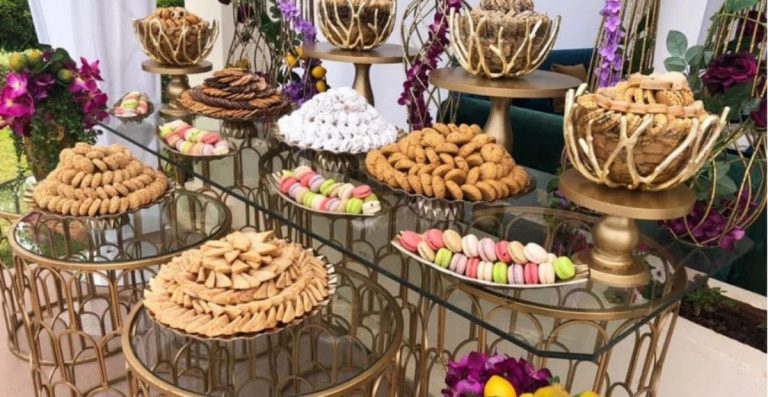
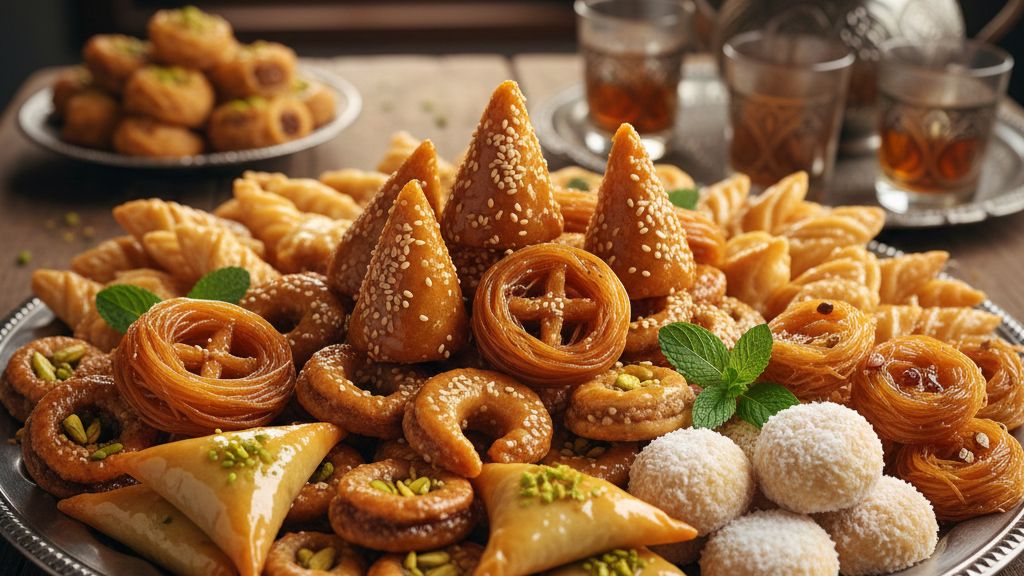
Among the Moroccan pastries you absolutely need to taste are cornes de gazelle (thin pastry filled with almond paste scented with orange blossom water), honey briouats, chebakia (deep‑fried pastry coated in honey and sesame seeds), ghriba (crumbly cookies, often with almonds or coconut) and various almond and pistachio cakes. These specialties are widely available in the windows of Tangier’s main patisseries and are often sold by weight or as mixed assortments, making it easy to try a bit of everything without blowing your budget.
For an American visitor, the best option is to ask for a mixed platter of Moroccan pastries in one of these shops: this lets you discover several textures and flavors (crunchy, soft, honeyed, orange blossom) in a single tasting. You can also have boxes prepared to take away or bring home as gifts, and many customers report that these pastries travel well as long as they are properly packed.
Top tea rooms and pastry shops with a view in Tangier
For travelers who want to combine Moroccan pastries with beautiful views in Tangier, the best options are along the corniche and on the heights around the medina, especially near the Kasbah and the main viewpoints over the bay. These areas are packed with cafés and tea rooms serving classic Moroccan sweets (like cornes de gazelle, briouats and almond cakes) as well as European‑style pastries, all with views of the ocean or the city’s rooftops.
Many travel guides and blogs suggest focusing on café‑pâtisseries along Avenue Mohammed VI (right on the seafront) to enjoy the sunset while sipping mint tea and sharing sweet assortments. In and around the medina and the Kasbah, some tea houses highlighted in tourist itineraries have rooftop terraces overlooking the port or the Strait of Gibraltar, making them ideal stops on a pastry‑themed food tour with a “panoramic view” angle.
Gourmet itinerary: one day to discover the best pastry shops in Tangier
A one‑day gourmet itinerary in Tangier can easily combine the medina, the corniche and the modern districts, while linking together tastings of Moroccan pastries and scenic breaks. The key areas to include are the medina and its ancient walls, Grand Socco, the Kasbah, then the corniche and Avenue Mohammed VI that runs along the bay.
Morning: sweet breakfast near the medina
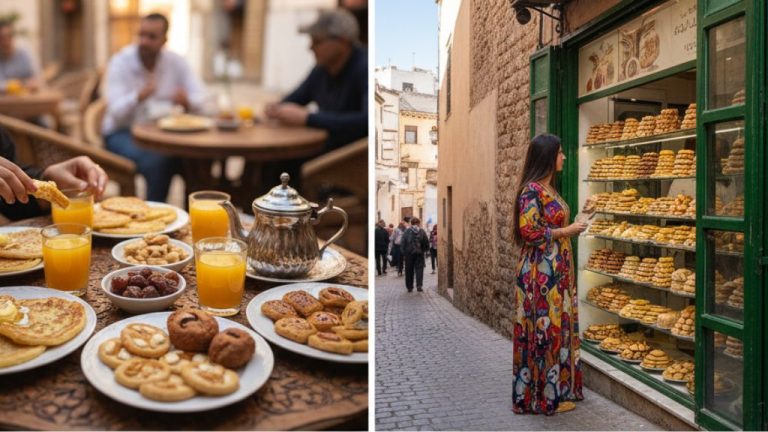
Start your day around Grand Socco or in a pastry shop close to the medina gates for a typically Moroccan breakfast: msemmen, beghrir and almond cakes, served with mint tea or coffee. Then plan a walk through the medina and the Kasbah, keeping an eye out for small neighborhood pastry shops selling cornes de gazelle, honey briouats and other treats to take away.
Midday / early afternoon: pastry break downtown
Around midday, head towards the modern city center or the port area to try a more contemporary pastry shop or a well‑reviewed place offering a mix of Moroccan cakes and French‑style pastries. This is the perfect time to order assortments (trays of mini‑pastries) and compare traditional and “fusion” styles before continuing your walk towards the corniche.
Late afternoon: pastries with a sea view on the corniche
End the day on Avenue Mohammed VI, the main seaside boulevard, where several cafés and tea rooms display generous pastry counters and offer direct views over Tangier’s bay. Sit on a terrace for a final platter of pastries and a mint tea at sunset, bringing this itinerary to a close with an experience that is both delicious and highly photogenic for North American travelers.
Best breakfast in Tangier: top spots for pastries and cakes
For breakfast in Tangier, travelers looking for pastries and cakes are spoiled for choice between Moroccan pastry shops, French‑style bakeries and modern cafés. Places like Pâtisserie Bab al Madina, well‑rated for its Moroccan crêpes, fresh juices and pastry assortments, are often recommended as great spots to start the day near the medina. Travel guides and platforms such as Tripadvisor and RestaurantGuru also highlight several bakeries and patisseries serving croissants, pain au chocolat and individual cakes, which fits perfectly with what North American visitors expect when they look for a familiar breakfast experience.
For a more “brunch‑style” angle, with a mix of sweet and savory, dedicated breakfast & brunch spots like Tramontana or the venues listed in “best breakfast spots in Tangier” rankings offer croissants, crêpes, waffles, loaf cakes and homemade pastries, often with vegetarian or healthier options. In your article, you can suggest a simple strategy to readers: start with a pastry shop or bakery near the medina (Bab al Madina and other places listed on Tripadvisor) for a typically Moroccan breakfast with cakes and msemmen; then, later in the trip, try a modern café or brunch spot downtown or near the corniche for more European‑style viennoiseries, using “best croissants” and “best breakfast in Tangier” lists as a guide.
Which pastries should you bring back from Tangier to the United States or Canada?
To bring pastries from Tangier back to the United States or Canada, it’s best to choose dry or semi‑dry sweets that travel well and keep for several days without refrigeration. Classics like cornes de gazelle, fekkas (almond or seed biscuits), ghriba (with almonds, coconut or sesame), and some makrout or small Moroccan shortbread cookies are often sold in boxes or trays that are easy to pack and slip into your carry‑on luggage.
By contrast, pastries soaked in a lot of honey or syrup, as well as cakes filled with cream or whipped cream, don’t handle long‑haul flights as well: they can get crushed, leak, or raise freshness concerns. In your article, you can advise readers to: ask shops for tightly closed, well‑padded boxes (with paper or food‑safe plastic between layers); keep pastries in cabin baggage rather than checked luggage; and always double‑check basic customs rules on allowed food items, while mentioning that dry cakes are generally more acceptable than fresh, perishable products.
Practical tips for ordering pastry delivery in Tangier
To order pastries for delivery in Tangier, the easiest option is to use major local delivery apps (such as Glovo and similar services), which list many pastry shops, bakeries and breakfast concepts. These platforms usually let you filter by category (pastry, breakfast, desserts), check customer reviews, browse photos and see estimated delivery times before confirming your order.
Pastry budget in Tangier: how much to plan for a sweet food tour
For a 100% pastry‑focused food tour in Tangier, a budget of 80 to 150 MAD per person for the day (around 8 to 15 USD) is more than enough if you stick to local pastry shops and standard cafés. Most individual items (such as cornes de gazelle, Moroccan cakes, cookies or slices of loaf cake) generally cost between 8 and 25 MAD each, and many trays of mini‑cakes or mixed assortments range from 70 to 150 MAD depending on weight and the shop.
In practice, a three‑stop itinerary (sweet breakfast, afternoon dessert break, and a pastry platter at the end of the day) might look like this:
Breakfast in a pastry shop or bakery: a hot drink plus two pastries or cakes for 20 to 40 MAD.
Midday tasting of Moroccan pastries: 3 to 5 pieces per person or a small shared assortment for 30 to 60 MAD.
A “signature” pastry platter at the end of the day (to eat in or take away): often 50 to 100 MAD for a tray or a few more elaborate desserts.
For more premium spots (gourmet concepts, very modern patisseries, venues with a view or prime tourist locations), prices are higher but still reasonable by North American travel standards: a refined dessert or slice of entremets typically costs between 20 and 40 MAD, and a high‑quality tray of Moroccan pastries can exceed 150–190 MAD per half‑kilo or kilo. In your article, you can confidently suggest that readers plan on 10 to 20 USD per person per day to comfortably enjoy a full sweet itinerary, while noting that organized food tours with a guide are significantly more expensive because they include guiding, multiple tastings and a structured visit.