
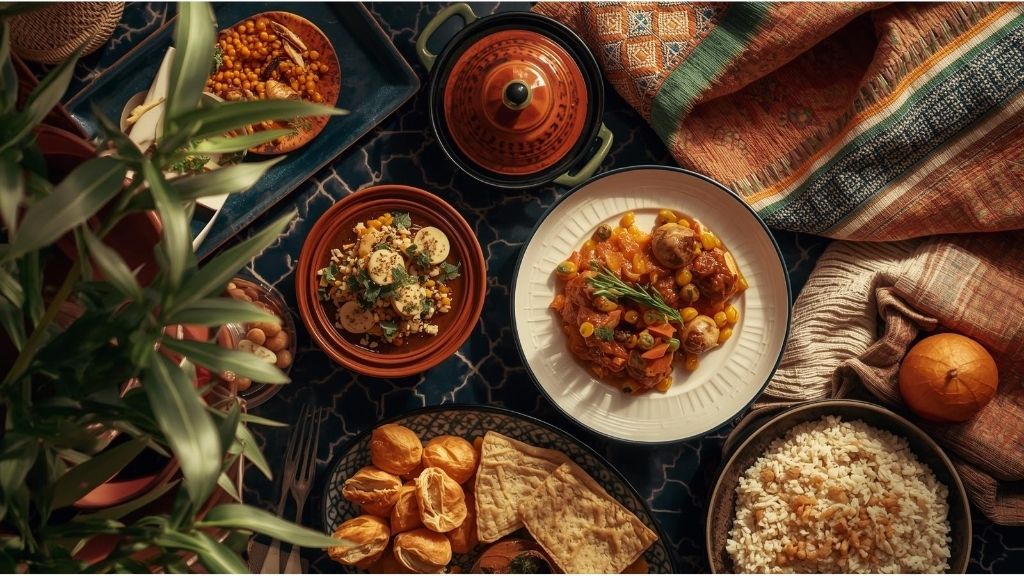
Tangier’s culinary identity lives in dishes that have fed families for centuries. The city’s position as a coastal gateway means flavors here blend Berber foundations with Arab refinements and hints of Andalusian influence. When you sit down at a table in the medina or a neighborhood restaurant, you’re tasting history layered into every spice blend and cooking method.
The tagine tradition runs deep
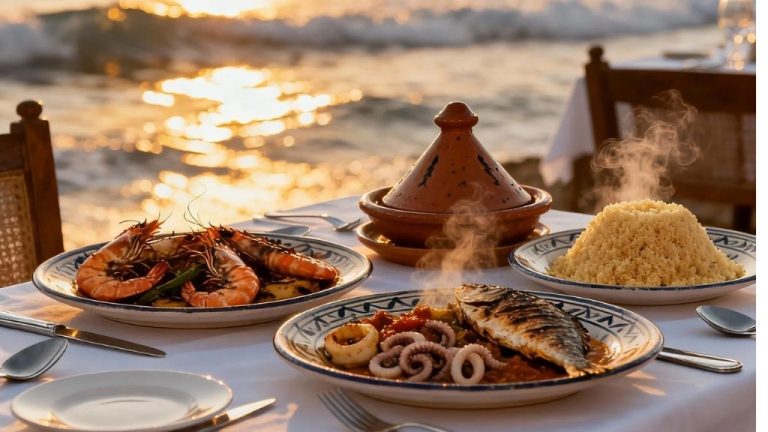
Walk past any restaurant kitchen and you’ll see rows of conical clay pots simmering over low flames. Tagines aren’t just a cooking vessel but a philosophy about patience and flavor building. The cone shape traps steam and returns moisture to the ingredients so meat becomes tender without drying out and vegetables absorb all the spices slowly.The most common version in tangier features chicken with preserved lemons and olives. The lemons get cured in salt for weeks until their bitterness transforms into something floral and intense. Combined with green olives, saffron, and ginger, the sauce balances salty, sour, and aromatic notes. Some restaurants add a handful of fresh cilantro at the end which brightens everything.
Beef or lamb tagines tend toward sweeter profiles. You’ll find versions with prunes and almonds or apricots and honey. The meat cooks for hours until it falls apart when you touch it with a fork. These tagines often appear during special occasions or Friday family meals but restaurants serve them daily for visitors.Vegetarian tagines deserve attention too. Seasonal vegetables like zucchini, carrots, and potatoes cook with tomatoes and a complex spice mix called ras el hanout. Some places add chickpeas for protein. The result tastes lighter than meat versions but still carries depth from the long cooking time.
Couscous anchors friday tradition
Couscous holds special status in moroccan culture as the centerpiece of friday lunch when families gather after mosque. The tiny granules of semolina get steamed multiple times until they’re fluffy and separate. Properly made couscous feels light not gummy and each grain should roll individually on your tongue.The traditional presentation piles couscous into a mountain on a large platter with vegetables arranged on top. Seven vegetables is the classic number representing good fortune. You might find turnips, carrots, zucchini, cabbage, pumpkin, chickpeas, and onions. Meat gets nestled into the vegetables and the whole thing gets drizzled with broth infused with saffron and other spices.In tangier the meat is usually lamb or chicken though some coastal restaurants offer fish couscous with grouper or sea bass. The fish version uses a lighter broth with tomatoes and peppers. This reflects the city’s maritime character and offers a different experience from inland versions.Street vendors sometimes sell couscous on fridays from huge pots and locals line up with containers to take home. Tourist restaurants serve it any day of the week. Eating with your hands is traditional where you roll the couscous into small balls with your fingers but forks work fine if you’re more comfortable.
Pastilla brings sweet and savory together
Pastilla represents moroccan cooking at its most refined. Thin layers of warqa pastry get filled with spiced meat then topped with powdered sugar and cinnamon. The combination sounds strange to western palates but the sweet and savory balance has roots in medieval andalusian cuisine.The traditional version uses pigeon though chicken is more common now. The meat gets cooked with onions, parsley, and spices until tender then mixed with scrambled eggs and almonds. Everything goes between pastry layers that get brushed with butter and baked until golden and crisp. Right before serving, powdered sugar and cinnamon get dusted on top in decorative patterns.
In tangier you can find seafood pastilla using shrimp or fish which reflects the coastal location. These versions skip the sugar topping and lean more savory. Some modern restaurants experiment with other fillings but purists argue that’s missing the point.Pastilla requires serious skill to make because the pastry tears easily and the filling needs proper seasoning balance. It’s not everyday food but reserved for celebrations and special guests. Ordering one shows respect for the craft involved.
Harira soup warms the soul
Harira appears year-round but gains special significance during ramadan when it breaks the daily fast. This thick soup combines tomatoes, lentils, chickpeas, and sometimes meat in a base flavored with coriander, parsley, and celery. A handful of broken vermicelli noodles adds body and a squeeze of lemon at the end brightens everything.The soup takes hours to develop its deep flavor. Some cooks add a flour and water mixture near the end to thicken it further. The result should coat a spoon and taste complex with layers of spice and herb. Street vendors sell harira in the medina for just a few dirhams and it comes with dates and sweet pastries to balance the savory richness.
Different regions make harira their own way. In Tangier you’ll sometimes find it with diced tomatoes left chunky rather than fully broken down. Some places add beaten eggs stirred in at the end which creates ribbons throughout the soup. The eggs add protein and create a silkier texture.
Msemen and Rghaif for breakfast
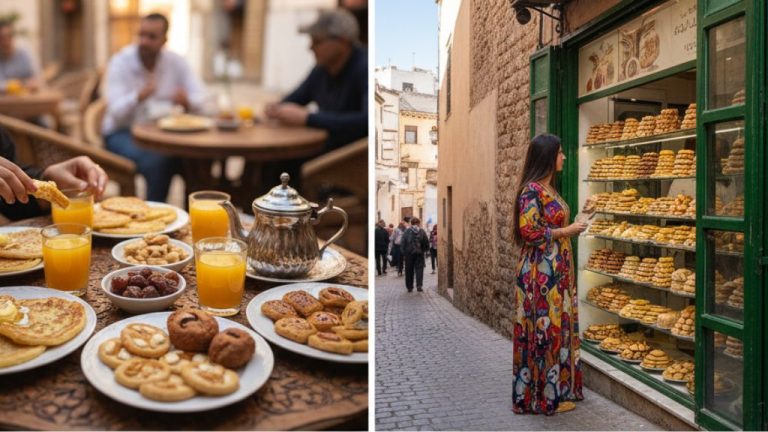
These layered flatbreads appear at breakfast tables across Tangier. Msemen gets folded multiple times during preparation creating square breads with visible layers. Rghaif follows a similar process but ends up round. Both get cooked on a griddle until golden spots form on the surface.The breads taste slightly greasy from the oil used during folding but that’s part of their charm. They’re usually served with honey and butter or jam. Some people dip them in olive oil mixed with cumin and salt. Street vendors make them fresh in the morning and the smell draws crowds.The dough requires technique to stretch thin without tearing. Watching someone make msemen is entertaining as they stretch and fold with practiced motions. The result should be crispy outside with tender layers inside that pull apart easily.
Zaalouk and Taktouka as sides
These cooked vegetable salads appear alongside main dishes at almost every meal. Zaalouk features eggplant that gets roasted until the skin blisters then the flesh gets mixed with tomatoes, garlic, olive oil, and spices. The mixture cooks down into a chunky spread that tastes smoky and rich.Taktouka uses green peppers and tomatoes cooked with garlic and paprika until everything breaks down. Some versions add preserved lemon for extra brightness. Both salads work as dips with bread or as sides with grilled meat.These dishes show how moroccan cooking treats vegetables with respect. The long cooking times and careful seasoning transform simple ingredients into something memorable. They also provide balance on a plate where rich tagines or grilled meats dominate.
Where to find authentic versions
The medina holds dozens of small restaurants serving traditional food. Places near Petit Socco cater to tourists but also serve locals which is usually a good sign. Look for restaurants where families eat and where the menu is handwritten or posted on a chalkboard.Restaurant Rif Kebdani near the port specializes in northern moroccan cooking including excellent fish tagines. Hamadi on Rue de la Kasbah has been serving classic dishes since the 1950s and maintains high standards. For couscous, locals recommend Restaurant Ahlen on Fridays when they make huge batches.Street food in the medina offers the most authentic and affordable experience. The vendors near the Grand Socco make fresh msemen every morning. Small soup stands scattered through the souks serve harira that rivals any restaurant version.Riad guesthouses often serve traditional breakfasts and some offer cooking demonstrations. This gives you context for how home cooks approach these dishes versus restaurant kitchens. The techniques don’t differ much but seeing food prepared in a domestic setting adds understanding.Prices range widely but traditional moroccan restaurants tend to be affordable. A full tagine meal with bread and salad rarely exceeds 80 dirhams. Street food costs even less with most items under 20 dirhams. Upscale places in the ville nouvelle charge more but the food isn’t necessarily better than medina spots.
Eating customs matter
Moroccans wash hands before meals and often eat from communal platters using bread to scoop food. Taking from your section of the platter is polite while reaching across to someone else’s area isn’t. Using your right hand for eating follows islamic tradition as the left hand is considered unclean.When invited to someone’s home, refusing food can offend your host. Take at least a small portion of everything offered. Complimenting the food makes hosts happy though excessive praise might seem insincere. Saying “bssaha” before eating is common and means something like “to your health.”Many restaurants provide hand washing stations or bring water and soap to your table. This isn’t about doubting cleanliness but following traditional practice. Accepting these customs shows respect for local culture and enhances your dining experience.
Beyond the tourist trail
Venture into residential neighborhoods for restaurants serving locals rather than visitors. The areas around Avenue Mohammed VI and Rue de Fes have family-run spots where menus might be in arabic only. Pointing at what other diners eat works fine and usually leads to good meals.Thursday and friday evenings see families dining out before the weekend. Joining that energy gives you a different perspective than eating during quiet weekday lunches. You’ll see how tangerines interact with food and each other in social settings.Markets provide another window into food culture. Watching people shop and haggle over ingredients shows what matters in local cooking. The Grand Socco on sunday mornings fills with vendors from surrounding villages selling produce, spices, and prepared foods. Grabbing breakfast there puts you in the middle of authentic tangier life.
Traditional moroccan dishes in Tangier aren’t museum pieces but living cuisine that adapts while maintaining core techniques and flavors. Every tagine reflects the cook’s touch and every couscous carries family traditions. Eating your way through these dishes connects you to the city’s past and present simultaneously. For more ways to explore tangier’s street food scene, discover the hidden gems locals frequent daily in the medina.