

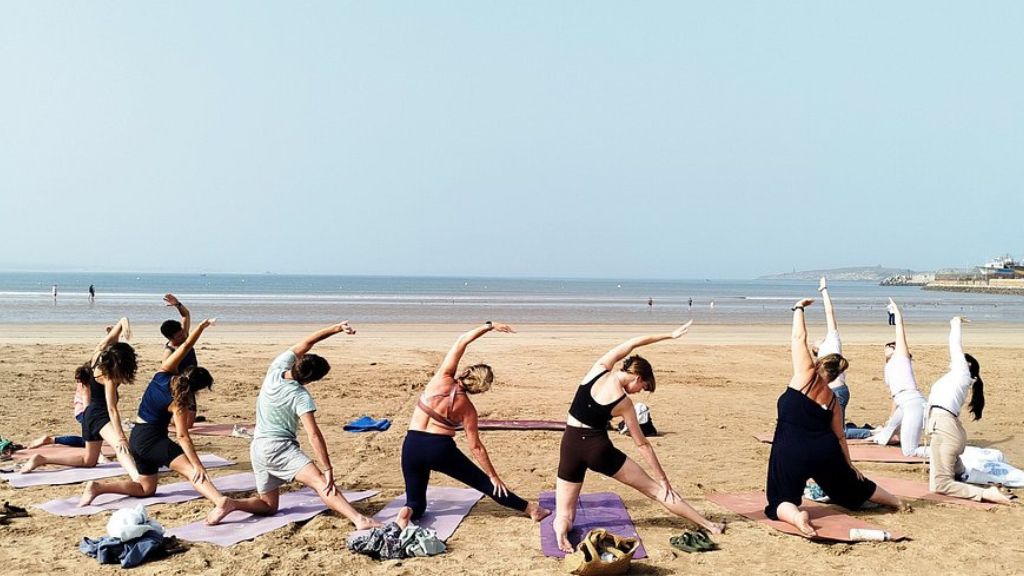
I rolled out my mat on the sand just as the sun cleared the horizon and the practice felt immediately different from my usual California beach sessions. The Atlantic rolled in with its own rhythm, slower and heavier than the Pacific I’ve known for years. The wind that defines Essaouira picked up even this early, requiring extra attention to balance poses. But the fundamentals held, breath syncing with waves, body grounding into earth, mind releasing into the endless blue.
Why beach yoga works differently here
Practicing yoga on Essaouira’s beaches offers something distinct from California’s ocean-side classes. The beaches here stretch for miles with almost nobody on them early morning. No joggers dodging your mat, no beach volleyball games starting up mid-practice, no lifeguard announcements interrupting savasana. The emptiness allows genuine immersion in practice rather than constant awareness of surroundings.The sand itself differs from California beaches. It’s packed firm near the water making it stable for standing poses without the instability of loose sand. Move further up the beach and you get softer sand that challenges balance and engages stabilizer muscles differently. This natural variation within single beach provides options for different practice styles.The wind forces modifications that actually improve practice. In strong wind you can’t hold tree pose the same way so you lower your center of gravity and engage core more completely. The external challenge creates internal strengthening. What initially feels like obstacle becomes teacher showing you where your practice lacks solid foundation.The temperature stays moderate year-round, similar to central California coast. Mornings require light layers but by practice end you’re usually down to single layer. You don’t deal with Santa Monica summer heat or San Francisco summer fog. The consistency allows you to focus on practice rather than constantly adjusting to weather.
Studios and drop-in classes available
Several yoga studios operate in Essaouira offering drop-in classes for travelers alongside regular schedules for residents and long-term visitors. The studios generally teach vinyasa or hatha with some offering yin, restorative, or specialized practices. The level of instruction equals what you’d find in California studios at about one third the price.
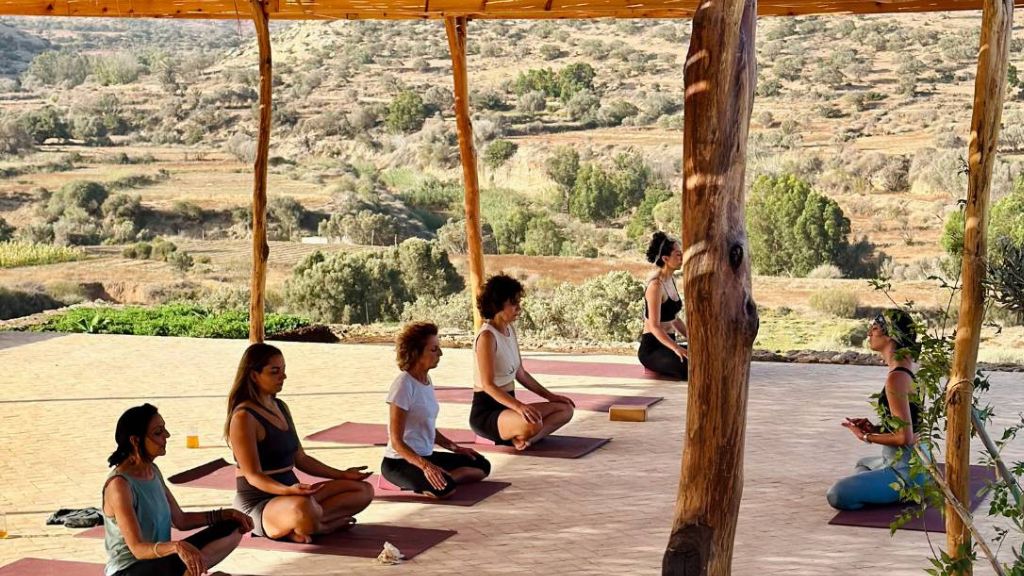
Yoga Maroc operates from a riad in the medina with a rooftop space overlooking the ocean. They offer morning and evening classes daily with afternoon workshops several times weekly. Drop-in classes cost around $10 and monthly unlimited passes run $60. The teachers include both Moroccan instructors trained internationally and expats who relocated to Essaouira specifically to teach yoga.The style leans toward alignment-focused vinyasa with emphasis on breath work and mindful movement rather than athletic flow. This approach suits the environment and culture better than the intense power yoga that dominated California studios for years. The practice integrates meditation and pranayama rather than treating them as separate activities.
Hub Yoga opened more recently and targets the digital nomad and long-term traveler community. Their schedule includes early morning beach practices weather permitting plus regular studio classes. They also offer workshops on meditation, breathwork, and yoga philosophy. The vibe feels less polished than Yoga Maroc but equally authentic with strong sense of community.
Beach practices happen organically
Beyond organized classes, beach yoga happens spontaneously along Essaouira’s coastline. Early mornings you’ll see individuals or small groups practicing without instruction or structure. The beach becomes shared space where everyone respects each other’s practice without needing formal boundaries or rules.This organic beach yoga culture resembles what existed in California decades ago before beach yoga became Instagram commodity requiring permits and generating complaints. You simply show up, find a spot, roll out your mat, and practice. Nobody charges you, nobody directs you, nobody tries to sell you anything afterwards.The best spots for solo beach practice are south of the main beach toward the river mouth. This stretch stays emptier even during tourist season and the sand quality works well for yoga. Sunrise practices here mean you often have entire beach to yourself with just birds and occasional early fisherman as company.
Some morning surfers incorporate yoga into their beach routine doing a quick flow before paddling out or using yoga as post-surf stretch. This integration of practices feels natural given how both activities connect breath, body, and water. Several surf schools now offer combined surf-yoga programs recognizing the complementary benefits.
Ocean meditation techniques
Meditation facing the ocean provides focus point that indoor or mountain meditation lacks. The horizon line gives eyes somewhere to rest, the wave sounds create natural mantra, and the vastness puts personal concerns into perspective. These elements combine to make ocean meditation accessible even for people who struggle with traditional sitting practice.A simple technique involves sitting comfortably and watching waves without trying to count them or predict them. Just observe how each wave differs slightly from the last. Notice the variations in size, speed, and how they break. Your mind will wander, that’s normal, and when you notice it wandering you return attention to waves. This practice develops concentration while acknowledging the reality of wandering mind.Breath synchronization with waves creates another approach. Watch waves and gradually align your breathing so inhales match wave gathering and exhales match wave releasing onto shore. This external pacing helps regulate breathing naturally without forced counts or holds. The practice becomes collaboration between your breath and ocean rhythm.
Walking meditation along the waterline where waves wash over your feet combines movement with meditation in ways that suit some people better than seated practice. Walk slowly enough that you feel each step completely. Notice the sensation of wet sand, cold water, the pull of undertow. This embodied awareness grounds you in present moment through physical sensation.
Sunset rituals at the ramparts
The ramparts overlooking Essaouira’s harbor provide perfect sunset meditation spot. Locals and visitors gather here every evening, not as organized event but as collective understanding that watching sunset matters. The gathering feels ceremonial without being religious, communal without requiring interaction.You can sit on the ramparts or on rocks below and simply watch light change as sun drops toward Atlantic. The sky usually puts on a show with colors ranging from soft pastels to dramatic oranges and purples depending on clouds and atmospheric conditions. The spectacle demands nothing from you except presence.Some people meditate formally during sunset, others just sit quietly, still others chat with companions while also watching. The mix of approaches all count as mindfulness practice. You’re marking the transition from day to night, acknowledging the movement of time and light, participating in rhythm larger than individual concerns.This daily ritual costs nothing, requires no special equipment or clothing, and welcomes everyone regardless of experience level or cultural background. It’s wellness practice as it existed before commodification, something humans do naturally when given beautiful place and permission to simply be.
Breathwork enhanced by salt air
Pranayama practice on the beach gains additional dimension from the ionized salt air. The negative ions in ocean air may support respiratory function and the increased oxygen feels immediately energizing. Whether these effects are scientifically measurable or partly placebo doesn’t really matter when you feel the difference.
Nadi shodhana alternate nostril breathing works particularly well at the beach because the fresh air makes it easier to take full breaths through each nostril. The practice balances nervous system and many people report feeling clearer and calmer after several rounds. Doing it facing ocean seems to amplify effects.Kapalabhati breath of fire gets complicated in strong wind as the forceful exhales meet resistance. But on calmer days the technique works beautifully at the beach. The rapid breathing combined with ocean air creates almost immediate shift in energy level and mental clarity. Just be aware this practice can make you light-headed so having solid sand beneath you matters for safety.Ujjayi breathing, the ocean breath, becomes almost recursive when practiced at actual ocean. The sound you create in your throat mimics waves and being at the beach where real waves provide backdrop creates layered experience. Your internal ocean sound meets external ocean sound in way that deepens the practice.
Yoga retreats combine practices
Several operations run yoga retreats in Essaouira combining asana practice with meditation, breathwork, healthy meals, and cultural experiences. These programs range from weekend intensives to week or two-week immersions. The format resembles California yoga retreats but at fraction of the cost and with added dimension of Moroccan cultural context.
Typical retreat schedule includes morning meditation and asana practice, healthy breakfast, free time for beach walking or exploring the medina, afternoon workshop on specific topic, restorative evening practice, and communal dinner. The balance between structure and freedom allows for both deep practice and integration time.Accommodation usually happens in riads with shared or private rooms depending on budget. The intimate scale of these spaces creates community naturally as participants share meals and common areas. Unlike large resort retreats, you get to know everyone in your group.Cultural components might include visits to argan cooperatives, cooking classes, Gnaoua music experiences, or guided medina walks. These activities connect yoga practice to place rather than treating Morocco as interchangeable exotic backdrop. The integration of practice and culture reflects how yoga originally existed within specific cultural contexts.Prices for week-long retreats run $600 to $1,000 including accommodation, meals, all yoga instruction, and cultural activities. Equivalent retreats in California or even Central America cost $1,500 to $3,000. The affordability makes retreats accessible to yoga teachers and other people who value practice but don’t have unlimited disposable income.
Surf and yoga natural combination
The overlap between surf and yoga communities makes sense given how both practices emphasize breath, balance, and presence. Essaouira’s combination of reliable waves and developed yoga scene creates ideal conditions for combining them. Several programs specifically structure days around both practices.Morning typically starts with yoga to warm up and center before paddling out. The practice prepares body for physical demands of surfing while the meditation component helps with the mental focus good surfing requires. Post-surf yoga helps prevent injuries and works out the specific muscle groups surfing engages.The practices complement each other technically. Yoga develops core strength, flexibility, and balance that directly improve surfing. Surfing develops timing, reading natural patterns, and comfort in ocean that deepens yoga practice when done at the beach. Each practice makes you better at the other.
Psychologically both activities encourage presence and acceptance. You can’t control waves any more than you can force a challenging yoga pose. Both require showing up, doing the work, and accepting whatever happens. That mental training transfers to life off mat and out of water.
Accessibility versus California costs
Drop-in yoga classes in Essaouira cost $8 to $12 compared to $20 to $30 in California. Monthly unlimited passes run $60 to $80 versus $150 to $200 back home. The price difference means you can actually afford to practice daily rather than calculating whether you can justify the expense this week.Private instruction costs $30 to $40 per hour enabling personalized attention for working on specific issues or deepening practice. In California private sessions run $80 to $150 per hour putting them out of reach for most practitioners. The accessibility in Essaouira allows for learning that price barriers prevent at home.This affordability matters enormously for yoga teachers and others who make modest incomes while prioritizing practice. They can actually live somewhere and maintain serious daily practice without working multiple jobs to afford it. Several California yoga teachers relocated to Essaouira for exactly this reason.
The quality of instruction equals California standards because many teachers trained internationally and bring diverse experience to their teaching. You’re not sacrificing quality for lower prices, you’re accessing instruction in place where cost of living allows studios to charge sustainable rates without requiring premium pricing.
Integrating practice with daily life
What makes Essaouira valuable for yoga practitioners beyond just cheap classes is how the environment supports practice as lifestyle rather than as scheduled activity. The slower pace, the daily rhythms tied to natural cycles, the acceptance of taking time for contemplation, all create conditions where practice integrates into life seamlessly.Morning beach walks before breakfast become walking meditation without labeling them as such. Sunset watching at the ramparts functions as mindfulness practice. The deliberate pace of Moroccan meal times encourages present moment awareness. These experiences happen naturally as part of daily life rather than requiring special carving out of time and space.The culture also provides models for integrating spiritual practice with everyday life. The five daily prayers structure Muslim life around regular pauses for contemplation and connection. Ramadan creates month-long practice of discipline and reflection. While these aren’t yoga practices, they demonstrate how regular spiritual practice can weave through normal life rather than existing separate from it.California often treats yoga as fitness activity scheduled like gym sessions or as wellness luxury reserved for people with abundant time and money. Essaouira’s environment allows rediscovery of yoga as practice that supports all of life rather than as separate activity requiring special circumstances to access.
The lessons learned here about integrating practice transfer back home. You realize you don’t need perfect studio with expensive mat and specific playlist. You need commitment to showing up and practicing with whatever space and time you actually have. The beach and ramparts teach that any place becomes sacred when you bring practice to it. When you’re ready to fuel your practice with food that nourishes rather than just fills, Essaouira’s vegan scene demonstrates how plant-based eating works beautifully within Moroccan culinary traditions.