
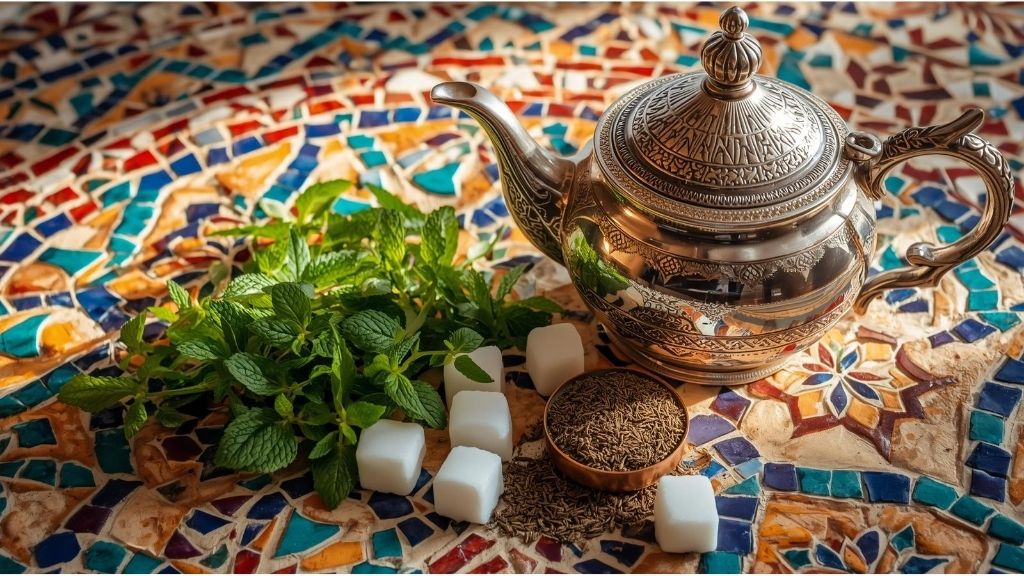
Moroccan mint tea isn’t just a beverage but a symbol of hospitality and connection. The ceremony surrounding its preparation and serving follows precise traditions that have remained unchanged for generations. From the specific pouring height to the three-glass custom, each element carries meaning and purpose. This ritual represents a cornerstone of Morocco’s relationship between food and wellness where sharing nourishment builds community bonds. Finding authentic tea ceremonies in Marrakech means discovering spaces where tradition still thrives.
The history behind the ritual
Mint tea arrived in Morocco relatively recently compared to other cultural traditions, entering the country during the mid-1800s when British merchants brought Chinese gunpowder green tea to North African ports. Moroccans combined this tea with their abundant fresh mint and created something entirely new that quickly became central to their social fabric.The drink spread rapidly because it satisfied multiple needs simultaneously. It provided a warm beverage during cool evenings, aided digestion after meals and created a framework for hospitality that anyone could participate in regardless of wealth. The simple ingredients, tea leaves, fresh mint, sugar and hot water, remained accessible even to modest households.Over time, the preparation evolved into a ceremonial art form with specific techniques that demonstrated respect for guests and pride in one’s skills. The person preparing tea, traditionally the male head of household, performed the ritual with care and attention that elevated a simple drink into a meaningful gesture. This transformation from beverage to ceremony reflects how Moroccans integrate everyday acts with deeper cultural values.
The essential ingredients
Authentic Moroccan mint tea requires only a few ingredients but quality matters enormously. Chinese gunpowder green tea forms the base, chosen for its strong flavor that can stand up to mint and sugar without disappearing. The tightly rolled leaves unfurl during steeping and release a slightly smoky, robust taste that defines proper Moroccan tea.Fresh spearmint, called “naana” in Morocco, provides the cooling, aromatic element that makes this tea distinctive. Moroccans use generous amounts of mint, sometimes filling half the teapot with fresh sprigs. The mint must be fresh because dried versions lack the essential oils that give the tea its characteristic flavor and digestive benefits. Many families grow mint on balconies or in small gardens to ensure constant supply.Sugar plays a controversial but traditional role. Classic preparation uses large amounts of sugar, creating an intensely sweet drink that balances the tea’s bitterness and mint’s sharpness. The saying goes that Moroccan tea should be “bitter as life, sweet as love, gentle as death.” Modern health consciousness has led some people to reduce sugar, though purists argue this changes the fundamental character of the drink.
The preparation ritual
Watching an experienced Moroccan prepare mint tea reveals the ceremony’s complexity and precision. The process begins with rinsing the tea leaves in a small amount of hot water that gets immediately discarded. This step removes dust and bitterness while beginning to open the tightly rolled leaves. Some practitioners rinse twice for the smoothest possible result.The rinsed tea goes into a traditional silver or stainless steel teapot along with a large handful of fresh mint sprigs, stems included. Sugar lumps get added directly to the pot, not to individual glasses. Boiling water fills the pot and the tea steeps for several minutes while the preparer occasionally swirls the pot to encourage mixing.The signature high pour comes next, where tea streams from the pot held at shoulder height or higher into small glasses placed on a tray. This aeration serves multiple purposes beyond showmanship. The falling liquid cools slightly, incorporates air that enhances flavor and creates the light foam that tops a properly poured glass. The foam, called “the crown,” indicates proper preparation technique.
The three-glass tradition
Moroccan custom holds that a guest should drink three glasses of tea during a visit. Each glass supposedly tastes different despite coming from the same pot. The first glass is described as “gentle as life,” the second “strong as love,” and the third “bitter as death.” This progression reflects both the tea’s changing flavor as it steeps longer and the philosophical journey of a social visit.Refusing tea can be considered rude unless you have a compelling reason. Even if you don’t particularly want tea, accepting at least one glass shows respect for your host’s hospitality. The act of drinking together creates a shared moment that facilitates conversation and connection more effectively than words alone sometimes can.The three-glass custom also has practical roots. Moroccan tea is served in small glasses that hold only a few ounces, so three glasses amount to a reasonable quantity of liquid. The tradition encourages people to linger rather than rushing through a visit, creating space for meaningful interaction that modern life often lacks.
Where to find authentic ceremonies in Marrakech
Tourist-oriented cafes and restaurants in Marrakech serve mint tea but often skip the ceremonial aspects in favor of speed and efficiency. Finding places where tea preparation follows traditional protocols requires knowing where locals actually gather. These spaces prioritize the ritual over turnover and understand that tea service means more than just delivering a beverage.The medina contains numerous small cafes tucked into corners and alleyways where neighborhood men gather throughout the day. These establishments often have minimal decoration, just simple seating and the essential tea equipment. The owner or a regular customer typically handles tea preparation, performing the ritual while conversing with others present. Visitors who wander in respectfully will usually receive a welcoming glass.Riads that cater to culturally-interested travelers rather than luxury seekers often maintain proper tea ceremonies. The staff understands the tradition’s importance and takes time to prepare and serve tea correctly. Some riads offer tea preparation demonstrations where guests can learn the techniques and cultural significance directly from people who grew up with these traditions.
Tea houses in the Mellah
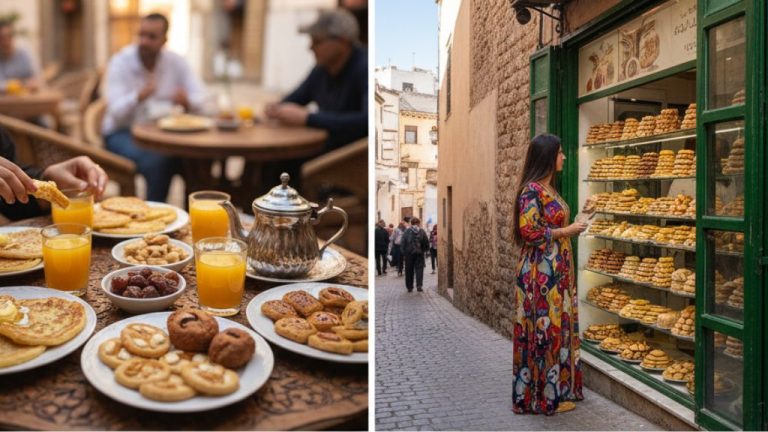
The old Jewish quarter, known as the Mellah, contains several tea houses that have served their communities for decades. These establishments preserve older customs and often attract an eclectic mix of elderly locals, artists and knowledgeable travelers. The pace here moves slowly, with conversations flowing as continuously as the tea.Entering these spaces requires patience and observation. Take a seat quietly and wait for acknowledgment rather than demanding immediate service. Watch how others behave and follow their lead. When tea arrives, thank your server genuinely and don’t rush through drinking. The environment rewards those who adapt to its rhythms rather than trying to impose their own timeline.Some of these tea houses also serve simple snacks that pair beautifully with mint tea. Dates stuffed with almonds, honey-soaked pastries or plain butter cookies complement the tea’s sweetness without overwhelming it. Watching the interplay between food and drink in these settings teaches you how Moroccans balance flavors throughout the day.
Rooftop terraces at sunset
Many traditional buildings in Marrakech feature rooftop terraces where residents escape the heat and gather during cooler evening hours. A few of these terraces have opened to visitors while maintaining their authentic character. The combination of fresh air, sunset views over the medina and properly prepared tea creates an unforgettable experience.These rooftop spaces feel distinctly different from the polished hotel bars that also offer terrace seating. The furniture might be mismatched, the setup casual, but the tea ceremony proceeds with full attention to tradition. The informal atmosphere actually enhances the experience by removing the performance aspect that sometimes creeps into tourist-oriented venues.Arriving before sunset means you can watch the light change while sipping your second and third glasses. The call to prayer echoes across the rooftops and the city transforms from the busy daytime energy to a gentler evening mood. Tea facilitates this transition, providing a focal point for the quieter contemplation that sunset naturally encourages.
Learning the preparation technique
Many visitors want to learn proper tea preparation to recreate the experience at home. Several cooking schools in Marrakech include tea ceremony instruction as part of their programs, teaching not just the mechanical steps but the cultural context that makes the ritual meaningful. These lessons typically happen at the end of a cooking class when everyone is ready to relax and reflect.The instruction covers selecting quality ingredients, the importance of proper equipment and the specific techniques that create the characteristic flavor and presentation. Teachers emphasize that the ceremony requires practice to master, particularly the high pour that looks effortless but demands coordination and confidence. Students usually attempt the pour multiple times, gradually raising the pot higher as they gain skill.Beyond technique, good instruction explains the social protocols around tea service. You learn when to serve tea, how to be a gracious guest and the subtle communications that happen through the tea ceremony. This cultural knowledge transforms tea from a drink you can make at home into a practice that connects you to Moroccan values and traditions.
The digestive benefits
Moroccans drink mint tea after meals for good reason beyond taste and tradition. The combination of green tea and mint provides specific digestive support that helps process food more comfortably. Green tea contains compounds that stimulate enzyme production while mint relaxes the smooth muscles of the digestive tract, reducing cramping and bloating.The hot liquid itself aids digestion by maintaining the stomach’s warmth which helps break down food more efficiently. This becomes particularly important after eating the rich, spiced dishes that characterize Moroccan cuisine. The tea cuts through heavy flavors and prepares your palate for the next course or brings pleasant closure to the meal.The ritual of sitting and sipping slowly also benefits digestion by forcing a pause between eating and other activities. This rest period allows your body to focus energy on digestive processes rather than immediately moving on to physical or mental work. The modern habit of eating quickly and rushing away disrupts digestion in ways that the tea ceremony naturally counteracts.
Tea as social currency
Understanding mint tea’s role in Moroccan social dynamics helps you navigate interactions more successfully. Offering tea to visitors, whether in a home or shop, establishes a relationship that transcends commercial transaction. Accepting the tea acknowledges this relationship and creates an obligation to interact respectfully rather than simply as buyer and seller.This dynamic sometimes confuses tourists who interpret tea offers as sales pressure. While shopkeepers do hope to make sales, the tea ceremony itself represents genuine hospitality that predates any commercial interest. Drinking tea doesn’t obligate you to buy anything, though it does create a context where aggressive bargaining or abrupt departure would be considered rude.In residential settings, tea invitations signal welcome and a desire for extended conversation. Declining without good reason suggests you don’t value the host’s company. Even brief visits should include at least one glass to honor the gesture and maintain social harmony. The tea provides something to do with your hands and a reason to stay seated, making conversation flow more naturally.
Seasonal variations
While spearmint dominates year-round, some Moroccans adjust their tea based on season and occasion. Winter months might see the addition of herbs like sage or verbena that have warming properties and support immunity during cold and flu season. The slightly different flavor profiles create variety while maintaining the core tea ceremony structure.Special occasions sometimes call for the inclusion of orange blossom water or rose water which add delicate floral notes. These variations appear more commonly in formal settings or celebrations where the extra refinement demonstrates the host’s sophistication and effort. The flowers’ aromatherapeutic properties also create a calming atmosphere appropriate for gatherings.Summer variations might emphasize the mint even more heavily or use slightly less sugar to create a more refreshing drink. Some modern Moroccans have begun serving iced versions of mint tea during the hottest months, though traditional practitioners often frown on this adaptation as unnecessarily influenced by foreign customs.
Beyond Marrakech
While this guide focuses on Marrakech, mint tea culture extends throughout Morocco with regional variations that reflect local preferences and available ingredients. Northern areas influenced by Spanish proximity sometimes prepare tea differently than southern regions near the Sahara. Exploring these variations deepens your understanding of how one tradition adapts to different contexts while maintaining its essential character.Berber communities in the Atlas Mountains add wild herbs to their tea that grow in the highlands. These herbs contribute flavors and medicinal properties not found in standard preparations. Visiting mountain villages and accepting tea from Berber hosts introduces you to these regional expressions of a national tradition.Coastal cities sometimes incorporate citrus elements that reflect their proximity to orange and lemon groves. A twist of lemon peel or a few drops of orange blossom water might appear in teas served near the Atlantic or Mediterranean. These subtle adaptations show how Moroccans personalize their tea while respecting the fundamental ceremony.
Making tea part of your routine
Bringing mint tea ceremony into your daily life doesn’t require moving to Morocco. The practice adapts well to different settings and schedules once you understand its core principles. Starting your day with the ritual of careful preparation creates a mindful moment that sets a positive tone. Afternoon tea breaks provide a structured pause that refreshes mental energy.Investing in proper equipment enhances the experience even though you can technically make the tea in any pot. A traditional Moroccan teapot, even a small one, and a set of tea glasses make the ceremony feel more authentic. The specific shapes and sizes were developed to optimize the tea’s flavor and presentation, so using them produces better results.Share tea with friends and family to introduce them to the ceremony’s social dimensions. Teaching others the preparation technique and explaining the cultural context creates shared experiences that strengthen relationships. The tea becomes a vehicle for slowing down and connecting in ways that our typically rushed interactions rarely allow.If you want to explore how mint tea fits into the broader context of Moroccan food traditions and their wellness benefits, discovering organic farm-to-table restaurants in Marrakech shows how traditional ingredients get sourced and prepared with the same attention to quality that defines proper tea ceremony.