
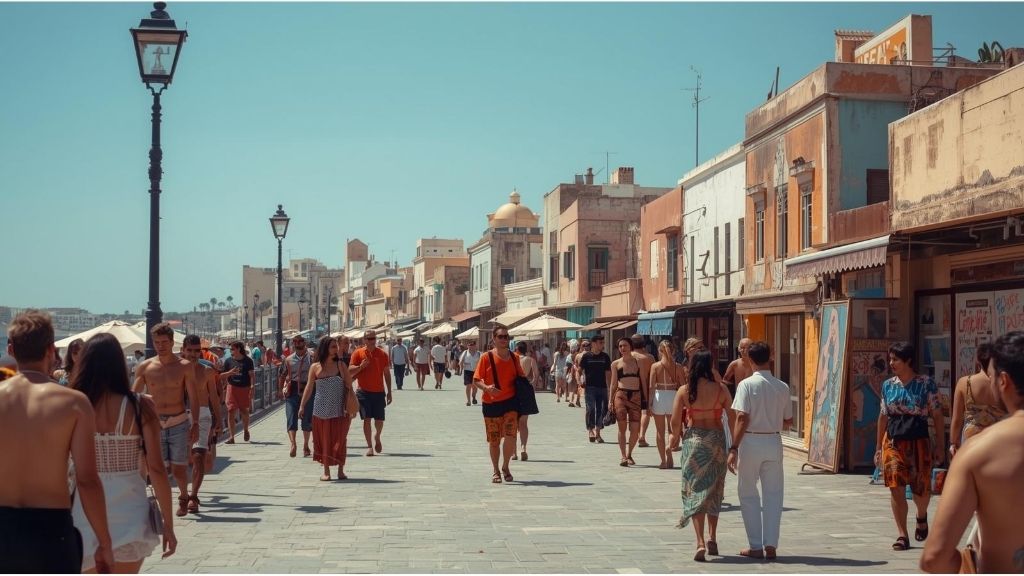
The first thing I noticed walking through Essaouira’s medina wasn’t the Portuguese architecture or the blue-painted doors but the murals. Street art covers walls in the mellah, portraits of Jimi Hendrix appear in unexpected corners, and colorful abstract pieces transform otherwise plain surfaces into outdoor galleries. This wasn’t traditional Morocco, this was bohemia transplanted to North Africa.
The Jimi HENDRIX legend matters
Whether Jimi Hendrix actually stayed in Essaouira in 1969 depends on who you ask. Some locals swear he spent weeks here, others admit the story probably got embellished over decades. A riad now operates as “Jimi Hendrix’s house” though evidence remains thin. None of that matters because the legend captured something true about this town’s spirit.Essaouira attracted counterculture travelers in the late 1960s and early 1970s when Morocco became destination for hippies seeking alternatives to Western materialism. The coastal town’s laid-back vibe, cheap living costs, and tolerance for nonconformity made it natural gathering place. That energy never fully left even as tourism evolved and Morocco modernized.The Hendrix connection gives the bohemian identity concrete symbol. Visitors understand immediately that Essaouira welcomes artists, musicians, and free spirits. The town maintains that reputation deliberately because it distinguishes Essaouira from other Moroccan tourist destinations and attracts the kind of travelers who stay longer and integrate more deeply.Walking past Hendrix murals or seeing his face on cafe walls reminds you that creative energy has roots here going back decades. The current artist community didn’t appear from nothing but built on foundations laid by previous generations of people who chose this place specifically because it allowed them to create and live differently.
Artist studios occupy the Medina
Dozens of working artist studios scatter through Essaouira’s medina streets. Unlike tourist-focused galleries selling mass-produced crafts, these spaces function as actual studios where you can watch artists paint, sculpt, or work wood. The artists often sit in doorways creating while passersby stop to watch and chat.
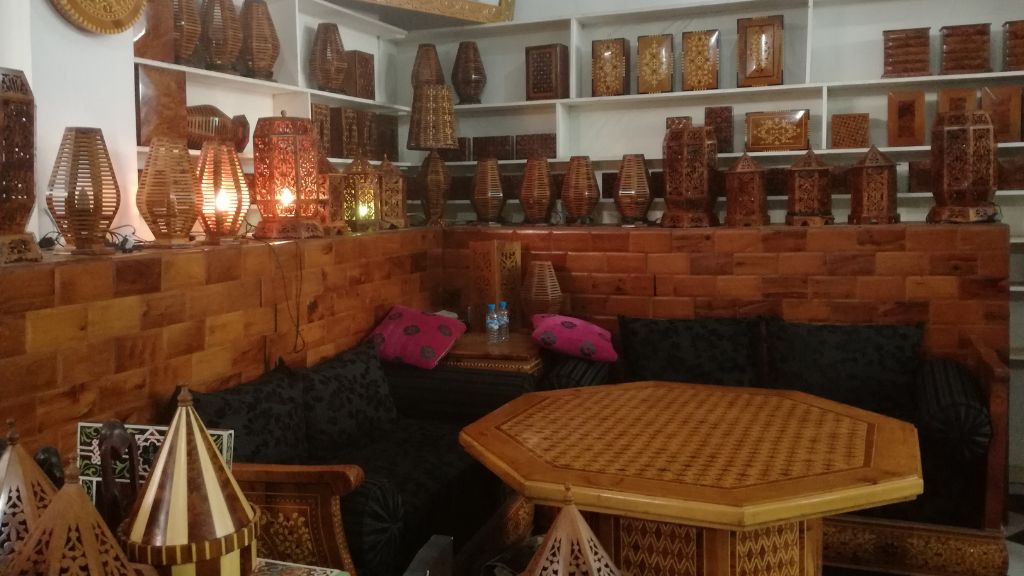
The thuya wood craftsmen deserve particular attention. Thuya grows in the region and its rich reddish-brown wood with distinctive grain patterns has been carved here for centuries. Contemporary artisans create everything from traditional boxes to modern sculptures. Watching them work the wood, the smell of thuya filling the small studios, connects you to craft traditions that persist alongside contemporary art.Several painters work in styles that blend Moroccan themes with international contemporary art movements. You’ll see canvases incorporating Arabic calligraphy with abstract expressionism or traditional patterns reimagined through street art aesthetics. The cross-cultural synthesis feels authentic rather than calculated because these artists live between worlds naturally.The studios welcome visitors without pushy sales tactics. You can watch someone work, ask questions about technique or inspiration, and leave without buying anything. If something speaks to you, prices remain reasonable because you’re buying directly from makers. A canvas that would cost $800 in a Venice Beach gallery runs $150 here and the artist gets all of it.
Music scene centers on Gnaoua traditions
Gnaoua music forms Essaouira’s sonic foundation. This trance-inducing style traces back to sub-Saharan African spiritual traditions brought by descendants of former slaves. The music features three-stringed guembri bass, metal castanets called qraqeb, and vocals that build hypnotic repetition. The sound is simultaneously ancient and contemporary, traditional and experimental.The Gnaoua World Music Festival happens every June transforming Essaouira into music capital for four days. International acts share stages with traditional Gnaoua masters creating fusion performances that demonstrate why this music matters beyond historical interest. The festival draws 500,000 visitors but maintains intimate vibe because performances happen throughout the medina rather than in isolated venue.Outside festival time you can find live Gnaoua most Thursday nights when traditional lila ceremonies happen. These spiritual healing rituals incorporate music, dance, incense, and food in all-night events. Some riads and restaurants host more tourist-friendly abbreviated versions lasting a few hours rather than until dawn.
What California musicians appreciate about Gnaoua is how the music creates altered states through rhythm and repetition similar to electronic music or jam band improvisation. The trance element connects to practices California embraced through psychedelic rock, electronic dance music, and various spiritual movements. Gnaoua offers traditional path to places modern Western music discovered more recently.
Cafés double as creative spaces
Taros occupies a restored riad with a rooftop terrace that’s become unofficial gathering place for Essaouira’s creative community. During day it functions as cafe serving food and drinks. Most evenings live music happens, sometimes Gnaoua, sometimes jazz fusion, occasionally visiting international acts. The space feels like what Cafe Wha in Greenwich Village must have been in the 1960s or what Hotel Cafe represented in early 2000s LA.
The crowd at Taros skews international with roughly equal mix of Moroccans, European expats, and travelers. Conversations happen in multiple languages often within the same table. Musicians sit with visual artists who talk with writers who know the surfers. The cross-pollination of creative disciplines creates energy that isolated scenes lack.
Ocean Vagabond serves double duty as healthy cafe and coworking space. The California expat owner designed it specifically to provide what she missed, fast wifi, good coffee, comfortable seating, and food that supports productivity rather than inducing food coma. Digital nomads claim tables for hours working between surf sessions while local artists use it as meeting place and informal office.
The cafe aesthetic consciously evokes Venice Beach or Silver Lake. Blonde wood, plants hanging from ceiling, natural light flooding through large windows, that carefully casual vibe California perfected. The difference is nobody gets territorial about tables and coffee costs $2 instead of $7. You can actually afford to spend entire afternoon here.
Vintage shopping reveals cultural mixing
Essaouira’s vintage and antique shops offer more interesting finds than most Moroccan tourist destinations. The town’s history as trading port means goods from multiple continents accumulated here over centuries. Add the bohemian travelers of the 1960s and 1970s and you get unusual mix of items.Vintage Moroccan textiles fill several shops with rugs, blankets, and fabrics in traditional patterns and colors. These aren’t new items made to look old but actual vintage pieces with wear and patina that tell stories. California designers seeking authentic textiles for projects or homes find better selection here than in Marrakech where the market tilts more toward tourists.
The Jewish quarter maintains several antique dealers specializing in items from Morocco’s once-large Jewish community. Menorahs, sabbath candlesticks, Hebrew manuscripts, and ritual objects appear alongside Muslim and Berber artifacts. This mixing reflects Essaouira’s historical religious diversity and creates shopping experience more complex than simple Moroccan handicrafts.Some shops specialize in vintage clothing and accessories from various eras. You’ll find 1970s kaftans, vintage leather bags, old jewelry mixing Berber and European influences. The proprietors often know the provenance of pieces and share stories about where items came from. The shopping becomes cultural education rather than just acquisition.
Creative wellness integrates naturally
The connection between creativity and wellness that California articulated explicitly has always existed implicitly in Essaouira’s bohemian culture. Making art, playing music, engaging in craft all contribute to mental and spiritual health. The town’s creative community practices this integration without naming it or packaging it as product.Several artist studios offer workshops teaching traditional crafts. You can spend an afternoon learning thuya wood carving, try your hand at pottery, or study Arabic calligraphy. These experiences provide meditative focus and tangible accomplishment that wellness retreats charge hundreds of dollars for. Here they cost $20 to $40 and you’re learning from master craftspeople.Music therapy happens organically through Gnaoua performances and drum circles that form spontaneously on the beach or in medina squares. The participatory nature of Moroccan music means visitors get invited to join rather than just observe. The physical act of drumming combined with the rhythmic complexity creates mindfulness through engagement.
The overall pace of life in Essaouira supports creative work in ways California’s hustle culture no longer does. You can afford to take time experimenting, to pursue projects without immediate monetization pressure, to create for creation’s sake. Several California artists who relocated here say they’re more productive because they stopped treating everything as content or potential income stream.
Why artists are relocating here
The artist exodus from California to places like Essaouira reflects economic realities more than romantic notions about exotic locales. California simply became too expensive for anyone without tech money or trust fund to pursue creative work full-time. The math doesn’t work when studio rent alone runs $2,000 monthly before adding living expenses.In Essaouira a small riad suitable as combined living and studio space rents for $400 to $600 monthly. Food costs about $200 monthly if you shop markets and cook. Utilities run minimal. You can live and work as artist for under $1,000 monthly meaning part-time remote work or modest art sales actually sustain you.The visa situation allows Americans to stay ninety days without visa then exit and return for another ninety days. Many artists work this pattern spending half the year in Morocco and half in California or split time between Essaouira and other locations. The flexibility supports creative careers that don’t fit traditional employment.
Beyond economics the creative community here provides support and inspiration that became harder to find in California. Everyone struggles with the same challenges of making art in the modern world. That shared experience creates bonds and collaborative energy. You’re not competing for limited gallery slots or fighting to get noticed by gatekeepers who determine success.
Coworking spaces for digital nomads
The digital nomad phenomenon brought infrastructure that supports creative work requiring internet connectivity. Several coworking spaces opened in the last five years offering fast wifi, comfortable seating, meeting rooms, and community events. They charge daily, weekly, or monthly rates significantly below California equivalents.Hub Cité provides the most complete setup with dedicated desks, private offices, printing services, and regular networking events. The monthly membership costs around $100 including unlimited coffee and tea. The member community includes mix of entrepreneurs, remote workers, and creative professionals. The space deliberately fosters collaboration rather than just providing desks.Many cafes now function as informal coworking spaces with strong wifi and tolerance for people spending hours on laptops. Ocean Vagabond, Cafe Taros, and Elizir all attract digital workers. The understanding is you’ll order periodically but nobody rushes you or makes you feel guilty about occupying table while working.This infrastructure means creative professionals can maintain California clients or income sources while living in Essaouira. The eight or nine hour time difference with the West Coast requires adjustment but many find the forced separation of work and personal time actually improves productivity and life quality.
Galleries mix traditional and contemporary
Galerie Damgaard pioneered contemporary art in Essaouira during the 1980s when Danish owner Frederic Damgaard began representing local self-taught artists. The gallery launched careers and established Essaouira as legitimate art destination beyond just craft tourism. Though Damgaard retired, the gallery continues under new ownership maintaining high standards.The work shown ranges from paintings incorporating traditional Moroccan motifs to abstract pieces that could hang in any international contemporary art space. Prices reflect actual market rather than tourist premiums with substantial pieces starting around $500 and going up based on artist reputation and size.Several smaller galleries opened in Galerie Damgaard’s wake creating scene where serious collectors shop alongside casual tourists. The galleries represent both Moroccan artists and international artists who relocated to Essaouira. The mix creates conversations between traditions and perspectives that enrich both.
Unlike California galleries where intimidation factor often keeps regular people from entering, Essaouira galleries welcome everyone. You can wander in, look at everything, ask questions, and leave without pressure. If you want to buy something the process is straightforward with prices clearly marked. The accessibility makes art feel democratic rather than exclusive.
The free spirit energy persists
What makes Essaouira’s bohemian culture genuine rather than manufactured is how it evolved organically from the town’s particular circumstances. The combination of coastal isolation, economic marginality, historical religious diversity, and African-Arab-European cultural mixing created conditions where nonconformity could thrive.The energy resembles what Venice Beach or Topanga Canyon offered before real estate prices made bohemianism a luxury only wealthy people could afford. You can still live cheaply here, still spend your days creating rather than hustling, still find community among other people pursuing similar paths. That’s increasingly rare anywhere.The Moroccan context adds dimensions that purely Western bohemian scenes lack. The call to prayer five times daily, the month of Ramadan, the market rhythms, the Arabic language, all remind you constantly that you’re a guest in someone else’s home. That awareness prevents the entitled appropriation that sometimes plagued Western countercultural movements.
For California creatives exhausted by the commodification of everything including rebellion itself, Essaouira offers space to remember why they started making art in the first place. Not for Instagram metrics or potential monetization but because creating things feeds something essential in human experience. The town’s bohemian culture maintains that purity not through ideology but through circumstances that still allow it. If you’re curious about other aspects of Essaouira that mirror California sensibilities, the plant-based dining scene demonstrates how traditional Moroccan cuisine adapts beautifully to modern wellness priorities without losing its soul.