
Tangier draws travelers for many reasons its light, its edges, its geography, its restless creative energy. But beneath the visible layers, the city resonates with a spiritual soundscape that precedes borders and outlives empires. Morocco’s sacred music, particularly in Tangier, reveals itself gradually to those who listen carefully: in zawiya courtyards, Andalusian orchestras, neighborhood celebrations, late-night Ramadan concerts, and annual festivals that continue shaping the city’s cultural memory.
This music does not function as entertainment alone, nor does it exist to please the tourist gaze. It emerged from remembrance, devotion, longing, exile, healing, and collective belonging. Today centuries after the fall of Andalusia its rhythms continue guiding communities through changing eras while drawing new listeners into their orbit. Across Morocco, sacred music festivals offer access to this living tradition. Some are intimate, centered around spiritual lineages; others are monumental cultural events drawing international audiences. All reflect the resilience and vitality of a tradition that remains profoundly contemporary. Tangier, sitting where Africa meets Europe, offers a unique vantage point for understanding how ancient rhythms continue meeting modern souls.
Below is a deeper exploration of Morocco’s sacred festivals how they sound, where they unfold, and why they endure revealing a musical geography that stretches from medina alleyways to grand performance halls and from personal memory to national heritage.
Historical Echoes: Why Music Became Morocco’s Cultural Memory
Every Moroccan festival connected to sacred music carries echoes of Andalusia. When Jews and Muslims were expelled in 1492, melodies crossed the water with them, becoming vessels for memory. In mosques, zawiyas, salons, and public squares, music became a spiritual archive holding emotion where language alone could not.
These echoes are especially clear in Tangier, where Andalusian orchestras still perform noubas that trace back to medieval Spanish courts. The survival of these musical structures is not accidental; it is the outcome of centuries of devotion, teaching, and community guardianship.
For travelers ready to explore this legacy more deeply, the influence of exile, memory, and continuity in Tangier’s Andalusian music is more fully revealed in Andalusian Music in Tangier: The 1492 Legacy Lives On, which traces how cultural identity evolved through sound rather than text.
The Sound of Devotion: How Moroccan Festivals Carry Sacred Lineages
Most Moroccan sacred music festivals originate in spiritual brotherhoods Aissawa, Hamadsha, Jilala, Darqawiyya, Tijaniyya each with distinct rhythms, instruments, and modes of remembrance. These festivals grew from religious gatherings honoring saints, transmitting spiritual knowledge, and strengthening social bonds. Today, many festivals maintain their sacred purpose while welcoming international audiences. Their transformation from local gatherings to national cultural events reflects Morocco’s evolving relationship with its spiritual heritage.
To understand how trance, breath, rhythm, and ecstasy shape spiritual memory in Morocco, readers may explore the emotional and musical architecture of Aissawa practice through Aissawa Music Morocco: The Ghaita’s Ecstatic Call, which reveals how trance emerges as community expression rather than performance.
Festival Geography: How Morocco Turns Cities into Music Maps
Morocco’s sacred festivals follow the geography of cultural lineage. Fez, Meknes, Tangier, Chefchaouen, Marrakech, Tetouan, Essaouira, Rabat each city nurtures a distinct spiritual sound. Fez hosts spiritual gatherings rooted in scholarship and memory. Meknes pulses with Aissawa rhythm. Chefchaouen’s blue alleyways echo Sufi chanting. Essaouira merges Gnawa trance with Atlantic wind.
Tangier stands apart. Its soundscape feels layered: Andalusian orchestras performing in palazzos, zawiyas hosting centuries-old chanting, medina streets filling with spontaneous prayer-songs, Ramadan nights alive with open-air concerts. Those seeking direct access to this living tapestry will find practical guidance in Where to Hear Sacred Music in Tangier: Complete Guide, which maps the city’s sacred venues and musical rhythms.
The Moussem Tradition: Sacred Time, Sacred Movement
Morocco’s moussem festivals form the backbone of sacred musical culture. A moussem honors the memory of a saint gathering musicians, pilgrims, and spiritual brotherhoods for days of celebration. Each moussem holds a distinct personality: Moulay Idriss Zerhoun’s pilgrimage pathways, Chefchaouen’s mountain shrines, Tangier’s Moussem of Sidi Kacem, where Aissawa groups move through the medina in shifting waves of sound.
Visitors who witness these gatherings discover music not as presentation but as presence. Rhythm moves through processions, through streets, through bodies marking sacred time rather than scheduled time. For many travelers, this represents a turning point in their understanding of Moroccan sacred sound, linking them to deep collective memory.
Fez Sacred Music Festival: Global Stage, Local Soul
The Fez Festival of World Sacred Music is Morocco’s most internationally recognized sacred event. Andalusian orchestras share stages with Persian ensembles, gospel choirs, flamenco duos, Indian classical musicians, and Sufi groups.
What makes Fez unique is not its size or scale, but its atmosphere. Concerts in Bab Makina open into warm summer nights; courtyards glow with slow rhythms; streets hum between performances. Yet beneath its global identity, the festival remains deeply Moroccan, preserving Andalusian repertoire and devotional sound at its core.
Visitors who experience Fez often continue their journey into more intimate settings, especially zawiyas, where music returns to spiritual origin. Understanding these spaces becomes essential, and the insight offered in Morocco Zawiya Etiquette: Visiting Sacred Spaces guides travelers respectfully through these encounters.
Gnawa: Trance from the Desert to the Sea
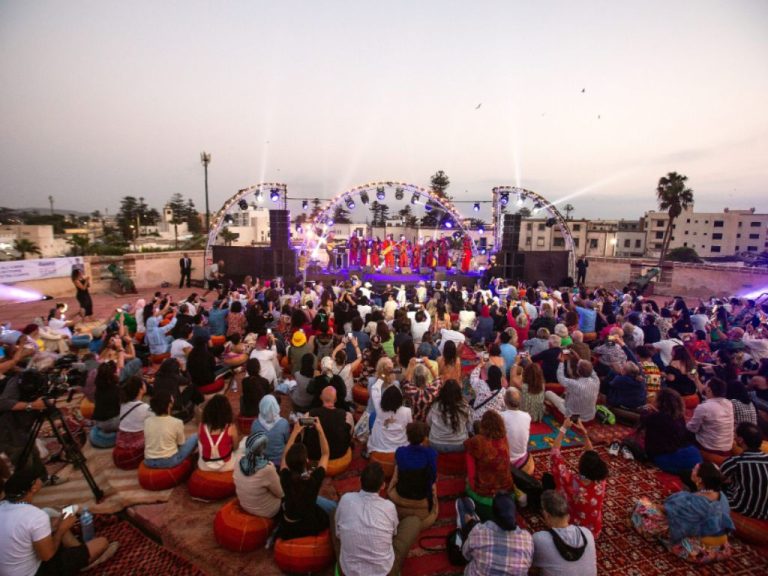
While Andalusian and Aissawa traditions shape northern Morocco, Gnawa heritage anchors the south and coast. Its rhythms emerged from West African spiritual lineages, blending remembrance with healing. Essaouira’s Gnawa Festival brings these sounds into international focus, uniting ancestral trance with contemporary collaboration.
Here, the guembri vibrates through stone walls, qraqeb spark against night air, bodies sway as invocation becomes movement. The tradition remains spiritual practice, even when shared on open stages. Travelers who hear Gnawa once rarely forget it.
Tangier: Where Sacred Sound Becomes Living City
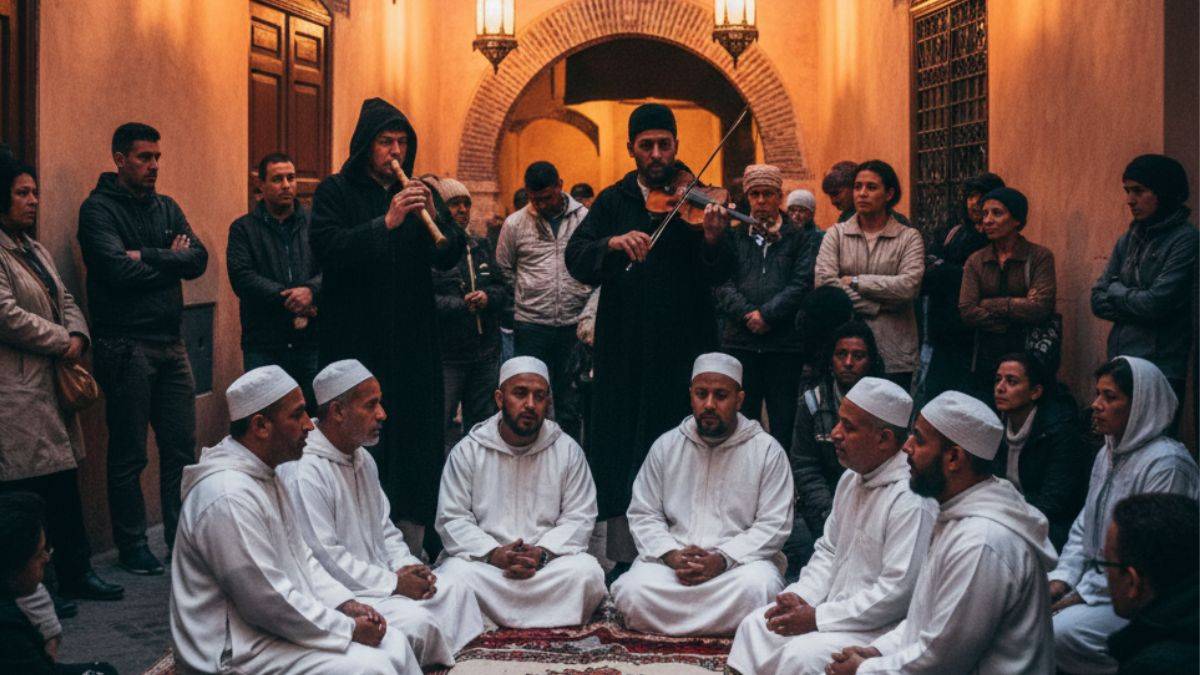
Tangier’s sacred music cannot be experienced through schedule alone. It must be walked, followed, waited for, listened into. Thursday nights at Zawiya Tijania, sustained dhikr rising into evening. Slow Qadiriya chanting near Bab Fahs. Dynamic Darqawiya gatherings in medina corridors. Andalusian orchestras filling grand salons. Ramadan concerts glowing in open squares.
For those seeking to understand how this living soundscape organizes itself throughout the year, from Ramadan to moussem season to conservatory recitals,Tangier Music Festivals: Sacred Sounds Year-Round outlines the rhythmic calendar that guides the city.
From Public Squares to Palace Halls: How Space Shapes Sound
Moroccan sacred sound is inseparable from place. Zawiya courtyards create intimacy and shared breath. Palace halls amplify orchestral grandeur. Public squares dissolve hierarchy, turning families, travelers, and neighbors into a single audience.
In Tangier, these worlds overlap. Tijani gatherings near Grand Socco. Andalusian orchestras at Institut Cervantes. Experimental performances at Cinémathèque de Tanger. Aissawa processions winding through medina turns. Ramadan nights welcoming every passerby.
The architecture becomes instrument; sound becomes architecture.
Memory and Migration: Why Sacred Festivals Still Matter
Sacred festivals endure because they answer needs modern life cannot remove: community, belonging, identity, continuity, emotional depth. As borders shift and cultures migrate, sacred sound holds memory in motion. For Moroccan families, these festivals mark spiritual calendar. For musicians, they represent lineage. For travelers, they open a form of cultural access unavailable through text or image.
Music becomes living archive.
Visiting Sacred Festivals Respectfully
Travelers entering sacred spaces participate in living continuity. Respect, curiosity, and cultural awareness shape the experience. This is especially important in zawiyas, where practice is devotional rather than performative. Those preparing to enter such spaces will find guidance, language, and cultural understanding woven into Morocco Zawiya Etiquette: Visiting Sacred Spaces, which clarifies how humility shapes reception.
A Year-Round Calendar: Seasonal Rhythm of Moroccan Festivals
Morocco’s sacred festivals unfold across seasons. Ramadan concerts fill Tangier’s squares with orchestral sound. Moussem Sidi Kacem brings Aissawa groups into the medina. Fez ignites spring with spiritual diversity. Conservatories reopen halls as autumn cools. Winter returns gatherings to their intimate roots.
Those aligning travel with these cycles can navigate through the natural musical rhythm described in Tangier Music Festivals: Sacred Sounds Year-Round, revealing how time shapes tradition.
The Future of Morocco’s Sacred Sound
The question is not whether sacred music will survive; it already has, through centuries of upheaval. The question now is how it will evolve. Younger musicians enter conservatories with passion. New audiences reclaim ancestral sound. Collaborations grow across genres and borders. Sacred music no longer stands at risk; it stands in motion.
Tangier, especially, shows how tradition transforms without breaking. Andalusian orchestration blends with modern composition. Zawiya dhikr echoes through digital archiving. Sacred sound circles back to youth rather than fading with elders.
Listening as Participation
To hear Moroccan sacred music is to participate in community. In dhikr, silence becomes speech. In Andalusian concerts, stillness carries reverence. In processions, movement becomes rhythm. Travelers who listen deeply discover a shift: music becomes experience rather than event.
A Journey of Sound, Not Schedule
The most meaningful encounters rarely come from planning. They come from walking into night air, hearing a melody drift through alleys, following its echo until it opens into presence. Tangier offers these invitations constantly. Festivals simply make them visible.
Ancient Rhythms, Modern Souls
Morocco’s sacred festivals reveal how exile becomes art, how devotion becomes rhythm, how memory becomes sound. Tangier stands at the crossroads of these lineages, where melodies travel across water, centuries, and identity and continue reshaping those who listen.