
Marrakech moves according to its own internal logic. Heat shapes the day. Tradition shapes behavior. Human connection shapes everything else. Mornings begin early, when the air is still cool and the streets belong to shopkeepers, porters, and quiet routines. Afternoons slow as the sun presses down on red walls and shaded courtyards become refuges. Evenings arrive gently, filling rooftops, markets, and neighborhood streets with conversation, movement, and sound.
Visitors who try to impose their own rhythm often feel overwhelmed. Those who observe first and adjust gradually find that the city begins to open. Patience here is not passive. It is an active form of respect and the most valuable cultural currency you can carry.
Understanding etiquette in Marrakech is less about memorizing rules and more about learning how to move without friction, how to listen without urgency, and how to participate without intrusion.
Understanding the Rhythm of the City
Marrakech does not reward speed. It rewards alignment. Daily life unfolds in layers shaped by climate, prayer times, family obligations, and long-standing social patterns. Shops may open early, close briefly during the hottest hours, then reopen late into the night. Conversations rarely begin abruptly. They build through greeting, acknowledgment, and shared presence.
For visitors, adapting to this rhythm reduces tension. Scheduling fewer activities and allowing space between them often leads to richer encounters. Waiting is not wasted time here. It is often where the city reveals itself most clearly.
This rhythm is inseparable from the living heritage explored more fully in Traditions of Marrakech: Living Heritage in the Red City, where daily habits, rituals, and social codes form a continuous cultural fabric rather than isolated customs.
Respecting Personal Space and Social Codes
Marrakech is a social city, but familiarity develops slowly. Greetings matter deeply. A calm salam alaikum offered with eye contact and patience establishes goodwill more effectively than efficiency or formality. Conversations unfold at their own pace, often beginning with questions about well-being rather than purpose.
Physical gestures remain restrained. Public displays of affection are minimal and generally avoided, even among locals. Visitors who mirror this discretion are perceived as respectful rather than distant.
Listening carries weight. Interrupting, rushing, or pressing for immediate answers can feel intrusive. Allowing silence and responding thoughtfully signals cultural awareness and emotional intelligence.
Dress as Cultural Language
Clothing in Marrakech communicates intention. It signals whether someone understands the environment they are entering. In traditional neighborhoods and the medina, modest dress is appreciated regardless of gender. Covered shoulders, longer shorts or trousers, and breathable fabrics create comfort while aligning with local expectations.
This becomes especially important when approaching mosques, zawiyas, family homes, or spiritual spaces. Dressing thoughtfully does not mean abandoning personal style. It means choosing harmony over contrast.
Visitors who dress with sensitivity often notice smoother interactions, fewer confrontations, and warmer responses. Clothing becomes a quiet form of participation rather than a statement.
Navigating the Medina with Awareness
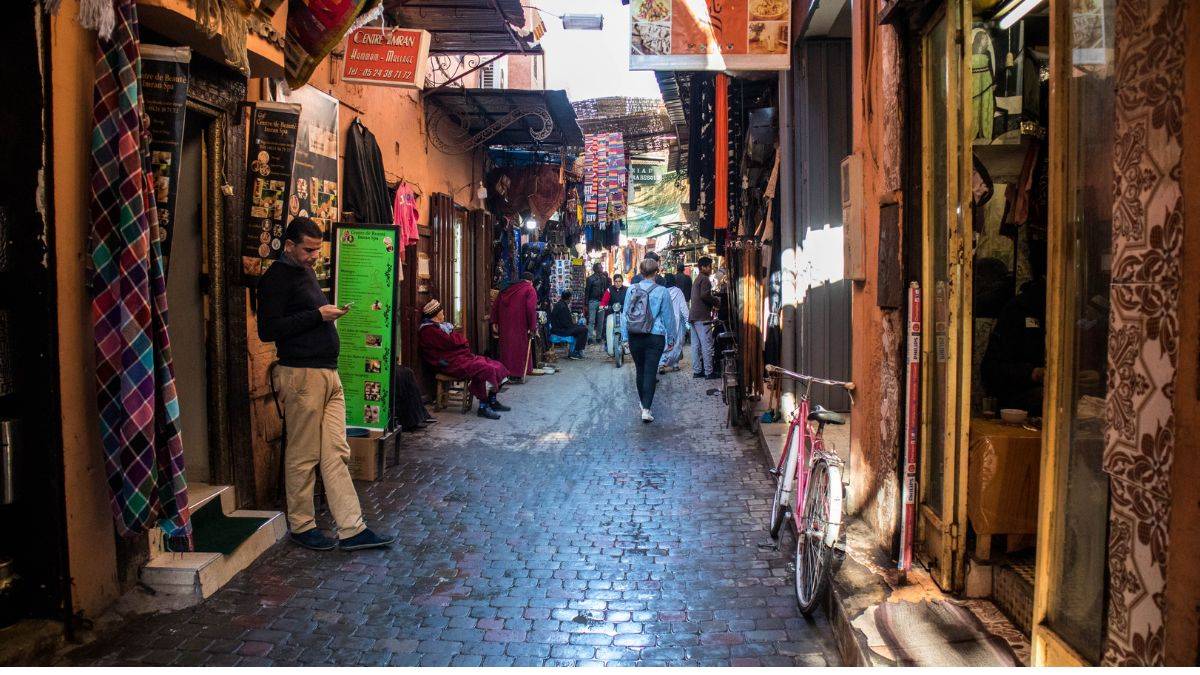
The medina is not chaotic by accident. It is a living organism shaped by centuries of trade, family life, and craftsmanship. Narrow alleys serve specific purposes. Workshops spill into walkways. Children play where commerce unfolds. Everything exists in proximity.
Walking with awareness means moving deliberately but without urgency. Blocking doorways, stopping abruptly, or pushing through crowds disrupts the flow. When approached by vendors or guides, a calm no thank you offered without defensiveness is understood and respected.
Photography requires sensitivity. Asking permission before photographing people is essential, especially artisans, elders, and children. Some moments are meant to be witnessed rather than captured. Respecting this distinction builds trust.
Sacred Spaces and Quiet Observation
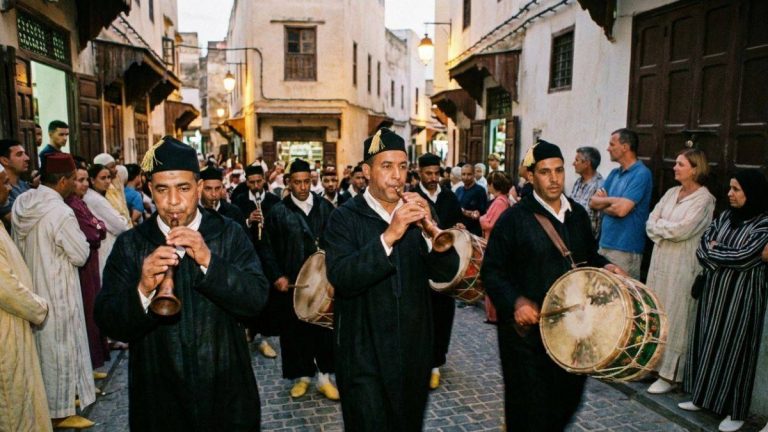
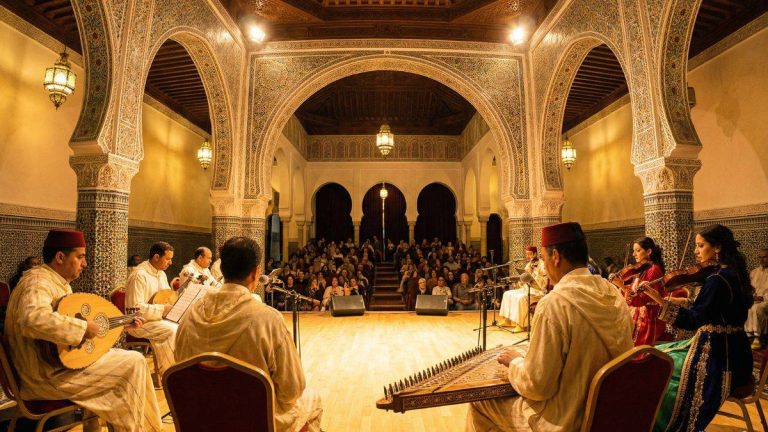
Many of Marrakech’s spiritual spaces are not attractions. They are active centers of devotion. If you encounter a dhikr gathering, prayer session, or musical ritual, remain still. Lower your voice. Put your phone away. Presence itself becomes a form of participation.
These moments are not performances. They are lived expressions of faith and continuity. Observing without intrusion allows you to witness something authentic without disrupting its purpose.
Understanding how these spaces function within daily life is part of the broader cultural ecosystem described in Living Traditions of Marrakech in Everyday Life, where spirituality, routine, and community intersect naturally.
Markets Without Conflict
Haggling in Marrakech is not a battle. It is a conversation. Prices are fluid, but dignity remains fixed. Beginning with curiosity rather than confrontation changes the tone entirely. A smile lowers resistance faster than pressure.
Walking away is acceptable. So is returning later. What is remembered is not the price paid but the manner in which the exchange unfolded. Respect lingers longer than transactions.
Money changes hands openly, yet fairness is valued. Visitors who treat bargaining as performance rather than engagement often encounter resistance. Those who approach it as dialogue find balance.
Food Etiquette and Shared Tables
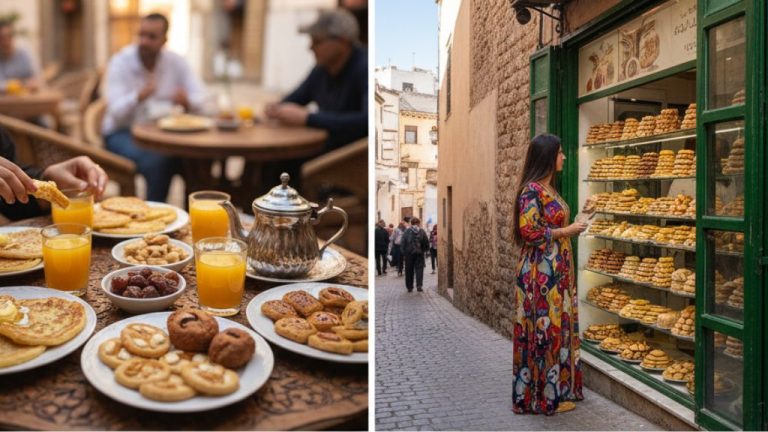
Food in Marrakech is an expression of generosity. When invited to share a meal, accepting even a small portion honors the gesture. Eating with the right hand remains customary. Compliments offered sincerely are welcomed and often returned with warmth.
Street food culture thrives throughout the city. Observing where locals eat offers better guidance than recommendations. Busy stalls indicate trust, freshness, and continuity.
Meals are rarely rushed. Sitting, sharing, and lingering are part of the experience. Food nourishes relationships as much as bodies.
Time Is Flexible but Intent Matters
Appointments may shift. Conversations may extend beyond expectation. This does not signal disorganization. It reflects a value system where human connection outweighs schedules.
Showing frustration closes doors quietly. Showing adaptability opens them. This flexibility becomes especially important during festivals, family gatherings, or spontaneous invitations.
Intent matters more than precision. Being present carries more weight than being punctual.
Departing with Awareness
Leaving Marrakech carries its own etiquette. Saying goodbye matters. Thanking hosts, shopkeepers, or guides reinforces mutual respect. A simple acknowledgment of shared time leaves a lasting impression.
The city remembers those who pass through gently. Not because they consumed experiences, but because they moved in harmony with what already existed.
Understanding cultural etiquette in Marrakech is not about rules or performance. It is about alignment. When visitors adjust their pace, soften their expectations, and listen more than they speak, Marrakech reveals itself without effort, without spectacle, and without demand.
What remains is not a checklist of customs, but a feeling of having been allowed to witness something real.