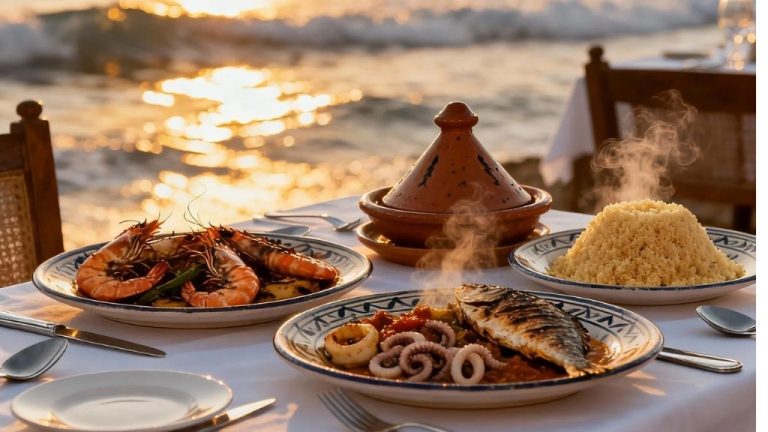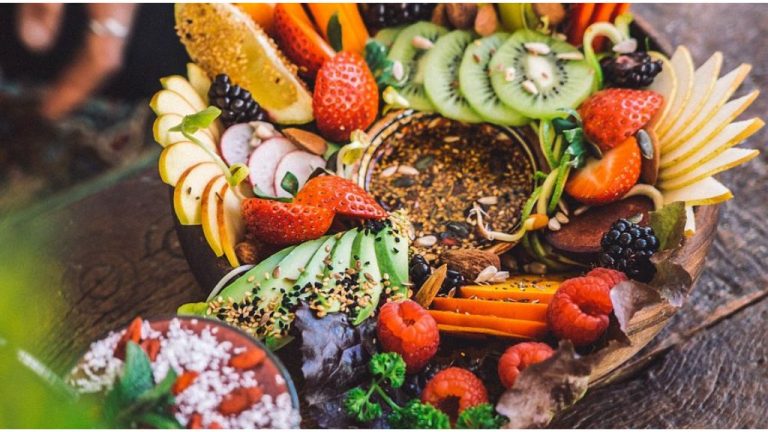

Finding truly satisfying vegan food in Morocco sounds challenging until you realize traditional cuisine already features vegetable tagines, lentil soups, chickpea-based dishes, and grain preparations that need zero modification. The foundation is plant-forward by nature because meat historically showed up in Moroccan cooking as accent rather than centerpiece. Essaouira builds on this foundation with restaurants and cafés specifically understanding plant-based eating as health choice rather than dietary restriction.
Moroccan cuisine already leans plant-forward
Traditional Moroccan meals start with multiple vegetable salads called mezze. Zaalouk combines roasted eggplant with tomatoes, garlic, and spices. Taktouka features peppers and tomatoes cooked until they meld together. Carrot salads get dressed with cumin and lemon. These dishes aren’t side thoughts but central components of the meal receiving as much attention as any meat preparation.Vegetable tagines appear on every restaurant menu, not as accommodation but as legitimate choice Moroccans actually order. Seven vegetable tagine remains popular especially on Fridays when families gather for couscous. The vegetables cook slowly with aromatic spices until they transform into something far greater than plain cooked vegetables.Harira soup which breaks the Ramadan fast each evening during the holy month centers on lentils, chickpeas, and tomatoes. The traditional version includes small amount of meat but many families prepare meatless versions that lose nothing in flavor or satisfaction. Bread gets used to scoop every drop of the rich broth.
This existing foundation means vegan travelers don’t face the usual restaurant challenges of limited options or plates where they removed the meat leaving you with sad sides. The cuisine respects vegetables and legumes as worthy of attention and skill. Adapting it to fully plant-based eating requires small adjustments not complete reinvention.
Restaurants specifically catering to plant-based diets
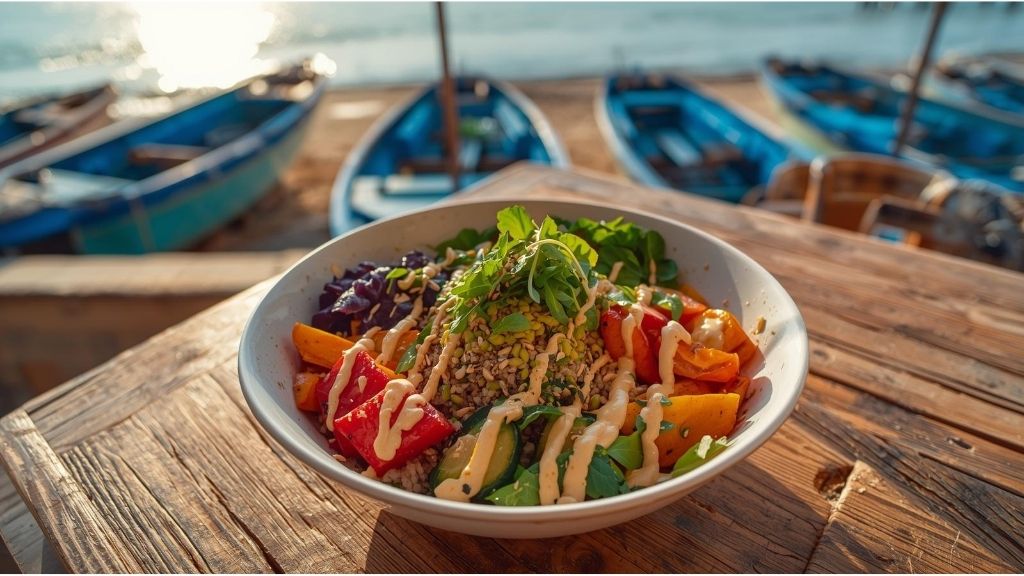
Ocean Vagabond opened specifically to serve the health-conscious crowd including significant vegan and vegetarian population among Essaouira’s expat and long-term traveler community. The California expat owner designed the menu around what she wanted to eat, nutrient-dense bowls, smoothies, salads, and dishes that actually satisfy rather than just fill space on a plate.Their Buddha bowls feature quinoa or brown rice as base, roasted seasonal vegetables, leafy greens, pickled items for acidity, nuts or seeds for crunch, and house-made dressings like tahini-lemon or cashew-herb. Everything gets sourced from local farms when possible. The construction follows California wellness bowl template but adapted to Moroccan ingredients and flavors.The smoothie menu includes standard options like berry-banana plus more adventurous combinations incorporating Moroccan ingredients. The date shake blends medjool dates with almond milk, cinnamon, and vanilla creating dessert-like drink that’s actually nutritious. The avocado-mint smoothie sounds weird but works surprisingly well with the freshness cutting the richness.They also serve vegan versions of Moroccan classics. The vegetable tagine comes with your choice of couscous or quinoa. The lentil soup gets finished with fresh lemon and cilantro. Even the breakfast offerings include shakshuka made with tofu instead of eggs maintaining the tomato-pepper base that makes the dish work.
Traditional restaurants adapt willingly
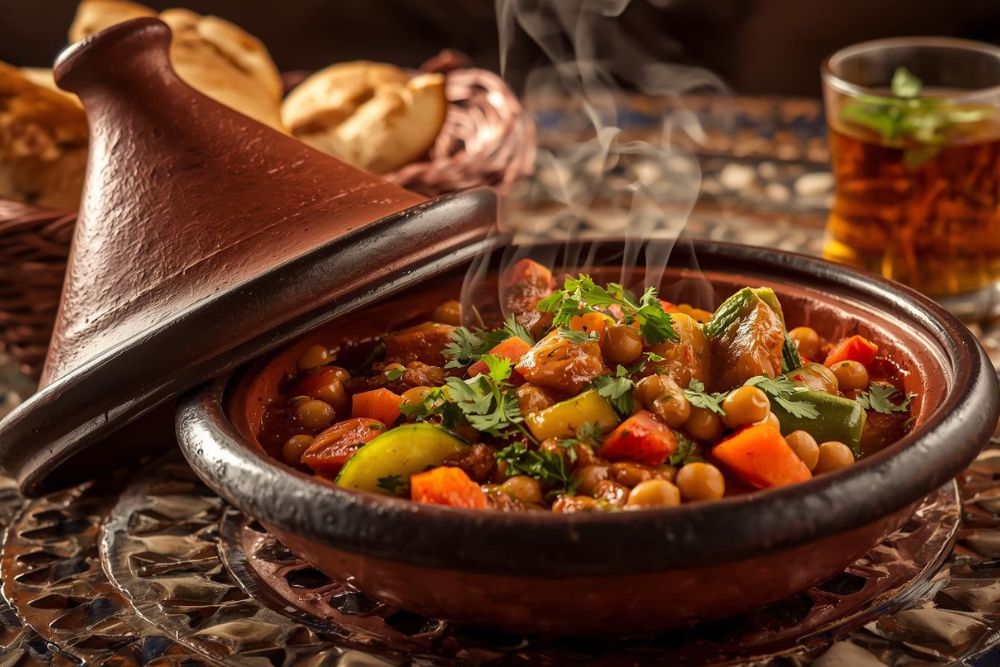
Most traditional Moroccan restaurants in Essaouira accommodate vegan requests without making it difficult. The concept of vegetarian eating isn’t foreign here and adapting dishes to remove dairy or other animal products usually just requires asking. The key is communicating clearly what you do and don’t eat since “vegetarian” means different things across cultures.
La Table by Madada features seasonal tasting menu that always includes several courses naturally vegan or easily adapted. The chef uses vegetables and plant proteins with same care and technique applied to fish or meat dishes. A recent menu included heirloom tomato carpaccaccio with preserved lemon, white bean and harissa soup, eggplant tagine with dates and almonds, and orange blossom sorbet.Restaurants along the port that focus primarily on seafood still serve excellent vegetable tagines, couscous with vegetables, and mezze plates. The same cooking skills applied to fish work equally well with vegetables. The tagine cooking method itself creates deep flavors regardless of protein source because the slow cooking and spice layering do most of the work.Street food presents more challenges but options exist. The msemen vendors make their flatbreads with just flour, water, oil, and salt so they’re naturally vegan. You can request them without butter and eat them with jam or amlou if you eat honey. Fresh-squeezed orange juice from cart vendors provides everywhere refreshment. Roasted nuts and dried fruits work as portable snacks.
Protein sources beyond just chickpeas
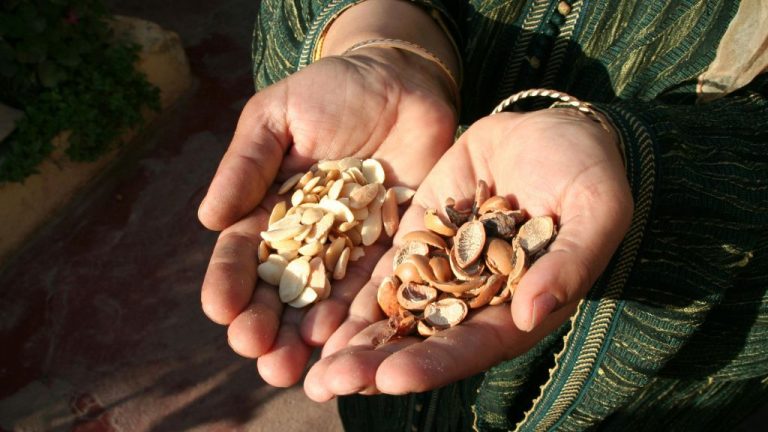
California vegans sometimes worry about protein when traveling but Moroccan cuisine offers multiple plant protein sources beyond the obvious beans and lentils. Understanding what’s available helps you maintain nutrition without overthinking every meal.Chickpeas show up everywhere in various forms. Whole chickpeas get cooked into tagines and soups. Chickpea flour becomes base for savory crepes and fritters. Hummus appears on mezze plates though it’s more Middle Eastern than traditionally Moroccan. The versatility means you get chickpeas without eating the exact same preparation repeatedly.Lentils in various colors provide different textures and flavors. Brown lentils hold their shape in soups and stews. Red lentils break down creating creamy consistency. Harira soup traditionally combines lentils with chickpeas getting complete amino acid profile without thinking about protein combining.Almonds feature prominently in Moroccan cooking appearing in both savory and sweet preparations. Almond paste fills pastries, slivered almonds top couscous and tagines, almond milk provides dairy-free option. The local almonds taste incredible, fresher and more flavorful than what you get in California supermarkets despite California growing most of America’s almonds.Seeds including sesame, pumpkin, and sunflower get used for both nutrition and flavor. Tahini made from sesame seeds appears in dressings and sauces. Roasted seeds top dishes adding crunch and protein. The seed quality impresses because they’re fresher and often less processed than commercial versions.
Navigating dietary restrictions culturally
Explaining vegan diet in Morocco requires some cultural awareness. The word “vegetarian” translates to “nabati” in Arabic but not everyone knows it and the concept sometimes confuses older generations who grew up in different food culture. Being specific helps more than labels.Saying you don’t eat meat, chicken, fish, eggs, milk, or cheese communicates clearly what you need. This approach works better than explaining philosophical reasons for veganism which may not translate culturally. Most Moroccans respect religious dietary restrictions so framing it as personal practice similar to kosher or halal usually generates respect.Moroccan hospitality culture means people want to feed you generously. Refusing food can sometimes offend especially in home settings. Explaining your restrictions clearly before the meal starts helps hosts plan appropriately. Most people genuinely want to accommodate once they understand what you need.
Learning a few Arabic phrases helps enormously. “Ana nabati” means I’m vegetarian. “Bla lahm, bla hoot, bla beid, bla hleel” means without meat, fish, eggs, or milk. Even attempting Arabic shows respect and usually generates goodwill making people more willing to work with your needs.
Comparing costs to California vegan dining
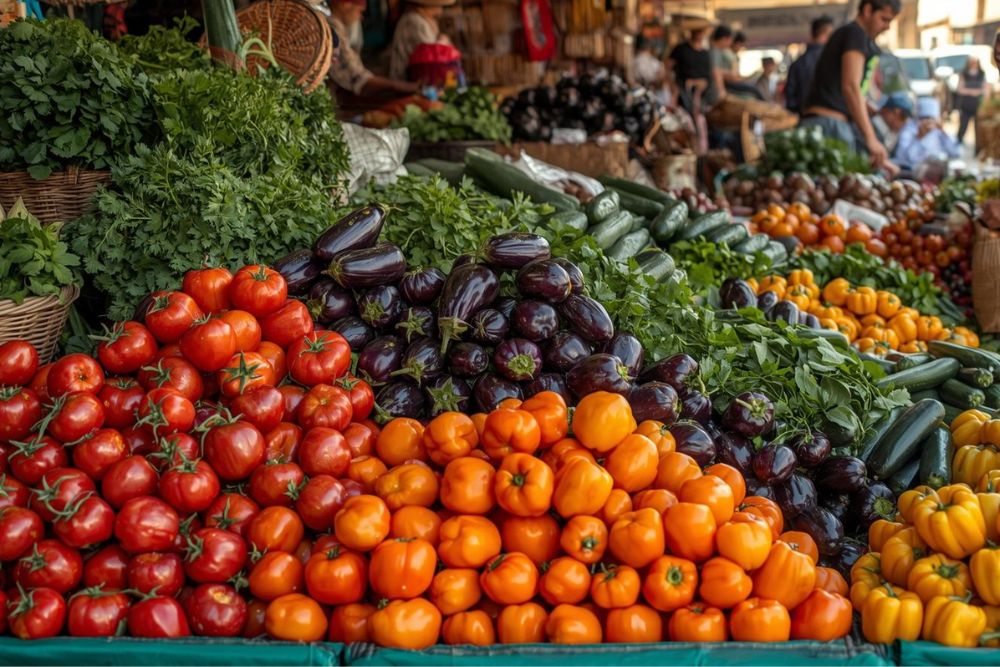
Vegan meal in Essaouira costs dramatically less than equivalent food in California. A substantial Buddha bowl at Ocean Vagabond runs $7 compared to $15-18 at similar California cafés. Traditional vegetable tagine with salads costs $5-8 versus $12-16 back home. The difference means you can eat out regularly without destroying your budget.Fresh produce from markets costs almost nothing by California standards. Beautiful tomatoes go for maybe a dollar per kilogram. Eggplants, peppers, zucchini all price similarly. You can buy enough vegetables for several days of cooking for under $10. The savings allow you to focus on quality and eating well rather than calculating whether you can afford fresh produce this week.Street food and casual options remain incredibly cheap. Fresh-squeezed orange juice costs 50 cents. Msemen flatbread runs maybe 30 cents. Even at cafés a coffee and pastry costs $2-3 total. This accessibility means maintaining healthy vegan diet doesn’t require wealth or sacrifice.The savings matter especially for people whose values-driven food choices already cost more in California. Eating organic and vegan there often means spending significantly more than standard diet. In Essaouira the food is often organic by default and plant-based options cost the same or less than meat dishes. You can align your eating with your ethics without financial penalty.
Adapting classic dishes plant-based
Many Moroccan classics adapt beautifully to vegan preparation. Understanding basic adaptations helps you order confidently or cook for yourself if you’re staying somewhere with kitchen access.Couscous traditionally gets steamed over stew containing meat but the couscous itself is just semolina wheat. Ordering couscous with seven vegetables gives you the traditional preparation minus the meat. The vegetables cook in aromatic broth with spices creating plenty of flavor. Some places offer couscous with caramelized onions and chickpeas that’s naturally vegan and deeply satisfying.Tagines adapt easily since the cooking method works with any ingredients. Vegetable tagines already exist on menus but you can also request specific combinations. Potato and olive tagine with preserved lemon tastes amazing. Carrot and chickpea with cumin and coriander works well. Restaurants generally accommodate requests if you order at less busy times.Bastilla or pastilla traditionally uses pigeon or chicken but vegetable versions appear increasingly on menus. The crispy phyllo layers filled with spiced vegetables, almonds, and sometimes dried fruits create similar textural and flavor contrast to the meat version. The cinnamon sugar topping works identically.
Breakfast dishes like msemen and baghrir Moroccan pancakes are naturally vegan when prepared traditionally. Serve them with jam, honey if you eat it, or amlou the almond-argan spread. The street vendors making these fresh each morning provide better breakfast than most hotel buffets.
Seasonal eating simplified
Eating seasonally happens automatically in Essaouira because that’s what the markets sell. This simplifies vegan eating enormously since you don’t face the usual questions about whether to buy out-of-season produce. You eat what’s growing now and discover preparations you’d never encounter if you had year-round access to everything.Spring brings peas, fava beans, artichokes, and early greens. Markets overflow with these items and restaurants feature them prominently. Vegetable tagines this time of year might center on baby artichokes with preserved lemon and peas. The freshness makes simple preparations taste extraordinary.Summer means tomatoes, peppers, eggplant, and zucchini dominating markets. This is when zaalouk and taktouka taste best because the vegetables have full flavor from growing in hot sun. Late summer brings melons and the last stone fruits before autumn transition.Fall delivers squash, root vegetables, pomegranates, and late figs. Tagines shift toward heartier vegetables and preparations get slightly richer. This is good timing because the weather cools and you want warming foods naturally.Winter focuses on citrus, root vegetables, and preserved foods. Markets fill with oranges, clementines, and grapefruits. Carrots, turnips, and potatoes feature in tagines. This is when preserved lemons really shine since their brightness balances the heavier winter vegetables.
Health benefits align with wellness goals
Plant-based diet combined with Essaouira’s lifestyle creates conditions supporting wellness goals California vegans pursue but often struggle to maintain consistently at home. The factors work synergistically rather than requiring separate management.The food is demonstrably less processed than typical American vegan products. No impossible burgers or highly processed meat substitutes, just actual vegetables, legumes, and grains prepared traditionally. The simplicity means you consume fewer additives and more nutrients even while eating at restaurants.Walking everywhere in the medina provides movement California car culture doesn’t. You might walk several miles daily just getting to market, exploring, meeting friends at cafés. This consistent low-level activity combined with plant-based eating supports healthy weight and cardiovascular function without formal exercise programs.The slower pace and cultural emphasis on relaxation reduces stress affecting health as much as diet choices. Long meals, afternoon tea breaks, sunset watching all contribute to nervous system regulation. Combined with anti-inflammatory plant-based eating the effects compound.
The community aspect matters too with shared meals and social eating being cultural norm. Research shows people eating alone versus communally affects both enjoyment and digestion. Moroccan food culture builds in social connections that support both mental health and healthy relationship with food.
Bringing Moroccan vegan cooking home
Learning to prepare Moroccan plant-based dishes at home extends the benefits beyond your time in Essaouira. The techniques and recipes adapt easily to California kitchens once you understand basics and source key ingredients.A tagine pot helps but isn’t essential. Any heavy pot with tight-fitting lid works for slow-cooking vegetables with spices. The method matters more than the specific vessel. Build layers of flavor with onions, garlic, spices, then vegetables and liquid. Cook low and slow until everything melds.Key spices to bring home include cumin, coriander, paprika, ginger, turmeric, cinnamon, and ideally ras el hanout spice blend if you find good quality. These keep for months and form the base of Moroccan cooking. Fresh herbs like cilantro and parsley grow easily in California or can be found at any grocery store.Preserved lemons take a month to make but require only lemons, salt, and jar. They transform dishes and last indefinitely refrigerated. Many specialty stores now sell them but making your own costs almost nothing and tastes better.
Moroccan cooking classes in Essaouira often offer vegan-specific sessions or happily adapt techniques to plant-based ingredients. Taking a class provides hands-on experience and confidence to recreate dishes at home. The teachers usually provide recipes adjusted for ingredients available outside Morocco.The broader lesson is that delicious vegan food doesn’t require specialty products or complex preparations. Traditional cuisines often already emphasize plants and grains. Moroccan cooking specifically offers techniques and flavor combinations California vegan cooks can integrate immediately improving both nutrition and enjoyment. Understanding how seamlessly plant-based eating fits into Essaouira’s culture completes the picture of why this Atlantic town resonates so deeply with California wellness seekers who value both health and authentic experience over processed convenience.