
Some cities speak through architecture. Tangier speaks through sound. You hear it before you understand it. A melody drifting from an open window. A drumbeat echoing through a narrow street. A voice rising, not to perform, but to remember.
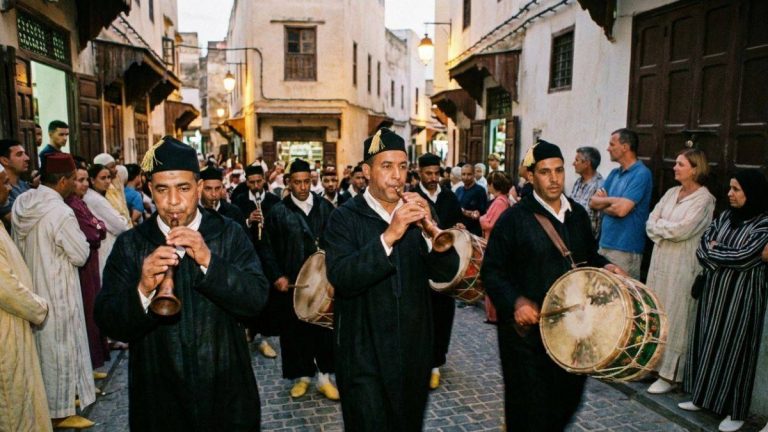
I noticed this one evening near the Kasbah. The call to prayer had just faded, and somewhere nearby a small group began to play. No stage. No audience. Just rhythm. Feet tapping softly against stone, hands clapping in time, bodies moving as if guided by memory rather than instruction.
Music as Memory, Not Entertainment
In Tangier, music is rarely about spectacle. It lives in homes, in weddings, in quiet gatherings, and sometimes simply in passing moments. Songs carry stories. Rhythms mark transitions. Dance becomes a language shared without explanation.
This is especially true in northern musical traditions, where Andalusian influences blend with local expressions shaped by centuries of movement across land and sea.
You don’t need to know the names of styles to feel their meaning. The music invites presence, not analysis.
Andalusian Echoes in the City
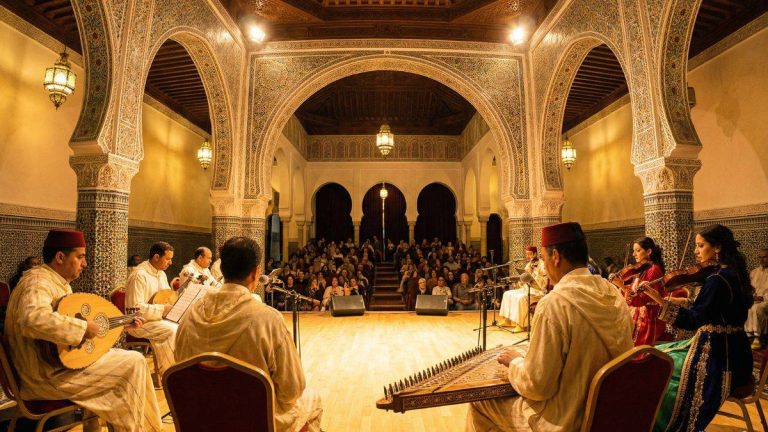
One of the most refined musical traditions you’ll encounter in Tangier traces its roots to Al-Andalus. Andalusian music is formal, poetic, and deeply emotional. It often appears during cultural gatherings, festivals, or private celebrations.
In these moments, music unfolds slowly. Instruments respond to one another. Voices rise and fall with intention. The atmosphere asks listeners to sit, to listen, and to let time expand.
This same patience appears in Tangier’s crafts and rituals, where continuity matters more than display.
This way of listening rather than performing reflects the same living continuity found in Tangier’s Living Traditions: A Mindful Cultural Guide for 2026, where culture survives through shared memory, repetition, and presence rather than spectacle.
Gnawa Rhythms and Spiritual Movement
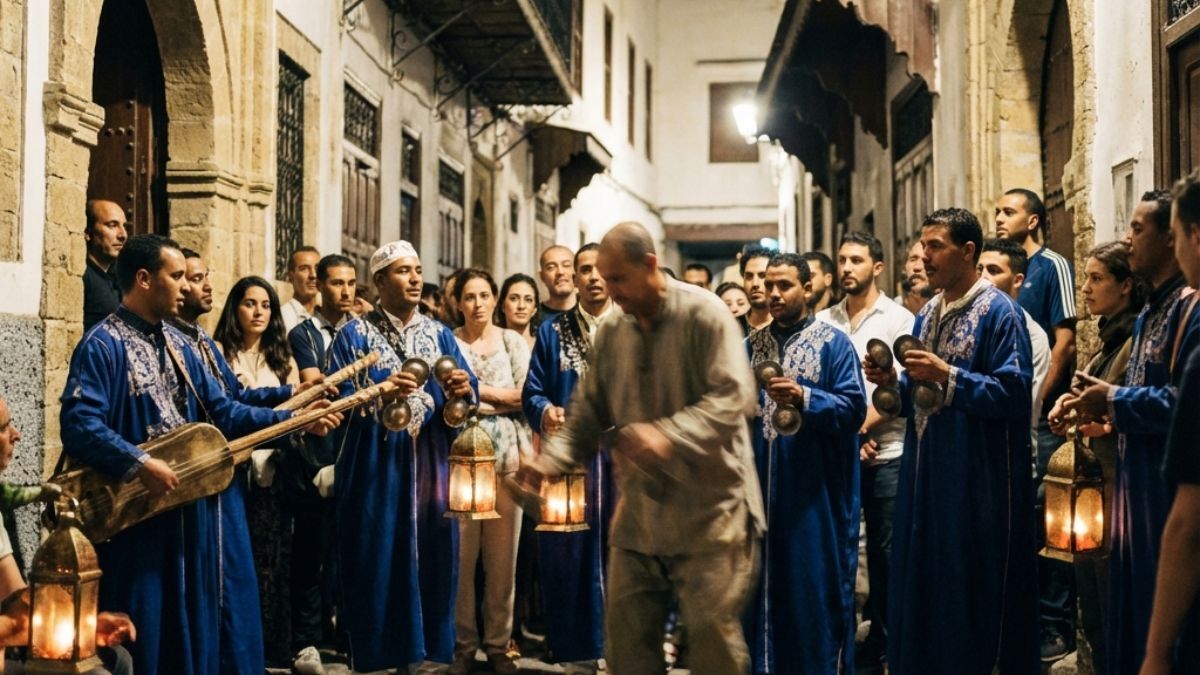
Another powerful presence in Tangier’s soundscape comes from Gnawa traditions. Rooted in spiritual practice and ancestral memory, Gnawa music combines rhythm, chant, and movement in ways that blur the line between music and ritual.
The metallic sound of qraqeb fills the air. Drums anchor the body. Dance becomes repetitive, grounding, almost meditative.
These performances are not staged for tourists. When you encounter them, you are witnessing a living spiritual expression, closely connected to healing practices still present in the city today.
Dance as a Shared Language
Dance in Tangier is rarely choreographed. It emerges naturally. At celebrations, people move together without instruction. The body responds to rhythm the way it responds to emotion.
There is no pressure to join. Watching is participation enough. Respecting space matters more than imitation.
In these moments, movement reflects community, not performance. Everyone belongs by simply being present.
Where to Experience Music Respectfully
Some experiences happen by chance. Others require patience. Cultural centers, local festivals, and intimate gatherings offer opportunities to listen without intrusion.
Avoid places that promise “authentic shows” on demand. Real music follows its own timing.
If invited, arrive quietly. Listen more than you record. Let the sound lead, not the camera
Music as a Doorway to Deeper Traditions
Understanding Tangier’s music opens doors to the city’s wider cultural world. Rhythm connects to ritual. Song echoes through craft, clothing, and daily gestures.
For travelers who wish to continue this exploration, the journey flows naturally into spiritual life, traditional attire, and the subtle etiquette that shapes how culture is shared.
If sound is Tangier’s first language, ritual is its quiet grammar. Beneath the music lies a network of gestures, pauses, and shared silences that shape how spiritual life unfolds in the city. For readers drawn to what happens beyond what is heard, into the subtle practices that give meaning to rhythm and gathering, Rituals & Spiritual Life in Tangier: Quiet Pathways of Meaning offers a deeper look into the understated ways devotion, habit, and presence continue to guide daily life.