
Traveling through Tangier is less about mastering a list of rules and more about learning how to listen. The city communicates softly through pauses in conversation, subtle gestures, shared silences, and rhythms that reveal themselves only when urgency is set aside. Cultural etiquette here is not rigid or instructional. It is fluid, relational, and shaped by centuries of coexistence between people, beliefs, and landscapes.
For travelers who move with awareness, Tangier becomes more than a destination. It becomes a dialogue. Small moments how tea is offered, how greetings unfold, how space is shared carry meaning far beyond what is immediately visible. This guide complements the broader perspective explored in the pillar article Tangier’s Living Traditions: A Mindful Cultural Guide for 2026, where everyday behavior reflects deeper layers of history, identity, and continuity.
Moving at the City’s Rhythm
Tangier does not reward haste. Its streets, cafés, ports, and markets follow a tempo that values presence over efficiency. To rush through Tangier is to miss it entirely.
Walking slowly through the medina allows the city to open itself naturally. Conversations emerge without agenda. Directions are offered generously, even when they wander. Time stretches in cafés where people linger over a single glass of tea, observing the movement of others rather than the clock.
This rhythm is not accidental. It reflects a worldview in which human connection matters more than schedules. Delays are not interruptions; they are part of the experience. Accepting this pace signals respect and invites openness in return.
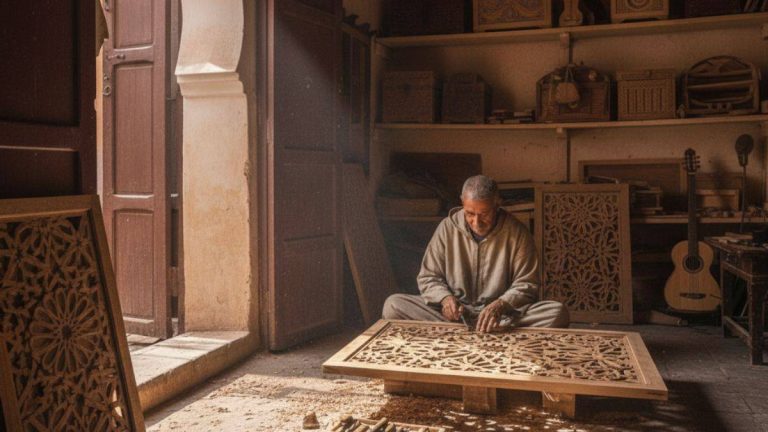
This same patience shapes Tangier’s creative traditions, where craftsmanship unfolds through repetition rather than speed. That relationship between time, skill, and care is explored more deeply in Arts & Crafts of Tangier: A Cultural Journey, where making is inseparable from waiting.
Dress as a Form of Respect
Tangier is coastal, cosmopolitan, and historically open to the world. Yet modesty remains a shared social value, expressed less through enforcement than through mutual understanding.
Dressing thoughtfully allows travelers to move comfortably across different social and cultural spaces. Light fabrics, covered shoulders in traditional neighborhoods, and balanced choices help avoid unnecessary attention while signaling awareness. In mosques, family areas, and older quarters of the city, modest attire is interpreted as courtesy rather than obligation.
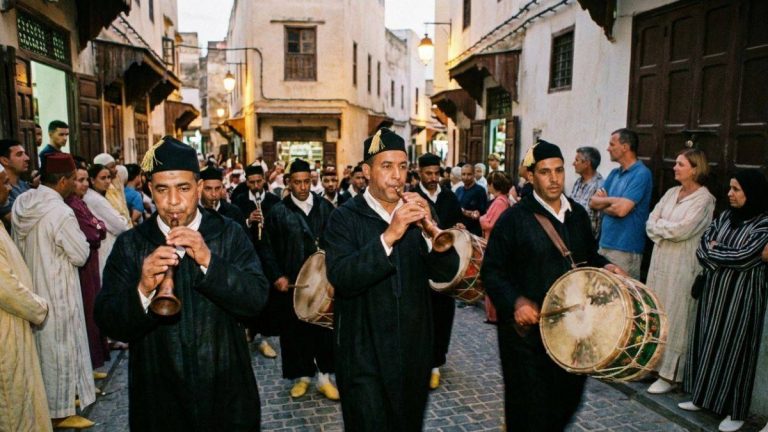
This does not mean suppressing personal style. Instead, it means adapting to context. In public celebrations and festive settings, clothing becomes expressive colors, textures, and traditional garments appear proudly, reflecting identity and belonging. The key is attentiveness rather than uniformity.
By dressing with intention, travelers participate quietly in the city’s shared sense of balance.
Sacred Spaces and Quiet Boundaries
Spiritual life in Tangier is woven seamlessly into daily routines. Mosques, zawiyas, neighborhood shrines, and family prayer spaces are not separated from ordinary life. They exist alongside homes, shops, and streets, forming an invisible architecture of meaning.
Respect in these spaces is communicated through behavior rather than instruction. Lowering one’s voice, pausing before entering, and observing before acting are gestures that carry more weight than spoken explanations. Photography, when allowed, is approached carefully and often avoided altogether in moments of prayer.
Boundaries are rarely marked with signs. They are felt through atmosphere. Learning to recognize them requires stillness and humility. These sacred dimensions are not performances for visitors; they are lived expressions of continuity and faith.
Understanding this subtle spiritual presence deepens one’s experience of the city and reinforces the importance of moving gently within spaces that carry collective memory.
Social Interaction and Everyday Courtesy
In Tangier, greetings are not formalities. They are foundations. A simple acknowledgment often accompanied by an inquiry into well-being opens conversations and establishes trust. Directness without greeting can feel abrupt, even dismissive.
Social exchanges tend to unfold gradually. Purpose comes after connection. In markets, cafés, and workshops, dialogue matters as much as transaction. Bargaining is not confrontation; it is conversation. Tone, patience, and humor influence outcomes more than firmness.
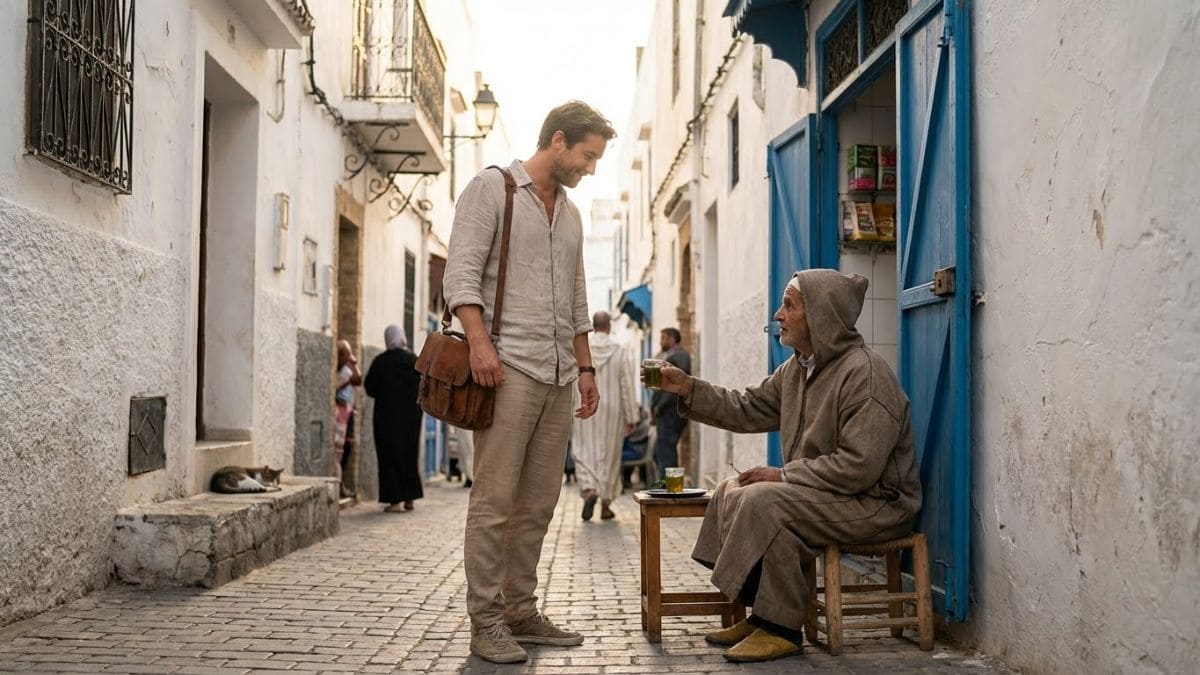
Hospitality is extended naturally, without expectation. Accepting it with gratitude rather than suspicion honors the spirit in which it is offered. Even brief interactions carry relational weight.
Observing how locals speak, pause, and listen provides guidance more reliable than any written etiquette guide. Courtesy in Tangier is learned through presence, not instruction.
Supporting Living Traditions
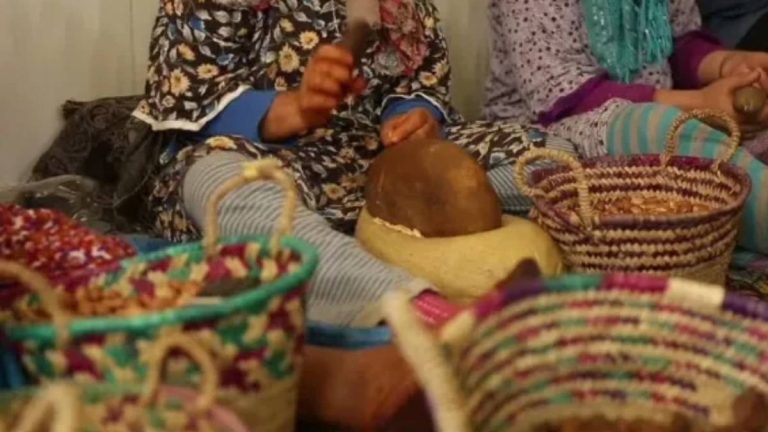
Cultural preservation in Tangier does not reside solely in museums or official institutions. It lives in kitchens where recipes are memorized rather than written, in workshops where skills are transmitted through observation, and in family gatherings where stories are repeated until they become collective memory.
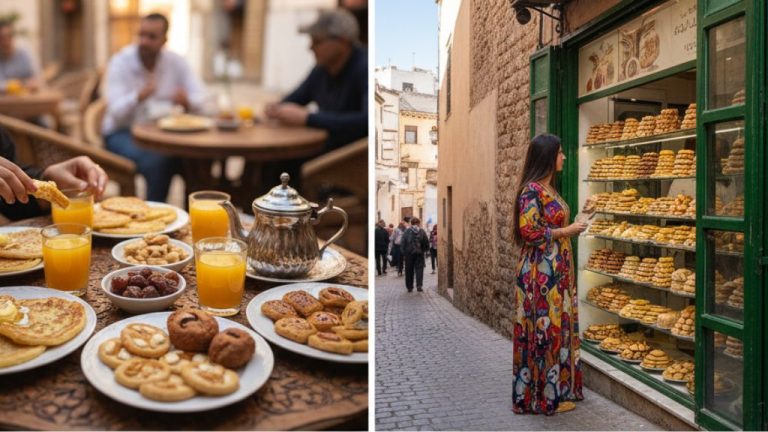
Supporting these living traditions means making conscious choices. Eating where locals eat. Choosing handmade objects whose imperfections tell stories. Listening without interrupting when someone shares a memory or explanation.
This form of engagement values continuity over consumption. It recognizes that culture survives through participation, not extraction. Travelers become witnesses rather than collectors.
Such an approach aligns with Tangier’s broader philosophy of care, where knowledge and meaning are passed through everyday gestures rather than formal systems.
When Uncertain, Observe
Uncertainty is not a weakness in Tangier. It is an entry point. Not knowing how to act invites observation, and observation is a respected form of learning.
Watching how elders move through space, how silence is used in conversation, and how time is treated reveals patterns that cannot be taught directly. These cues offer insight into social hierarchy, respect, and belonging.
Asking fewer questions and paying closer attention often leads to deeper understanding. Travelers who allow themselves to learn quietly are often met with warmth and inclusion that cannot be planned.
Belonging, in Tangier, emerges slowly through shared rhythms rather than explanations.
Traveling with Attentiveness
Cultural etiquette in Tangier is not about perfection. It is about awareness. Moving gently, dressing thoughtfully, and engaging with curiosity rather than expectation allows travelers to become part of the city’s living fabric.
Mistakes are forgiven when intentions are respectful. What matters most is the willingness to adapt, listen, and remain open.
This satellite article connects naturally to Tangier’s Living Traditions: A Mindful Cultural Guide for 2026, where everyday behavior reveals how history, spirituality, and human connection continue to shape the city’s evolving identity.
Tangier does not ask visitors to perform culture. It invites them to notice it. In that noticing, travel becomes relationship and memory becomes shared rather than taken.