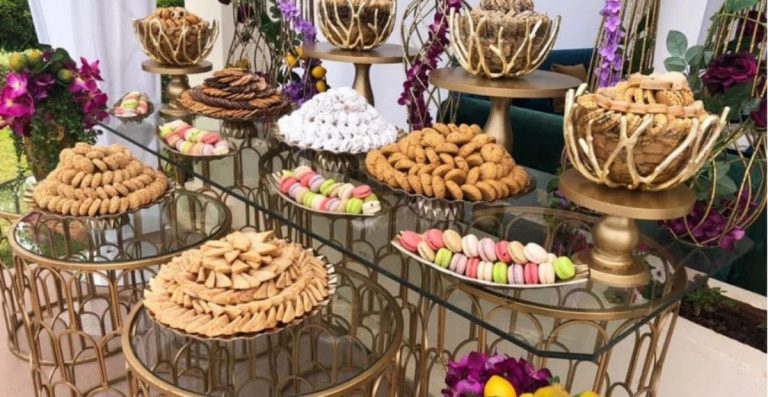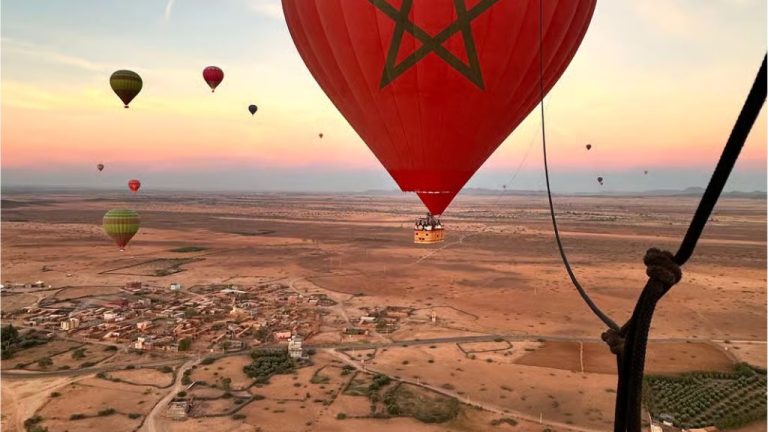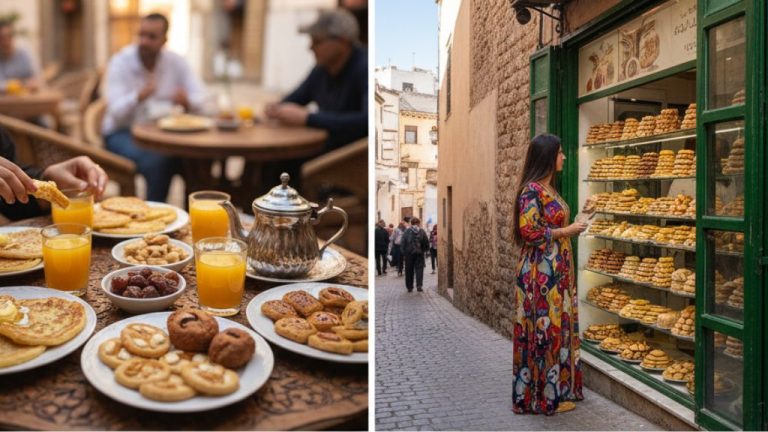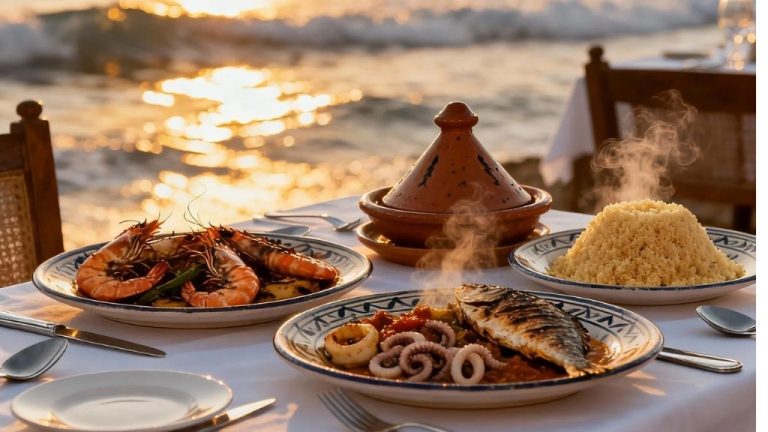

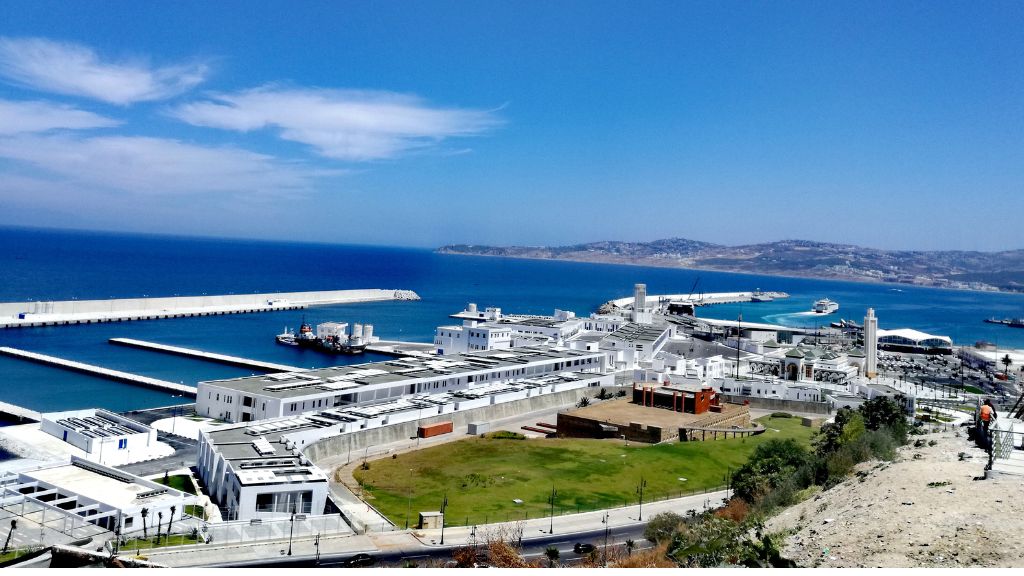
Tangier sits at the edge of two continents where the Mediterranean meets the Atlantic and the food culture reflects every civilization that passed through. Spanish fishermen, French colonials, Berber tribes, Arab traders, and Jewish merchants all left traces in the city’s kitchens. Today you can taste this layered history in a bowl of harira, a plate of grilled sardines, or a modern fusion dish that wouldn’t exist anywhere else.The city’s markets overflow with ingredients that span cultures. Saffron from the south sits next to spanish paprika while fresh mint grows beside french herbs. Local cooks might prepare tagine for lunch then serve paella for dinner without seeing any contradiction. This culinary flexibility defines Tangier in ways that separate it from inland moroccan cities where traditions hold tighter.

Walking through the medina you’ll smell cinnamon drifting from bakeries, charcoal smoke from street grills, and the sharp bite of preserved lemons being prepped in restaurant kitchens. The food culture operates on multiple levels simultaneously. Working class families eat from street vendors serving recipes unchanged for generations while wealthy moroccans dine at restaurants where chefs deconstruct and reimagine those same traditional dishes.Understanding mediterranean flavors in Tangier means accepting complexity rather than seeking a single authentic experience. The cuisine doesn’t follow neat rules because the city itself never did. A proper exploration requires tasting everything from humble msemen to elaborate pastilla, from beachside grilled fish to upscale fusion experiments. Each meal adds another layer to your understanding of how food and culture intertwine in this remarkable city.
Traditional Moroccan dishes you must try in Tangier
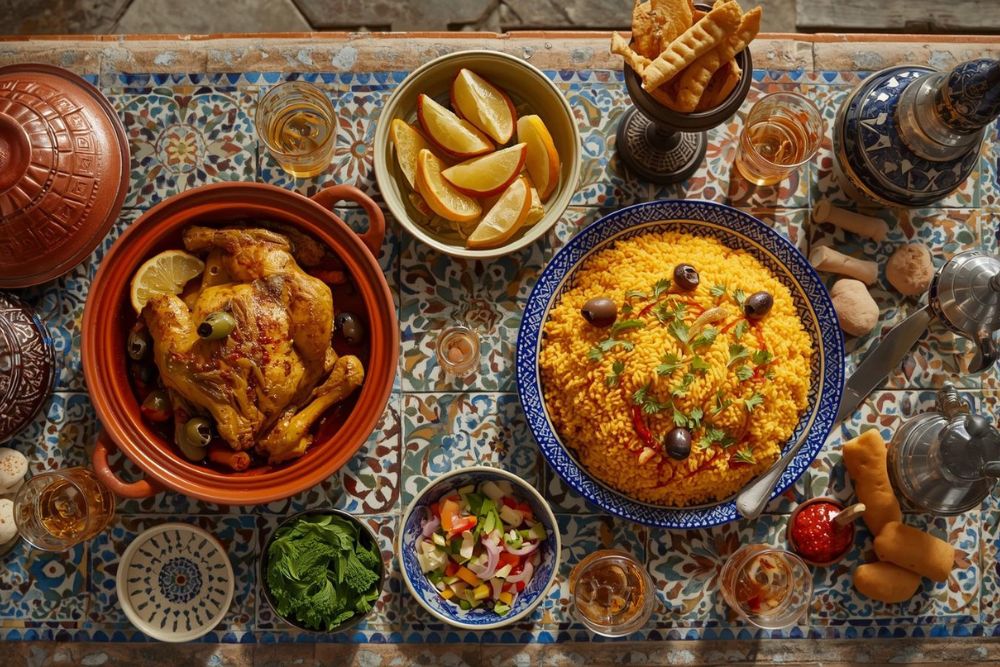
The foundation of tangier’s food culture rests in moroccan classics that have fed families for centuries. These dishes carry berber roots refined through arab influences with hints of andalusian sophistication. When you sit down to a tagine or a mountain of couscous you’re participating in culinary traditions that predate most european cuisines.Tagines represent moroccan cooking philosophy where patience builds flavor. The conical clay pots trap steam and return moisture to ingredients so nothing dries out during hours of slow cooking. Chicken with preserved lemons and olives appears most commonly in tangier restaurants. The preserved lemons spend weeks curing in salt until their bitterness transforms into something intensely floral. Combined with green olives, saffron, and ginger, the sauce achieves perfect balance between salty, sour, and aromatic.Beef and lamb tagines lean sweeter with prunes and almonds or apricots and honey. The meat cooks until it surrenders completely and falls apart at a touch. These versions often mark special occasions though restaurants serve them daily for visitors. Vegetarian tagines deserve equal attention with seasonal vegetables absorbing complex spice blends during long cooking times.Couscous holds sacred status as the centerpiece of friday lunch when families gather after mosque. The tiny semolina granules get steamed multiple times until fluffy and separate. Properly made couscous feels light not gummy with each grain rolling individually on your tongue. The traditional presentation piles couscous into mountains topped with seven vegetables representing good fortune. Turnips, carrots, zucchini, cabbage, pumpkin, chickpeas, and onions nestle around lamb or chicken with everything drizzled in saffron infused broth.
Tangier’s coastal character shows in fish couscous using grouper or sea bass with lighter tomato based broths. This reflects maritime identity and offers different experience from inland versions. Street vendors sell couscous from huge pots on fridays and locals line up with containers to carry home.Pastilla brings sweet and savory together in ways that confuse western palates until that first bite reveals genius. Thin warqa pastry layers hold spiced meat topped with powdered sugar and cinnamon. The combination traces back to medieval andalusian cuisine. Traditional versions use pigeon though chicken dominates now. The filling combines meat cooked with onions, parsley, and spices mixed with scrambled eggs and almonds. Everything goes between buttered pastry sheets baked until golden. Powdered sugar and cinnamon get dusted on top in decorative patterns right before serving.Tangier offers seafood pastilla using shrimp or fish which skips the sugar topping and leans savory. These coastal adaptations reflect local ingredients and tastes. Making pastilla requires serious skill because the pastry tears easily and the filling needs precise seasoning balance. It’s reserved for celebrations and special guests which makes ordering one a sign of respect for the craft involved.
Harira soup appears year round but gains significance during ramadan when it breaks daily fasts. This thick soup combines tomatoes, lentils, chickpeas, and sometimes meat in bases flavored with coriander, parsley, and celery. Broken vermicelli noodles add body while lemon brightens everything at the end. The soup takes hours to develop deep layered flavor. Street vendors sell harira in the medina for just a few dirhams alongside dates and sweet pastries.
Msemen and rghaif dominate breakfast tables across tangier. These layered flatbreads get folded multiple times creating square or round shapes with visible layers. They cook on griddles until golden spots form. The breads taste slightly greasy from folding oil but that’s part of their charm. They’re served with honey and butter or jam. Some people dip them in olive oil mixed with cumin and salt. Street vendors make them fresh each morning and the smell draws crowds.
Zaalouk and taktouka appear as cooked vegetable salads alongside main dishes. Zaalouk features eggplant roasted until the skin blisters then mixed with tomatoes, garlic, olive oil, and spices. The mixture cooks down into chunky spread that tastes smoky and rich. Taktouka uses green peppers and tomatoes cooked with garlic and paprika until everything breaks down. Both salads work as dips with bread or sides with grilled meat showing how moroccan cooking treats vegetables with respect.
Finding authentic versions means exploring the medina where small restaurants serve both tourists and locals. Places near petit socco maintain high standards because neighborhood families eat there regularly. Restaurant rif kebdani near the port specializes in northern moroccan cooking including excellent fish tagines. Hamadi on rue de la kasbah has served classic dishes since the 1950s. For couscous, locals recommend restaurant ahlen on fridays when they make huge batches.Street food offers the most authentic and affordable experience. Vendors near grand socco make fresh msemen every morning. Small soup stands scattered through souks serve harira that rivals any restaurant version. Riad guesthouses often serve traditional breakfasts and some offer cooking demonstrations providing context for how home cooks approach these dishes versus restaurant kitchens.Eating customs matter in moroccan culture. Moroccans wash hands before meals and often eat from communal platters using bread to scoop food. Taking from your section of the platter shows politeness while reaching across to someone else’s area doesn’t. Using your right hand for eating follows islamic tradition. When invited to homes, refusing food can offend hosts. Take at least small portions of everything offered. Complimenting food makes hosts happy though excessive praise might seem insincere.
For deeper exploration of traditional moroccan dishes in tangier, discover the essential plates every visitor should taste and where to find them prepared authentically.
Best seafood restaurants along Tangier’s coastline

The Mediterranean crashes against Tangier’s northern edge while the Atlantic touches its western shore. This double coastline means fishing boats return daily with catches that reach restaurant tables within hours. The city has always lived off the sea and that relationship shows in how seriously locals take their seafood.Tangier’s port bustles before dawn when boats unload night catches. Sardines dominate alongside mackerel, sea bream, sole, and whatever else nets brought up. Larger boats venture further for grouper, sea bass, and swordfish. The fish market near the port opens early and restaurant owners arrive to select what they’ll serve that day. This direct connection between boat and kitchen means menus change based on availability.Cooking methods tend toward simplicity. Grilling over charcoal, frying in light batter, or baking with chermoula sauce lets fish flavor speak. Heavy sauces aren’t common because quality seafood doesn’t need disguising. Salt, lemon, olive oil, and maybe cumin or paprika usually suffice.Le saveur du poisson sits close enough to the fishing port that you watch boats while eating. The name translates to fish flavor and they deliver. The dining room feels casual with plastic tablecloths and simple chairs but food quality rivals fancier places. Their specialty is whole fish grilled over charcoal. You choose from the display case where fish sit on ice and they weigh it to determine price. Sea bream runs about 120 dirhams per kilo and fish usually weigh 400 to 600 grams. They serve it with bread, olives, and simple tomato onion salad.The grilling technique matters. They don’t overcook and fish stays moist inside while getting crispy skin. A squeeze of lemon is all it needs. Local families come for weekend lunches which proves it’s not just a tourist trap. Fried fish platters offer variety if you can’t decide on one type. They’ll fry sardines, sole, and calamari then serve everything hot with harissa on the side. The batter is light and not greasy.
El MOROCCO club occupies a restored villa with terraces looking across the strait of gibraltar toward spain. The setting is upscale with white tablecloths and professional service. Prices reflect location and ambiance but seafood quality justifies the cost. Their seafood tagine fills traditional clay pots with fish, shrimp, mussels, and squid. The sauce uses tomatoes, preserved lemon, and saffron. The seafood stays tender because they add it late in the cooking process. This dish costs around 180 dirhams and easily feeds two people with sides.Grilled prawns come butterflied and brushed with garlic herb butter. They’re massive prawns, probably six or seven per order, arriving sizzling. The meat pulls cleanly from shells and tastes sweet. This works as starter before moving to main fish courses. The wine list includes Moroccan and imported options. Pairing white wine with seafood feels natural though Moroccan wines can be hit or miss. Staff knows which bottles work best.Restaurant populaire in the medina serves excellent seafood in no frills surroundings at prices that make you double check the bill. It’s tucked away from main tourist paths so you need directions or good maps to find it. Sardines are the star. They grill them whole and serve six or eight on a plate with bread and salad for maybe 35 dirhams. The sardines in Tangier are plump and oily in good ways. When fresh they don’t taste fishy but almost sweet. Locals eat them by pulling meat off with their teeth leaving the bones.The clientele is mostly working class tangerines grabbing lunch. Tourists who find it are usually thrilled by authenticity and value. There’s no written menu so you negotiate with the owner about what’s available and agree on price before they cook.
Le YACHT club targets the boating crowd and well off locals. The interior feels sleek with contemporary design and the terrace overlooks yachts bobbing in their slips. Seafood here gets elaborate presentations. Tuna tataki appears alongside Moroccan inspired dishes. Sea bass might come with saffron foam or lamb tagine reduction. The kitchen clearly has trained chefs who know french techniques and apply them to local ingredients.Oysters arrive on ice when available though they’re imported since Morocco doesn’t have oyster farming. A plateau de fruits de mer serves as impressive starter with lobster, prawns, crab, and shellfish artfully arranged. This runs expensive at 400 dirhams or more but works for special occasions.
Beach restaurants along malabata operate mainly in summer. These aren’t fancy establishments but casual spots where you sit at plastic tables on sand. Cooking happens on grills right there and smoke drifts across the beach. Sardine sandwiches are the specialty. They grill sardines then stuff them in round bread with tomatoes, onions, and harissa. The combination of hot fish, crunchy vegetables, and spicy sauce in soft bread hits perfectly after swimming. These cost about 15 dirhams.CASA d’ITALIA brings italian seafood traditions. The owner spent years in italy and returned with recipes blending italian seafood cooking with moroccan ingredients. Their seafood pasta deserves attention. Linguine with clams uses fresh clams from local waters with white wine, garlic, and parsley. The pasta is cooked properly al dente and sauce clings without being heavy. Grilled octopus comes tender after slow cooking then gets finished on the grill. They serve it with potatoes and salad dressed in olive oil and lemon.Whole grilled fish comes to tables with head and tail attached. Moroccans often eat the cheeks and other parts westerners might skip. The cheek meat is actually quite tender and flavorful. Use bread to push fish off bones rather than struggling with forks. Chermoula is the classic moroccan marinade for fish combining cilantro, parsley, garlic, cumin, paprika, lemon juice, and olive oil into green paste. Fish gets coated before grilling or baking. The herbs brighten fish without overwhelming it.Seafood prices in Tangier stay reasonable compared to European standards. A full grilled fish meal with sides rarely exceeds 100 dirhams at mid range places. Upscale restaurants charge more but remain affordable by international resort standards. Beach and medina spots offer the best value. You sacrifice ambiance and service polish but gain authenticity and savings.
To learn more about Tangier’s top coastal dining spots featuring fresh mediterranean catches, explore the best seafood restaurants where ocean meets plate.
Exploring Tangier’s spice markets and local ingredients

The moment you enter tangier’s spice markets your nose takes over as primary sense. Heaps of crimson paprika glow next to golden turmeric mounds while sharp cumin cuts through sweeter cinnamon notes. These markets aren’t just shopping destinations but living museums of culinary tradition where knowledge passes between vendors and customers through haggling and conversation.
Grand socco sits at the medina edge where old city meets newer ville nouvelle. The market operates daily but reaches peak energy thursday and sunday mornings when farmers from surrounding villages arrive with produce and spices. This is where many locals shop because prices stay lower than deeper in tourist zones. Spice vendors cluster near the archway leading into the medina proper. Their stalls overflow with sacks and baskets of dried goods each labeled with handwritten arabic signs showing prices per kilo.Essential spices every Moroccan kitchen needs start with cumin which appears in nearly every savory dish. The seeds get toasted then ground releasing earthy warmth that forms the backbone of tagines, couscous, and grilled meats. Moroccan cumin tastes more intense than western supermarket versions because it’s fresher and the climate where it grows concentrates the oils.Paprika comes in sweet and hot varieties. Sweet versions add color and mild pepper flavor without heat. Hot paprika brings genuine spice though it’s not as fiery as cayenne. Many dishes use both types to build layers of pepper flavor. Deep red color indicates quality since faded paprika has lost potency.Saffron represents luxury in moroccan cooking. The thin red threads come from crocus flowers and workers must hand pick the stigmas making it the world’s most expensive spice by weight. Real saffron has distinctive floral taste and turns liquids golden yellow. A tiny pinch goes into special occasion dishes like wedding couscous or high end tagines.Ras el hanout deserves special attention. This spice blend’s name translates roughly to head of the shop meaning the best spices a vendor has. Each spice seller makes their own version so no two taste exactly alike. The blend typically contains twenty or more spices including cardamom, nutmeg, mace, cinnamon, coriander, cumin, and sometimes rose petals or lavender. The complexity means it works in dishes where you want depth without adding ten individual spices.Buying ras el hanout from vendors who grind it fresh means better flavor than pre packaged versions. Watch them combine spices from different containers and grind everything together in large mortars. The scent that rises during grinding tells you about quality. It should smell fragrant and complex not flat or dusty.
Preserved lemons sit in large jars at many stalls packed in salt and their own juices. The preservation process takes at least a month and transforms the lemons completely. The bitterness mellows while the peel becomes soft and intensely flavored. You use only the peel in cooking, discarding the flesh. These lemons are essential for proper chicken tagine with olives.Olives come in dozens of varieties with different curing methods. Purple olives cured with herbs work well in tagines. Green olives preserved with lemon appear in many dishes. Dry cured black olives get eaten as snacks. Vendors let you taste before buying so try several to understand the range.Argan oil comes from trees that grow only in morocco. The nutty flavored oil gets used for finishing dishes or in amlou, a spread made with almonds and honey. Cold pressed argan oil costs more but tastes better than refined versions. A small bottle lasts months since you use it sparingly.Inside the medina the alleys narrow and shops stack floor to ceiling with goods. The spice souk concentrates on a few streets where multiple vendors compete side by side. This competition generally keeps prices fair though tourists still pay more than locals. Vendors call out as you pass trying to draw you into their shops. Acknowledging them with nods but continuing if you’re not ready to buy is perfectly acceptable.Spice shopping strategy starts with observing rather than buying. Walk through markets and see what catches attention. Note which vendors have customers and which sit alone. Busy vendors usually offer better quality because locals know where to shop. When ready to buy, engage vendors in conversation. Ask about origins of spices and how locals use them. Most vendors enjoy sharing knowledge especially if you show genuine interest.Smelling and examining products before purchasing is expected. Vendors will open containers and let you inspect. Don’t be shy about asking to see or smell multiple options. Haggling follows certain patterns. The vendor states a price usually inflated for tourists. You offer less, maybe sixty percent of their price. They counter higher, you go slightly higher, and eventually you meet somewhere in the middle.What to actually buy includes ras el hanout which makes excellent gifts or personal purchases since it’s distinctly moroccan and versatile. Buy it fresh ground and store it in airtight containers. It keeps several months. Saffron is worth buying if you can verify quality. The price should seem expensive because real saffron costs a lot everywhere. Cumin seeds stay fresh longer than ground cumin. Buy whole seeds and toast them yourself before grinding.Beyond spices, herb sellers offer fresh cilantro, parsley, and mint by the bunch. These herbs appear in nearly every moroccan meal. Nut vendors roast almonds, walnuts, and peanuts on site. The smell of roasting almonds draws you from streets away. Honey stalls display different varieties from mountain wildflower to orange blossom. Moroccan honey tends toward dark and strongly flavored.Early morning from eight to ten offers best selection before popular items sell out. The markets feel calmer then with mostly local shoppers doing daily provisioning. Thursday and sunday mornings at grand socco bring the biggest variety since rural vendors arrive with specialty items not available other days.
For comprehensive guidance on navigating tangier’s vibrant spice markets and understanding the essential ingredients, visit the complete market exploration covering shopping strategies and ingredient knowledge.
Street food culture: Hidden gems in the Medina
Street food in Tangier reveals the city’s soul in ways sit down restaurants can’t match. These vendors occupy the same corners their fathers and grandfathers did flipping the same recipes perfected over generations. The food costs almost nothing but the flavors carry the weight of tradition and the pride of craftspeople who’ve dedicated their lives to mastering single dishes.Morning rituals start with msemen before most tourists wake. Vendors set up griddles near grand socco and throughout the medina. The smell of browning butter and toasting bread signals the start of another day. Women in traditional dress flip msemen with practiced movements their hands moving so fast you can barely follow the technique. Msemen are square layered flatbreads made from semolina dough that gets folded multiple times with oil between each layer.Fresh off the griddle they’re hot enough to burn fingers but waiting for them to cool means missing the peak moment when layers separate perfectly. Most vendors sell them for five to eight dirhams each. You can eat them plain or the vendor will add honey and butter for a dirham or two more. The best msemen vendor operates near the entrance to petit socco. She’s been there for thirty years and her technique shows in every fold.
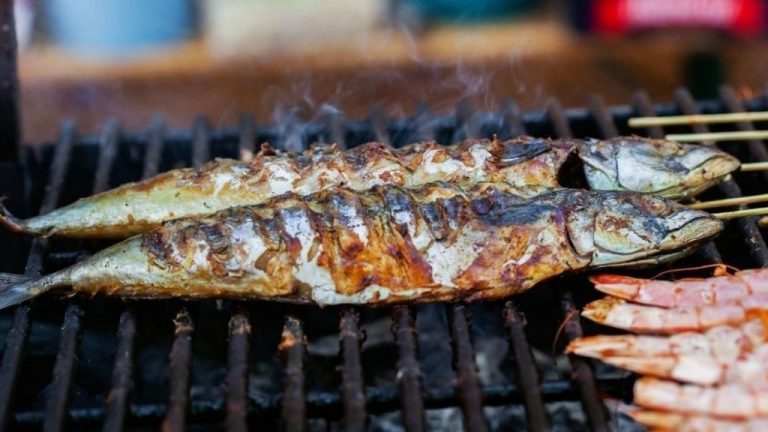
Harira soup vendors appear throughout the medina especially in late afternoon when people want something warming. The soup simmers in huge pots on portable burners and steam rises carrying scents of tomatoes, lentils, and spices. A bowl costs maybe ten dirhams and comes with dates and a small sweet pastry. The soup itself is thick enough to coat a spoon. Lentils and chickpeas provide protein while broken vermicelli noodles add body.Harira gained religious significance because it traditionally breaks the ramadan fast at sunset. During ramadan every harira stand does serious business as people line up before the call to prayer. Outside of ramadan it still feels like comfort food that connects tangerines to their traditions. The vendor near the american legation museum makes particularly good harira. He adds beaten eggs at the end which creates silky ribbons throughout the soup.Small grills pop up near the fish market after boats unload their catches. Vendors buy sardines directly from fishermen and grill them minutes later. The fish cost almost nothing, maybe twenty dirhams for six sardines grilled and served with bread and simple salad. Fresh sardines in tangier bear little resemblance to canned sardines. They’re plump with silver skin that crisps on the grill while flesh stays moist and rich. The vendors season them only with salt and maybe a squeeze of lemon.Eating grilled sardines requires technique. You pull the meat off with your teeth leaving bones behind. Locals make it look effortless but it takes practice. The vendors will debone them for you if you ask though you might get gentle teasing about it. The smoke from these grills visible from blocks away draws crowds during lunch hours.Bocadillo stands sell sandwiches that blend spanish and moroccan influences. The vendors use round Moroccan bread but fill it with combinations that wouldn’t be out of place in andalusia. The most common version features fried fish, usually sardines or small sole. The fish gets dipped in light batter and fried until crispy then stuffed into bread with tomatoes, lettuce, onions, and harissa. These sandwiches run about fifteen to twenty dirhams.Walking through certain medina streets you’ll spot vendors with huge pots full of snails swimming in broth. This dish called ghlal divides people sharply into lovers and skeptics. The snails cook for hours in broth flavored with thyme, mint, anise, and other herbs until tender. A bowl costs about ten dirhams and comes with a pin for extracting snails from their shells. Moroccans believe snail soup has medicinal properties and helps with digestion.Chebakia vendors appear especially during ramadan but some operate year round. These sesame cookies get shaped into flowers then fried and soaked in honey. They’re sticky, sweet, and incredibly rich. Sfenj are moroccan doughnuts, rounds of yeasted dough fried until puffy and golden. Vendors make them fresh throughout the day and they’re best eaten warm. Plain sfenj cost about two dirhams each.Seasonal fruit vendors set up with whatever is ripe. In summer you’ll find carts piled with prickly pears that vendors peel with remarkable speed despite the spines. Spring brings strawberries and cherries. Fall means pomegranates and fresh figs. Fresh squeezed orange juice stands cluster throughout the medina. A large glass costs five to ten dirhams and they squeeze it in front of you.
Street food in Tangier is generally quite safe if you choose vendors carefully. Look for places with high turnover where food doesn’t sit around. Vendors who cook to order right in front of you present minimal risk. Hot food is safer than room temperature food. Vendors who serve mostly locals have proven themselves over time.Street food prices stay remarkably consistent across vendors. A bowl of harira will cost roughly the same whether you buy it near grand socco or deep in the medina. Having small bills and coins makes transactions smoother. Many vendors can’t break two hundred dirham notes especially early in the day.Morning street food concentrates around grand socco and the entrances to the medina between seven and nine. Lunch hours from noon to two see the most variety. Late afternoon before sunset brings another wave of street food especially harira. Fridays after mosque see families out eating street food as treats.These vendors preserve recipes and techniques that might otherwise disappear. A harira vendor who learned from his grandmother keeps that specific version alive through his work. Street food provides affordable nutrition for working class tangerines. For visitors, street food offers the most direct connection to how locals actually eat.
To uncover tangier’s best street food spots and taste the authentic flavors locals love every day, explore the hidden gems throughout the medina’s winding alleys.
Modern Mediterranean restaurants blending cultures in Tangier
Tangier’s culinary evolution hasn’t stopped with tradition. A new generation of chefs is reimagining moroccan classics through contemporary techniques while the city’s international character encourages fusion that feels natural rather than forced. These modern restaurants occupy a space between honoring heritage and pushing boundaries, reflecting tangier’s ongoing identity as a place where cultures meet and merge.The modern dining scene targets both international visitors and affluent moroccans seeking sophisticated experiences. Young chefs who trained in Paris, Barcelona, or London return home with technical skills and global perspectives. They apply french plating precision to tagine ingredients or incorporate spanish tapas concepts into moroccan mezze traditions. The results feel authentic to Tangier even when they wouldn’t exist anywhere else in Morocco.
LE SALON BLEU inside a restored medina riad helped launch this movement over a decade ago. Their deconstructed pastilla separates traditional components into individual elements on the plate. Spiced chicken appears as a perfect roulade, almond filling becomes smooth puree, and phyllo crisps stand upright for textural contrast. Cinnamon sugar gets applied as delicate dust rather than heavy topping. The flavors remain recognizably pastilla but the presentation belongs to modern fine dining. Some purists argue this strays too far from tradition but the technique showcases ingredient quality in ways clay pot cooking can’t.Lamb tagine at these establishments transforms through sous vide cooking for precise temperature control then gets finished on grills. Traditional vegetables appear as carefully cut components and purees. Preserved lemon foam adds classic brightness without the chunks. The wine programs emphasize moroccan producers alongside french and spanish selections with sommeliers who know which local bottles actually merit attention versus which ones trade on novelty.
El REDUCTO brings spanish influence forward in a former consulate building. The chef spent years in san sebastian learning basque techniques before opening in tangier. Octopus gets cooked low temperature for hours until completely tender then charred quickly on a plancha. Instead of spanish paprika they use moroccan spices and serve it over chickpea puree flavored with cumin. Harissa oil brings heat that spanish versions lack. The tapas concept works naturally with moroccan small plate traditions where you order multiple dishes to share.
NORD PINUS Tangier occupies a building with serious artistic pedigree that hosted writers and artists throughout the twentieth century. The kitchen applies french technique to mediterranean ingredients from both shores of the strait. Their approach to fish shows restraint and skill. Whole sea bass gets roasted simply with herbs and olive oil then filleted tableside. The accompaniments might include moroccan style cooked vegetable salads alongside french potato preparations. The combination feels natural rather than forced because tangier itself embodies these cultural intersections.
Le MIRAGE targets younger diners seeking comfort food elevated through technique and quality ingredients. The chef worked in London and New York before returning to Tangier with ideas about casual fine dining. Burgers use moroccan spiced lamb rather than plain beef. The meat gets mixed with herbs and cumin then grilled and topped with caramelized onions and harissa aioli. French fries cook in a mix of olive oil and argan oil creating unique flavor. This isn’t fusion confusion but thoughtful adaptation of American casual food to local tastes and ingredients.
Rooftop restaurants scattered across the medina and ville nouvelle combine spectacular views with modern cooking. El morocco club mentioned earlier has a rooftop section separate from the main dining room. The roof menu offers lighter fare including creative salads and grilled items. Watching the sun set over the strait while drinking local wine captures tangier’s geographic drama. These spaces work well for sunset cocktails followed by dinner as city lights emerge below.What makes modern cooking work in Tangier is the deep respect for moroccan culinary heritage even as chefs push forward. The best modern restaurants show they understand traditional techniques before choosing to reinterpret them. Presentation matters more at these establishments with plating that considers visual appeal. Dishes often arrive looking like careful compositions. This isn’t just social media pandering but part of fine dining’s sensory experience where appearance primes your palate.Service standards rise at modern restaurants with trained staff who understand wine service and course pacing. The formality level varies but professionalism remains consistent. Staff typically speak multiple languages fluently and can explain dishes in detail. Prices run higher than traditional moroccan restaurants but remain reasonable compared to major european cities. Expect to pay 200 to 400 dirhams for main courses with wine adding significantly more depending on choices.
Top modern restaurants maintain relationships with specific farmers and fishermen. They’ll tell you which village the lamb came from or which boat caught the fish. This farm to table approach ensures quality and supports local food systems. Some restaurants grow their own herbs or maintain agreements with market vendors for first selection of certain ingredients. A chef might reserve all the best tomatoes from a particular farmer during peak season. These relationships require investment but result in measurably better food.The dining experience at modern restaurants unfolds over two or more hours. These places design menus for leisurely meals not quick eating. Trying to finish quickly means missing the point and probably annoying the kitchen. Embrace the slower pace that allows proper appreciation of multiple courses and wine pairings. Dinner starts later than in northern europe or america with restaurants beginning service around seven thirty or eight. Locals often don’t arrive until nine or later.Young moroccan chefs increasingly return home after training abroad bringing new ideas and techniques. This trend suggests Tangier’s modern restaurant scene will continue evolving and improving. The city’s inherent diversity supports culinary experimentation in ways more conservative moroccan cities might resist. International attention grows as food writers discover Tangier’s dining scene. This exposure brings both opportunities and challenges as restaurants gain customers but face pressure to maintain standards while handling increased volume.
The balance between preserving tradition and encouraging innovation remains ongoing. Tangier seems positioned to honor both impulses given its history of cultural mixing. Modern restaurants prove you don’t have to choose between respecting heritage and pushing culinary boundaries. Each new opening adds another voice to the conversation about what tangier cuisine can become while maintaining connection to what it has always been.For travelers seeking these contemporary experiences, reservations are essential especially during peak seasons from march through may and September through November. Summer brings fewer tourists but wealthy moroccans vacation in Tangier then filling restaurants. Winter offers easiest availability but some places reduce hours. Dress codes aren’t rigid but smart casual fits best. Clean jeans work fine but beachwear doesn’t. The investment in modern dining pays off through meals that become memorable highlights of your Tangier visit.
To explore how chefs are redefining moroccan cuisine through contemporary techniques while maintaining deep respect for tradition, discover the innovative restaurants where cultural fusion reflects Tangier’s unique identity as a culinary crossroads.
What really matters
Mediterranean flavors in Tangier tell stories about geography, history, and the human impulse to share food across cultures. Every meal connects you to sailors who brought spices from distant ports, berber families who perfected tagine techniques over centuries, and modern chefs reimagining tradition for contemporary palates. The city’s food culture operates without rigid boundaries where a vendor grilling sardines for twenty dirhams and a chef serving deconstructed pastilla for two hundred both contribute to tangier’s culinary identity.Your exploration of tangier through food can take whatever shape matches your interests and budget. Street vendors and five star restaurants both offer authentic experiences because authenticity in Tangier means embracing complexity rather than seeking single truths. The tagine your riad serves for breakfast carries as much cultural weight as the fusion dish you order at a waterfront restaurant. Both emerge from this city’s unique position at the crossroads of continents and civilizations.The markets, restaurants, cooking classes, and street corners covered in this guide represent starting points rather than comprehensive catalogues. Tangier’s food scene continues evolving as young chefs return from abroad with new ideas and traditional cooks maintain practices passed down through generations. The tension between preservation and innovation creates energy that makes eating in Tangier endlessly interesting.
Understanding mediterranean flavors here requires tasting widely and thinking about context. The spices in the souks connect to dishes on restaurant tables which connect to fishing boats in the harbor which connect to agricultural villages in surrounding hills. Food systems in tangier remain visible and accessible in ways that disappeared from most modern cities. Taking advantage of this visibility deepens appreciation for what you’re eating and why it tastes the way it does.When you return home the recipes and techniques you learned in tangier cooking classes will serve you well. But more valuable than any recipe is the broader understanding that food carries culture and that sharing meals creates bonds between strangers. Tangier teaches this lesson with every communal couscous platter and every street vendor who takes pride in perfecting a single dish. The mediterranean flavors you encountered here taste of place and history and human connection across differences.
For those seeking immersive culinary education beyond this introduction, joining hands on cooking classes in Tangier provides the deepest understanding of techniques and traditions that make this cuisine so compelling.