
Marrakech carries a spiritual rhythm that rarely announces itself loudly. It moves beneath the city’s surface, embedded in gestures, pauses, whispered prayers, and inherited habits that quietly shape daily life. Ritual here is not spectacle. It is continuity.
To walk through Marrakech with attentive eyes is to notice how spirituality lives between walls rather than atop monuments. It appears at dawn in quiet courtyards, at dusk in candlelit zawiyas, and during ordinary afternoons when someone pauses their work to murmur a prayer learned long before conscious memory formed.
This article explores how ritual and spiritual life continue to structure Marrakech from within. It belongs to a broader pillar examining Marrakech traditions as lived experience, where belief is woven into rhythm, craft, and community.
For wider context, see the article:
Traditions of Marrakech: Living Heritage in the Red City
The Spiritual Landscape of Marrakech
A City Built Around Devotion
Marrakech was founded not only as a political capital but as a spiritual center. Saints, scholars, mystics, and jurists shaped its growth as deeply as rulers and dynasties. The medina developed around zawiyas, mosques, and burial sites long before modern urban boundaries were drawn.
Spiritual presence remains visible through subtle signs. Green-painted doors mark sacred spaces. Incense drifts from corners without signage. Certain streets quiet naturally at specific moments of the day, as if the city itself remembers when to pause.
Belief as Daily Practice
In Marrakech, spirituality is not reserved for exceptional moments. It enters daily routines through repetition. Simple acts carry ritual weight: washing hands before prayer, greeting elders with specific phrases, sharing food quietly after sunset during Ramadan.
These practices mirror the collective rhythms found across the city’s cultural life. Faith is not explained or debated. It is practiced, absorbed, and passed forward through habit.
Zawiyas: The Quiet Heart of the City
Spaces of Remembrance
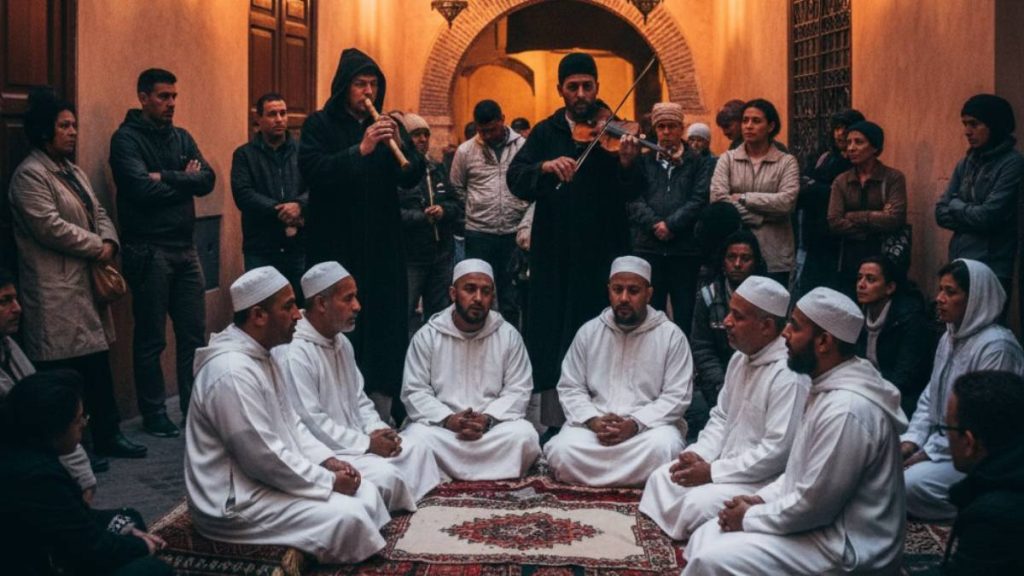
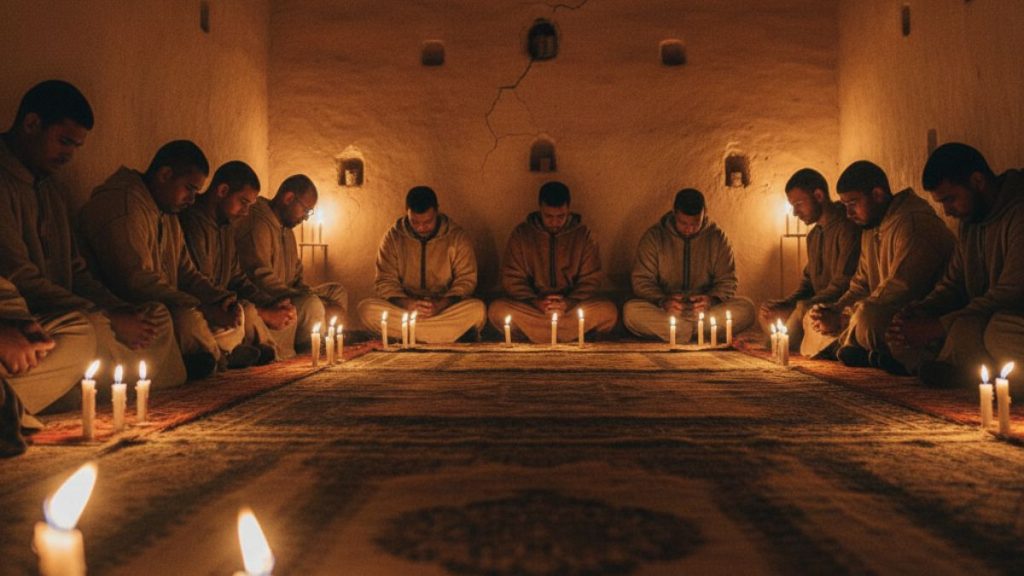
Zawiyas in Marrakech rarely stand out architecturally. Many are hidden behind unmarked doors in residential streets. Inside, they open into courtyards softened by time, their walls absorbing centuries of whispered devotion.
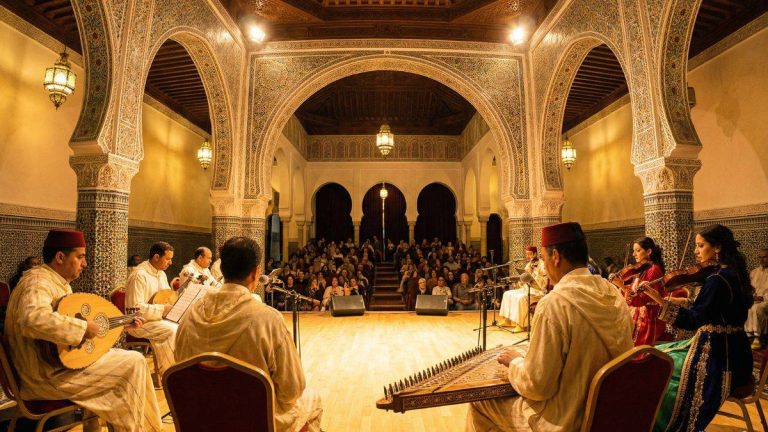
These spaces act as spiritual anchors. They host dhikr gatherings, Qur’anic recitations, and communal prayers that maintain continuity across generations. Participation is not performative. It is inward, grounded, and restrained.
The Rhythm of Dhikr
Dhikr sessions in Marrakech favor steadiness over intensity. Chanting unfolds slowly, often led by a single voice before others join. Repetition is deliberate, allowing attention to settle rather than surge.
Candles replace bright lighting. Silence carries meaning equal to sound. Time loosens its grip. These gatherings reveal how spiritual depth can exist without spectacle.
Saints, Shrines, and Living Memory
The Seven Saints of Marrakech
The pilgrimage route of the Seven Saints remains one of the city’s most enduring spiritual traditions. Each saint represents a chapter of Marrakech’s religious history, from scholarship and teaching to mysticism and ethical guidance.
Locals visit these shrines not as tourists, but as participants in an inherited rhythm. Visits align with personal transitions: hardship, gratitude, illness, or renewal. The saints are not distant historical figures. They are familiar presences woven into collective memory.
Baraka as Spiritual Circulation
Baraka, often translated as blessing, functions in Marrakech as a living current rather than an abstract concept. It is sought through proximity to saints, participation in ritual, and ethical conduct.
Baraka is understood to move through people, places, and actions. This belief shapes approaches to healing, protection, and guidance, reinforcing the idea that spiritual well-being is relational rather than individual.
Seasonal Rituals and Sacred Time
Ramadan Beyond Fasting
During Ramadan, Marrakech transforms quietly. Days slow. Nights expand. After breaking the fast, families gather not only to eat but to reconnect through prayer and conversation.
Zawiyas extend their gatherings. Mosques fill beyond capacity. Streets glow softly rather than loudly. Spiritual life during Ramadan is communal, patient, and rooted in shared endurance.
Moussems and Collective Devotion
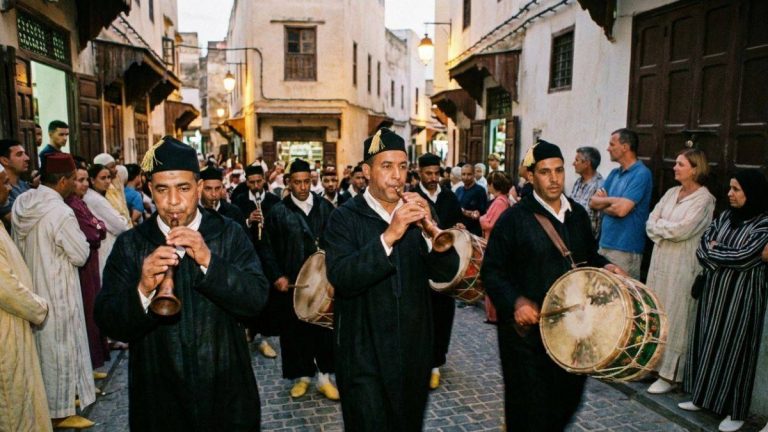
Moussems honoring local saints punctuate the year. These gatherings blend prayer, music, food, and storytelling. While some attract visitors, many remain local affairs where continuity matters more than display.
These rituals reaffirm belonging. They remind participants that spiritual identity in Marrakech is collective rather than individual.
Private Rituals and Personal Faith
Not all spiritual life in Marrakech is visible. Much of it unfolds privately, within homes. Morning invocations whispered before work. Evening prayers spoken after children sleep. Amulets placed discreetly in pockets.
These small rituals carry immense weight. They form the invisible architecture of belief that sustains the city far more than public ceremonies.
Approaching Spiritual Spaces with Respect
Visitors often encounter Marrakech’s spiritual life unexpectedly. A door opens. A chant drifts into the street. A gathering forms without announcement.
The most respectful response is restraint. Observing without intrusion. Listening without recording. Allowing experiences to remain intact rather than extracted.
Those wishing to understand spiritual life more deeply benefit from first understanding daily customs and social etiquette. Guidance on this is explored in:
Practical Tips & Cultural Etiquette of Marrakech
Continuity Rather Than Display
Ritual and spiritual life in Marrakech do not seek attention. They persist quietly, shaping how the city breathes, pauses, and remembers. These practices are not remnants of another era, but living systems that continue to guide behavior, belief, and belonging.
To encounter Marrakech spiritually is not to witness something dramatic, but to notice what remains steady. In that steadiness lies the city’s deepest strength.