
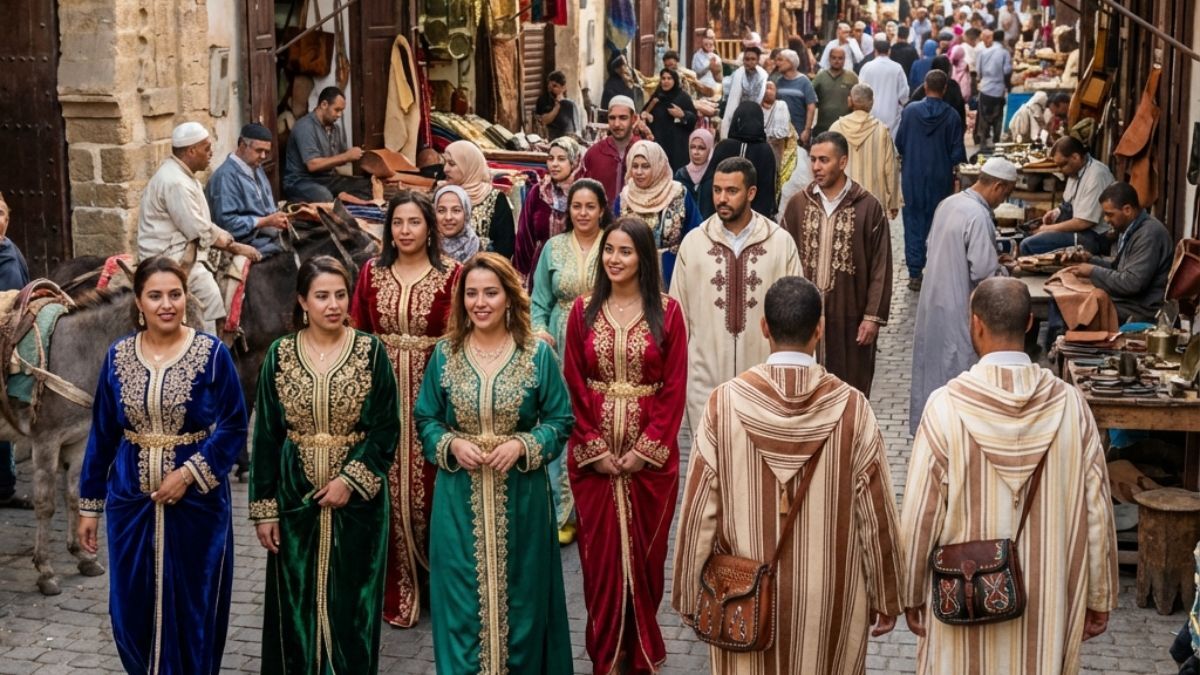
Traditional clothing in Tangier does not announce itself loudly. It blends into daily life with quiet confidence, moving through streets, markets, and family gatherings without asking to be explained. You notice it not as costume, but as continuity.
I became aware of this while sitting near the Petit Socco early one morning. A woman passed by wearing a striped djellaba, the fabric worn soft by years of use. Nothing about it felt ceremonial. It was practical, familiar, and deeply personal. In that moment, clothing felt less like fashion and more like memory.
Clothing as Belonging, Not Display
In Tangier, traditional clothing is not reserved for festivals. It belongs to everyday life. Djellabas, kaftans, and head coverings appear naturally, shaped by climate, rhythm, and social codes rather than trends.
Colors are chosen with care. Fabrics breathe. Cuts allow movement. Each piece responds to the body and to place. Even when styles shift slightly between generations, the intention remains the same: comfort, modesty, and dignity.
This relationship between clothing and daily life mirrors the same values found in Tangier’s Living Traditions: A Mindful Cultural Guide for 2026. where culture is carried quietly through repetition and presence.
Fabrics That Speak of Land and Season
Materials matter. Wool offers warmth during cooler months. Cotton and lightweight blends respond to coastal humidity. Silk and embroidery appear during moments of celebration.
Touching these fabrics reveals their purpose. They are meant to be worn, folded, washed, and worn again. The softness comes from use, not design.
Much like the city’s crafts, these garments carry the knowledge of hands that understand time, weather, and movement.
Symbols Worn Close to the Body
Certain details carry meaning. Stripes, stitching patterns, and colors can reflect regional identity or family preference. Jewelry worn with traditional clothing often holds protective or symbolic value.
Yet meanings are rarely explained outright. They are understood within families and communities, passed down quietly. Asking questions is welcome when done with respect, but observation often reveals more than words.
This subtle language of symbols connects clothing to rituals and spiritual life, where meaning lives beneath the surface.
Festive Clothing and Moments of Transition
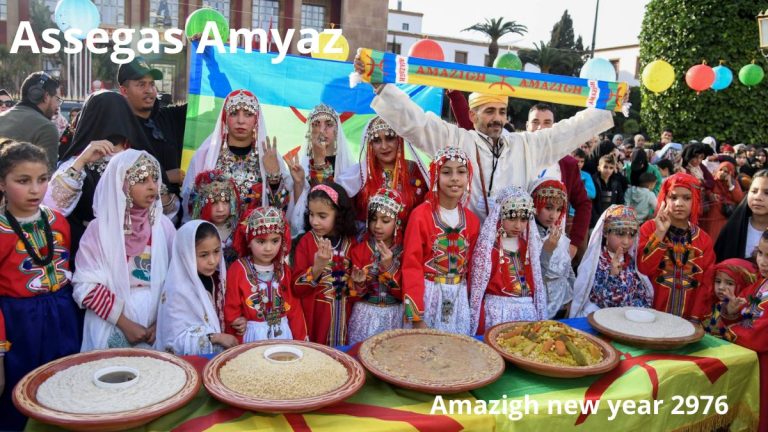
During weddings and celebrations, Tangier’s clothing becomes more elaborate. Kaftans appear layered, embroidered, and carefully prepared. Yet even here, elegance remains grounded.
Garments mark transitions. Marriage. Birth. Return. Clothing becomes part of the ritual, not separate from it.
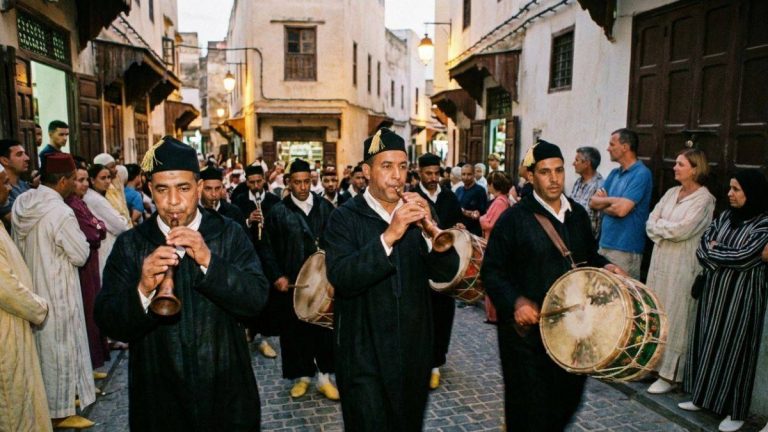
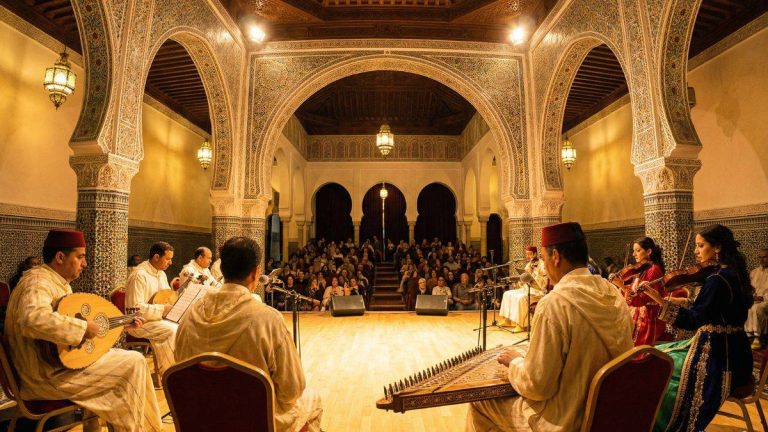
These moments echo the rhythms found in the city’s music and dance traditions, where expression rises naturally during shared celebrations.
Observing and Respecting Dress Codes
For travelers, traditional clothing offers insight rather than instruction. Wearing local garments is not required, nor expected. What matters is respect.
Modest choices, especially in traditional neighborhoods or sacred spaces, create ease and trust. Covering shoulders, choosing breathable fabrics, and avoiding excess help travelers move comfortably within local rhythms.
This sensitivity aligns with the broader cultural etiquette practiced across the city.
Clothing as a Living Thread
Traditional clothing in Tangier is not frozen in time. It evolves quietly while remaining rooted. Each garment carries layers of personal and collective memory.
Understanding this allows travelers to see beyond surface aesthetics. Clothing becomes a thread connecting craft, ritual, music, and daily life.
From here, the journey naturally continues toward healing practices and the ways the body and spirit are cared for across generations.
Just as traditional clothing preserves memory through fabric and daily movement, healing practices in Tangier do the same through the body and spirit. Herbal remedies, hammams, spiritual rituals, and gestures of care remain quietly present in everyday life, shaping how well-being is understood across generations. Readers seeking a deeper connection between culture, wellness, and lived tradition can continue this journey through Healing Practices in Tangier: Between Body, Spirit, and Memory, where the city’s approach to healing reveals itself as another living thread within Tangier’s cultural landscape.