
Spiritual life in Tangier rarely announces itself. It doesn’t ask for attention or explanation. Instead, it unfolds quietly, woven into everyday gestures, pauses, and shared silences. You may pass it without noticing, or you may feel it unexpectedly while standing still in a place you didn’t plan to stop.
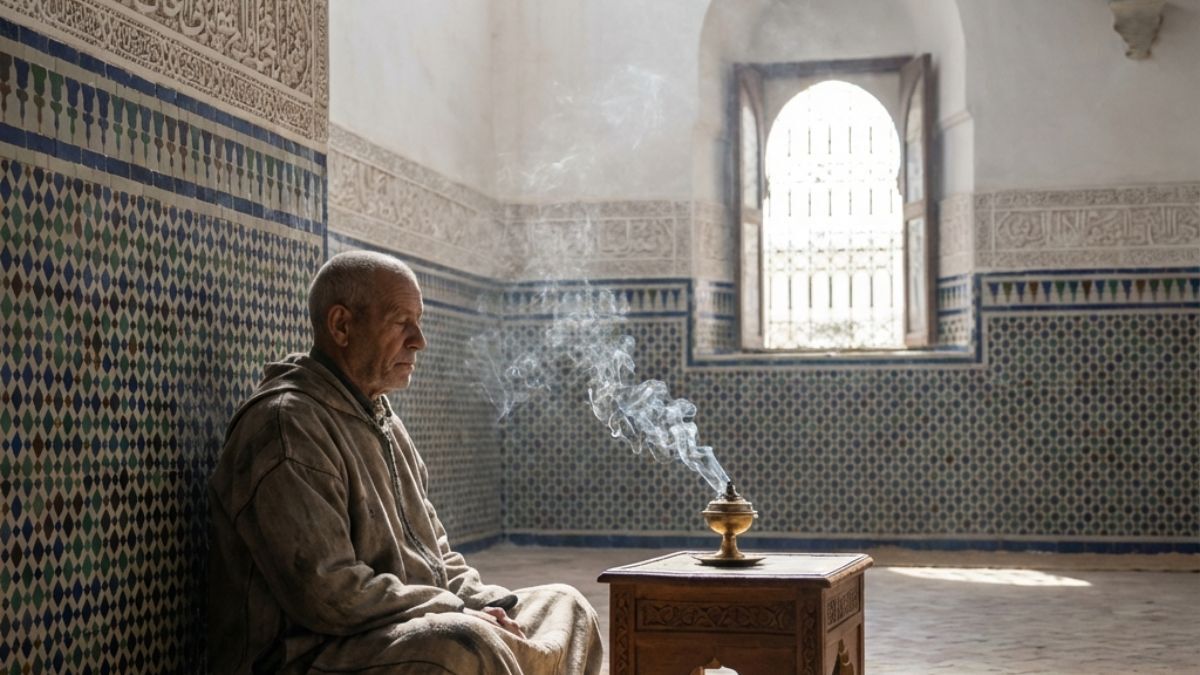
I felt it one afternoon near a small zawiya tucked between whitewashed walls. The door was half open. Inside, the air smelled faintly of incense and old stone. No ceremony was underway. Just presence. Someone sweeping the floor. Someone else sitting quietly. Nothing dramatic, yet everything felt intentional.
Spirituality as a Way of Moving Through Life
In Tangier, spirituality is less about doctrine and more about rhythm. It shapes how people greet one another, how time is respected, how patience is practiced. Faith here often lives in action rather than words.
You see it in small habits. A pause before entering a space. A hand placed over the heart during a greeting. A quiet acknowledgment of something unseen. These gestures form an invisible structure guiding daily life.
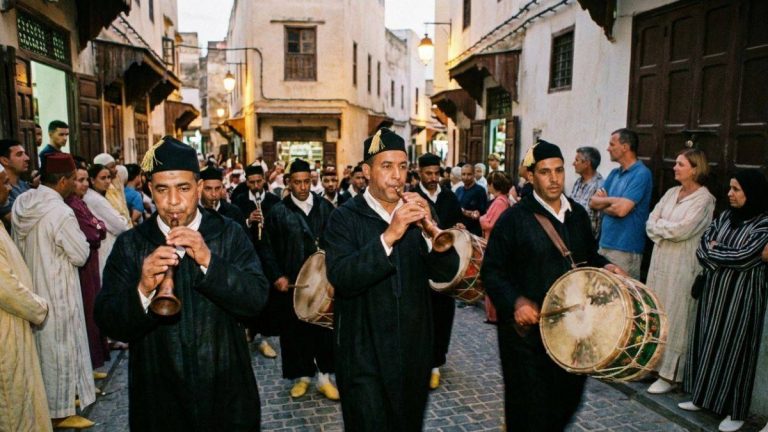
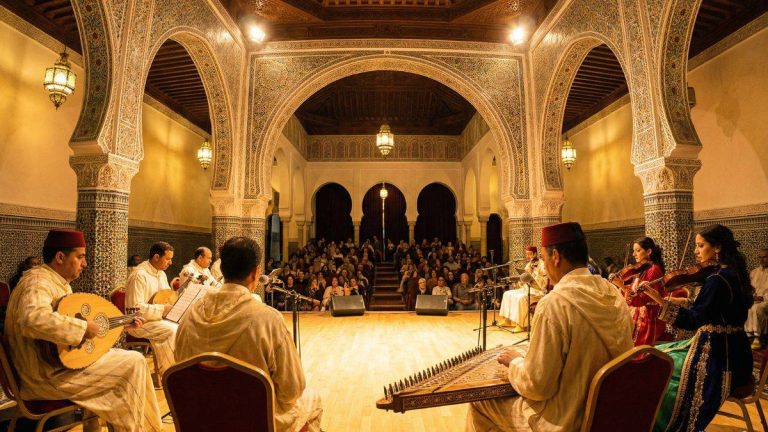
This subtle spirituality connects closely with the city’s music, crafts, and healing traditions, where repetition and presence matter more than performance.
Zawiyas and Sacred Corners
Zawiyas are among the most intimate spiritual spaces in Tangier. Often associated with Sufi traditions, they serve as places of prayer, learning, and remembrance. Unlike grand mosques, zawiyas feel personal. They belong to neighborhoods rather than crowds.
Visitors are sometimes welcome, sometimes gently discouraged. Both responses deserve respect. If you are invited inside, enter quietly. Observe more than you speak. Shoes off, voice low, phone away.
These spaces are not attractions. They are living centers of continuity, held together by trust and familiarity.
This quiet spiritual rhythm reflects the same living continuity explored in Tangier’s Living Traditions: A Mindful Cultural Guide for 2026, where culture unfolds through presence rather than spectacle.
Saints, Memory, and Place
Tangier’s spiritual landscape is shaped by the memory of saints and local figures whose influence continues long after their lifetimes. Shrines dedicated to them are scattered throughout the city and its surroundings.
People visit not to ask for miracles, but to reconnect. To remember. To sit with a sense of grounding. Offerings are simple. Intentions are personal.
Understanding this relationship between memory and place adds depth to any cultural journey through the city, especially when combined with an appreciation for rituals embedded in daily life.
Ritual Without Spectacle
Many spiritual rituals in Tangier happen quietly, away from view. There is no schedule to follow, no announcement to attend. Some occur within families. Others unfold during certain seasons or moments of transition.
What stands out is the absence of spectacle. Rituals are not designed to be watched. They are meant to be lived.
As a traveler, witnessing these moments is rare and often accidental. When it happens, presence is the only appropriate response. Cameras stay away. Curiosity softens into respect.
Respecting Spiritual Boundaries
One of the most important aspects of engaging with Tangier’s spiritual life is knowing when not to engage. Observation does not always require participation.
If a door is closed, it is closed for a reason. If silence is present, let it remain. Asking permission, following cues, and accepting limits are part of mindful travel.
This sensitivity mirrors the etiquette practiced across the city, guiding interactions not only in sacred spaces but in everyday encounters as well.
Spiritual Life and the Wider Cultural Web
Spirituality in Tangier cannot be separated from the city’s broader cultural fabric. It flows through music and dance, informs healing practices, and shapes how crafts are created and passed on.
For travelers seeking a deeper understanding, spiritual life offers a quiet entry point. It invites listening rather than learning, presence rather than explanation.
From here, the journey naturally continues toward traditional clothing, wellness practices, and the subtle etiquette that holds these traditions together.
Understanding Tangier’s traditional clothing opens another quiet doorway into how memory is carried on the body. Fabrics, colors, and cuts are never accidental; they hold stories shaped by climate, belief, and daily life. For readers who wish to explore this layer more deeply, Traditional Clothing of Tangier: Fabrics, Symbols, Memory continues the journey, revealing how garments function not as decoration, but as lived history woven into movement, ritual, and belonging.