
I didn’t come to Essaouira looking for wellness.
In fact, I was running from it. After years in California, I’d grown weary of a culture that turned care into consumption, presence into performance, and stillness into a premium product sold in sleek packages with promises of “transformation.” I’d done the juice cleanses, the silent retreats, the infrared saunas, the breathwork intensives. I had all the gear, all the apps, all the right hashtags. But inside, I was louder than ever. My body moved through the world like a ghost in a borrowed suit, and my mind was a browser with too many tabs open, none of them loading properly. So I left. Not for another destination, but for a reset. I took a bus west, toward the coast, toward a city I’d only heard about in whispers from friends who’d returned quieter, slower, somehow more themselves. I didn’t know it then, but I wasn’t going to find a new version of wellness in Essaouira. I was going to find the original.
What unfolded over the next months wasn’t a program. It wasn’t a curated experience with outcomes or milestones. It was a slow unlearning a return to rhythms older than the self. In Essaouira, wellness isn’t something you achieve. It’s something you receive, like sunlight or tide water, when you’re ready to stop fighting the current. And this wisdom reveals itself through six living currents, each one a doorway into a way of being that doesn’t ask you to improve, but to belong.
The Retreat as Return, Not Escape
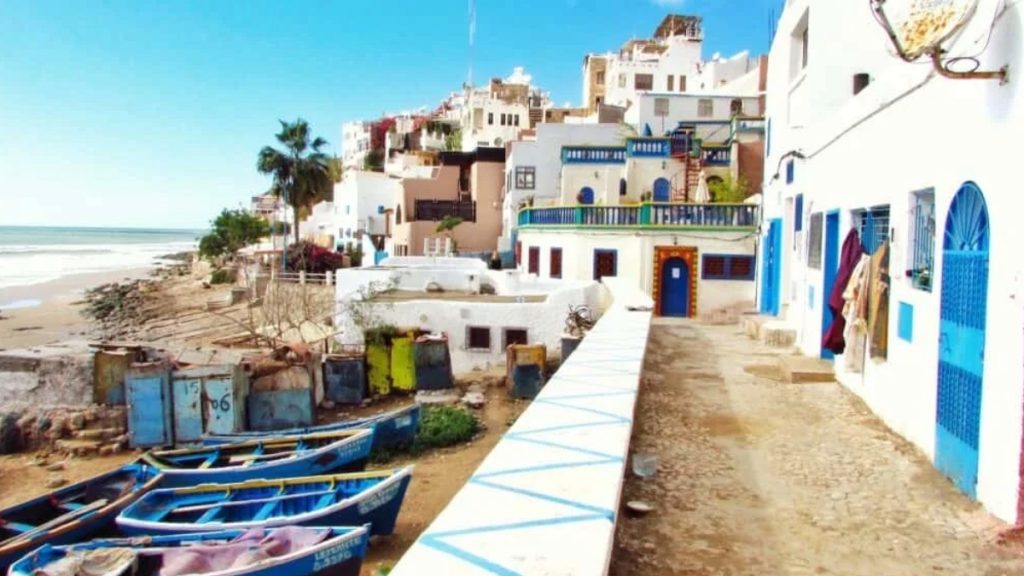
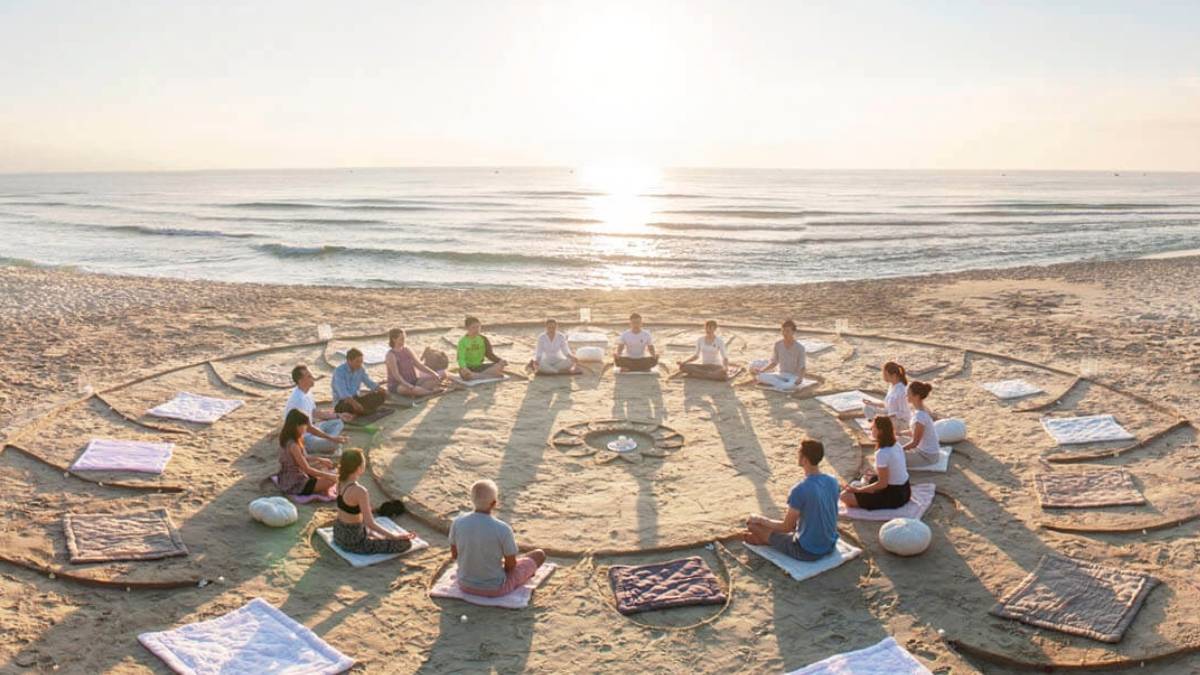
I almost canceled my stay at Leila’s riad. The word “retreat” had left a bad taste too many places that promised healing but delivered performance. But this wasn’t like that. There was no welcome packet, no schedule taped to the door, no list of “daily intentions.” Just a room with a bed, a window open to the sea breeze, and the sound of waves that never rushed.
Leila didn’t ask what I hoped to “get” from my week. She asked if I’d eaten. Then she brought mint tea. That night, I slept for ten hours straight the first time in years. No alarm. No agenda. Just deep, unbroken rest.
This is the heart of a true holistic retreat in Essaouira: it doesn’t add. It subtracts. It removes the pressure to optimize, to share, to transform. Instead, it offers something radical: the freedom to be unimpressive. To sit on the terrace and watch laundry flutter from a neighbor’s line. To nap through the hottest part of the day without guilt. To say “no” to an invitation and mean it.
And the best retreats here are deeply woven into the fabric of the place. They don’t import teachers or practices. They invite you to share meals made with fish from the morning catch, bread from the corner bakery, herbs from the host’s courtyard. They might walk you to a women’s argan cooperative not to buy, but to witness. They keep groups small, not for exclusivity, but so real connection can happen.
This isn’t wellness as a product. It’s wellness as belonging to a place, to a rhythm, to your own unedited self. If you’re seeking a retreat that honors Essaouira’s spirit rather than repackages it for export, Holistic Wellness Retreats in Essaouira reveals how to find spaces that don’t just house your body, but welcome your soul into a slower, more human rhythm of care.

Permission Over Programming: The Quiet Revolution of Doing Nothing
One afternoon, overwhelmed by a wave of grief I hadn’t expected, I sat on the terrace, silent. Leila saw me. She didn’t offer advice. She didn’t suggest a “healing modality.” She brought a blanket, a cup of warm milk with a drop of argan oil, and said, “Stay as long as you need.”
No timer. No follow-up. No expectation that I’d “process” it by dinner.
That moment taught me more about care than any workshop ever did. In Essaouira, healing isn’t something you do. It’s something that happens when you stop interfering. When you give yourself permission to be still, to feel, to not have answers.
This is the quiet revolution: doing nothing isn’t laziness. It’s trust.
Argan Oil: Liquid Memory Pressed by Hand
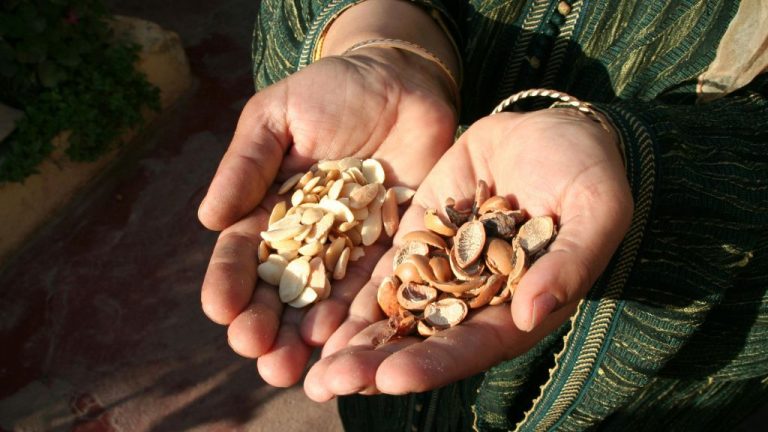
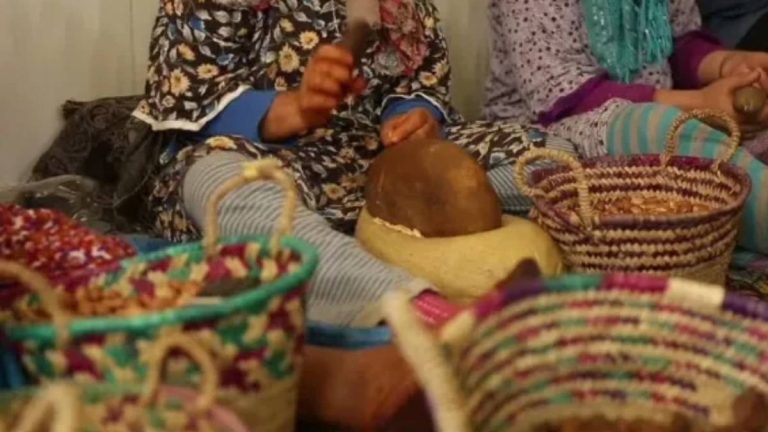
I first encountered argan oil not in a spa, but in a sunlit courtyard on the edge of the argan forest. A dozen women sat on low stools, their hands moving with the quiet certainty of those who’ve done this work since girlhood. Each held a smooth stone the kind you’d skip across a California lake and with a sharp tap, the hard shell split, revealing the pale kernel inside. No gloves. No machines. Just decades of muscle memory and a kind of sacred focus.
One of them, Fatima, handed me a small spoon of unrefined paste. It was earthy, slightly bitter, alive. “We eat this,” she said. “It gives strength. We give it to children when they’re weak, to elders in winter.”
Back home, I’d used argan oil as a finishing touch on toast, on my face, as the last step in a ten-product routine. But here, it’s woven into the fabric of life: stirred into couscous, massaged into tired hands after a day’s work, drunk in warm milk to soothe the nerves. The oil isn’t extracted. It’s received after hours of roasting, grinding, and pressing by hand, in stone mills turned with rhythm, not speed.
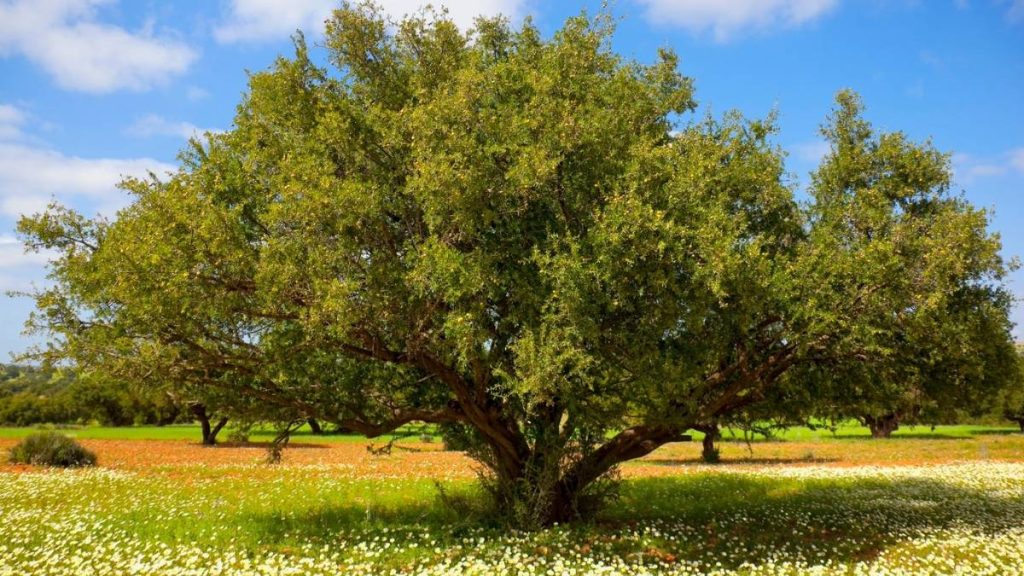
And the forest that shelters these trees? It’s not a commodity. It’s a living archive of resilience gnarled, ancient, and fiercely protected by the women themselves. In the 1990s, they formed cooperatives not just to process oil, but to reclaim dignity, literacy, and economic independence. To use this oil is to participate in that story. It’s to honor the hands that made it, the trees that gave it, and the quiet refusal to let healing become a trend. If you’ve ever held a bottle of argan oil and wondered what came before the label, what lives between the harvest and the pour, then Argan Oil Heritage: From Forest to Skin and Soul opens that story with honesty, respect, and a deep reverence for the women who turn wild bitterness into liquid gold.
From Forest to Table: Wellness as Daily Ritual, Not Luxury
In Essaouira, wellness isn’t reserved for special occasions. It’s in the ordinary: the spoonful of oil stirred into morning tea, the rub on dry elbows after washing clothes by hand, the shared jar passed among neighbors in winter. There’s no separation between care and daily life. They’re the same thing.
This is the lesson the forest teaches: healing doesn’t need packaging. It just needs presence and hands willing to do the slow work of turning bitterness into something nourishing.
The Healing Frequency: When Rhythm Becomes Medicine
I didn’t expect to find therapy in a basement on a Tuesday night. But there I was, in a room lit by a single hanging bulb, with sweat on the walls and the smell of cedar smoke curling through the air. The musicians dressed in white djellabas with embroidered red tassels didn’t perform. They summoned.
The music they played, Gnaoua, is more than melody. It’s a sonic archive of the African diaspora, born from the forced migration of enslaved people from sub-Saharan regions centuries ago. Their chants, carried across oceans, blended over time with Sufi Islam and local Amazigh traditions, evolving into a spiritual practice that uses rhythm, repetition, and movement to cleanse the soul.
Today, its deepest form isn’t seen on festival stages, but lived in private lila ceremonies that begin at sunset and can last until dawn. There’s no diagnosis, no intake form, no promise of “results.” Only willingness to stay, to let the music find what’s buried, and to trust that the body knows how to release it.
When someone enters trance jedba it’s not dissociation. It’s profound presence. Their shaking isn’t random; it’s the physical release of grief, tension, or energy long held. Elders in the room watch closely, offering support if needed, but never interrupting. They know the body is doing its sacred work.
The instruments are voices: the guembri anchors you in the earth, the qraqeb cuts through mental fog like a bell, and the voice invokes what words cannot name. This isn’t music therapy as a 45-minute session. It’s healing as communal catharsis something you enter, not consume. If you’ve ever felt that true wellness might live not in silence alone, but in the space between breath and beat, then Gnaoua Music Therapy and Spiritual Trance guides you into the heart of this living tradition, where rhythm doesn’t fix you it reminds you you’re already whole.

Jedba as Presence: Trance as Embodied Release, Not Dissociation
In the West, we fear losing control. But in Essaouira, trance is the moment you become more embodied, not less. It’s not about escaping the body, but returning to it fully feeling every stored emotion, every unshed tear, every knot of tension unravel through movement. The music doesn’t heal you. It creates the conditions for your own body to remember how.
The Atlantic as Companion: Breathing with the Sea
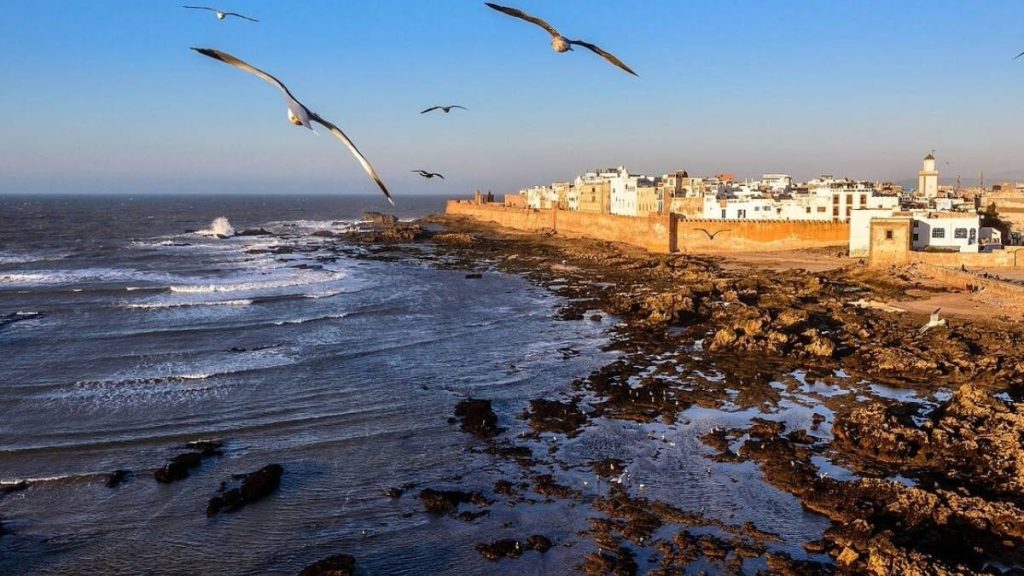
From the moment I arrived, I noticed a lightness in my chest, a clearing in my thoughts, a sense that my nervous system had finally found a rhythm it didn’t have to fight. Back home, I chased calm with supplements, sound baths, and expensive yoga classes. Here, it came for free—with salt on my lips and wind in my hair.
Locals don’t call it “wellness.” They simply live by the tide. They swim year-round, even in January, not for “cold therapy,” but because “the cold wakes up your blood.” Fishermen rinse their hands in seawater after hauling nets not for exfoliation, but because salt prevents infection. Women gather wild seaweed at low tide near Diabat, not for spa wraps, but because their grandmothers taught them it soothes joint pain.
Even the air is medicine. Essaouira sits where the Atlantic meets the trade winds, creating a constant flow of negative ions molecules proven to boost serotonin and reduce stress hormones. Scientists measure it. Locals feel it. They open their windows wide, even in winter. “The air here doesn’t just fill your lungs,” Leila told me. “It resets your spirit.”
And yes, they even drink seawater diluted with fresh water, lemon, and honey as a natural electrolyte tonic for fatigue. There’s no clinical trial behind it. Just centuries of observation and trust.
This is thalassotherapy not as a luxury treatment, but as daily ritual woven into ordinary life, not sold in a package. The real healing doesn’t happen in a resort treatment room with chilled towels. It happens on the beach at dawn, when an elder wades in alone and lets the waves hold him. It happens in the choice to walk barefoot on wet sand, not for “grounding,” but because it feels like coming home. If you’ve ever stood on a California coast and felt the ocean call you beyond aesthetics, beyond escape, then Ocean-Based Healing: Thalassotherapy and Marine Air reveals how Essaouira’s relationship with the sea offers a form of wellness that can’t be downloaded only received, one breath, one wave, at a time.
Thalassotherapy Without the Spa: Salt, Wind, and the Daily Reset
The ocean here isn’t a backdrop. It’s a participant in daily life. You don’t just look at it you drink it, bathe in it, dry your clothes in its breeze, whisper your worries to its waves. This is wellness not as consumption, but as conversation. And the sea always replies.
Walking as Witness: The Medina’s Living Classroom
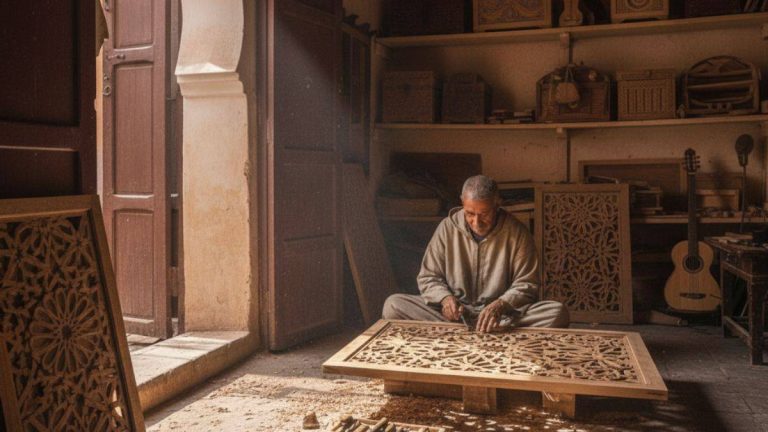
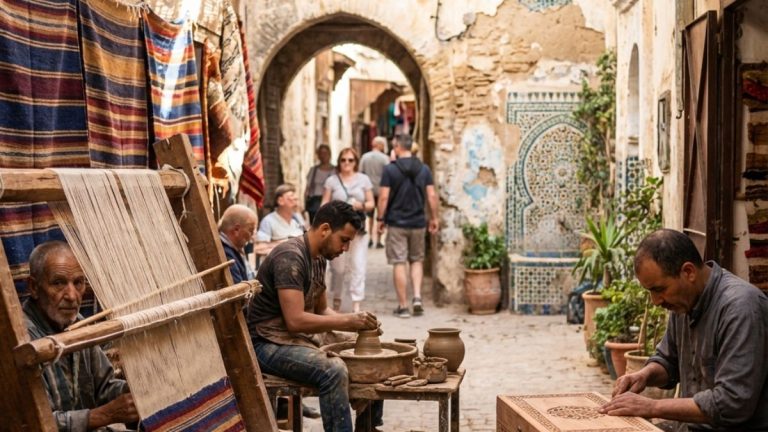
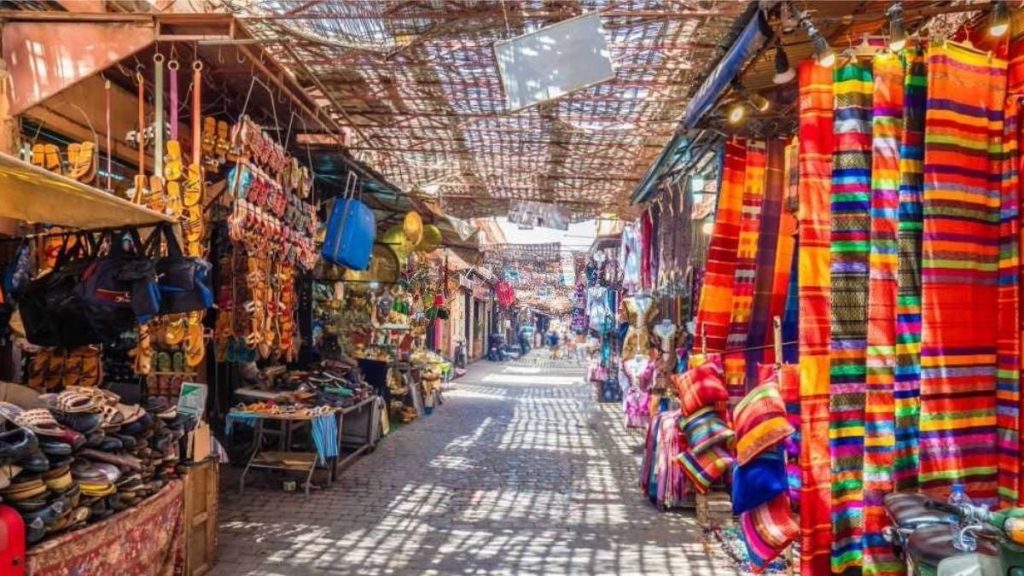
I used to think mindfulness required a cushion and twenty minutes of uninterrupted silence. Then I got lost in the medina not the kind that panics you, but the kind that frees you. No Google Maps. No itinerary. Just the scent of cedar sawdust, a basket of saffron threads glowing like embers, a splash of cobalt blue paint drying on a freshly washed step.
Presence wasn’t something I practiced. It was something that practiced me through texture, color, and the quiet intensity of a coppersmith hammering a teapot for an hour without looking up.
Craft here is contemplation. Color is orientation. The famous blue isn’t just pretty; it’s protective, historically painted with pigments believed to ward off evil spirits. And no two blues are alike. One door might be the color of twilight, another the deep of ocean trenches, a third the pale wash of dawn. Walking becomes a slow study in subtlety, training your eyes to see what your busy mind has long filtered out.
And the ethics of looking matter: asking before you photograph a craftsperson, buying a small item not out of pity but as an act of reciprocity, sitting with a tea vendor not to “experience local life,” but to share a few quiet minutes with someone who’s spent decades watching the world pass by.
This isn’t tourism. It’s attunement. The medina doesn’t reward efficiency. It rewards curiosity. Dead ends lead to hidden courtyards. Detours reveal murals you’d never find on a map. The pauses leaning against a sun-warmed wall, watching laundry flutter from a balcony become the real destination. If you’ve ever walked through your own neighborhood and wondered how to see it with fresh eyes, how to find presence in the ordinary, then Mindful Medina Walks: Crafts, Colors, and Inner Presence shows how Essaouira’s labyrinthine alleys offer a living classroom in attention, one quiet step at a time.
The Ethics of Attention: From Spectator to Participant
True mindful walking here requires a shift: from observer to guest. It means you don’t just take photos you ask. You don’t just buy you listen. You don’t just pass through you pause. In a world that treats attention as a commodity, giving it freely to a wall, a craftsperson, a patch of sky is a radical return to self.
Living the Seasons: Alignment Over Optimization
In Essaouira, wellness isn’t scheduled. It’s aligned. There are no January detoxes or summer “glow-ups.” Instead, life follows the seasons with a quiet intelligence that modern wellness has forgotten.
From November to February, the Alizé wind sweeps down from the Sahara, carrying sand, salt, and a strange kind of clarity. Tourists often complain it’s too strong, too cold, too relentless. But locals welcome it. “The wind doesn’t just move air,” Leila told me as we sat on her rooftop one January afternoon, scarves wrapped tight. “It moves what’s stuck inside you.” In winter, life slows indoors. Windows are kept open just a crack, not to keep the cold out, but to let the wind sweep through carrying away stale energy, stagnant thoughts, the heaviness of the year past. Meals grow heartier: slow-cooked lentils, preserved lemons, argan oil stirred into warm milk at night. There’s less talk of “productivity” and more of rest as resistance.
When March arrives, the wind softens. The Atlantic turns from steel to silver. And the desert explodes in color poppies, chamomile, wild thyme. This is when Essaouirans step outside again not to “get vitamin D,” but to gather. Women walk the edges of fields at dawn, filling baskets with wild greens, nettles, and fennel. These aren’t “superfoods.” They’re medicine. Boiled into teas for digestion. Blended with yogurt for skin. Steeped in argan oil for aching joints.
One morning, I joined Fatima on a foraging walk. She didn’t just pick plants. She spoke to them. She left a coin or a drop of water as thanks. “The earth gives,” she said, “but only if you remember to give back.” That’s the heart of spring wellness here: reciprocity.
Reciprocity as Ritual: Giving Back to the Earth That Gives
July and August are deeply still. The medina empties of tourists by noon. Locals draw shutters, sip mint tea in shaded courtyards, and nap through the hottest hours. Productivity isn’t praised. Slowness is. “What do you do all day?” I once asked Yusef during a long afternoon in his workshop. He laughed. “I wait for the evening. And I don’t rush it.” That’s the summer lesson: doing less isn’t laziness. It’s alignment.
By September, the light turns golden. The wind returns, softer now. Families collect olives, dry figs, and press the last batches of argan oil for the year. Evenings are spent sharing meals made from the season’s final gifts. Thanks are given not in grand ceremonies, but in small gestures: a bowl of olives offered to a neighbor, a jar of thyme honey left at a friend’s door.
This is wellness as lived gratitude. You don’t need to live in Essaouira to practice this. In California, I now mark spring not by the calendar, but by the first jacaranda bloom. I welcome winter not with dread, but with heavier blankets, slower meals, and permission to rest. Essaouira didn’t teach me new habits. It reminded me of an old truth: we are seasonal beings. Our energy rises and falls. Our healing must shift with the light. If you’ve ever felt out of sync with the world’s relentless pace, if you sense that true care might flow with the seasons rather than fight them, then Seasonal Wellness Rituals: Wind, Water, and Slow Living offers a return to the ancient rhythm of earth, wind, and quiet return.